
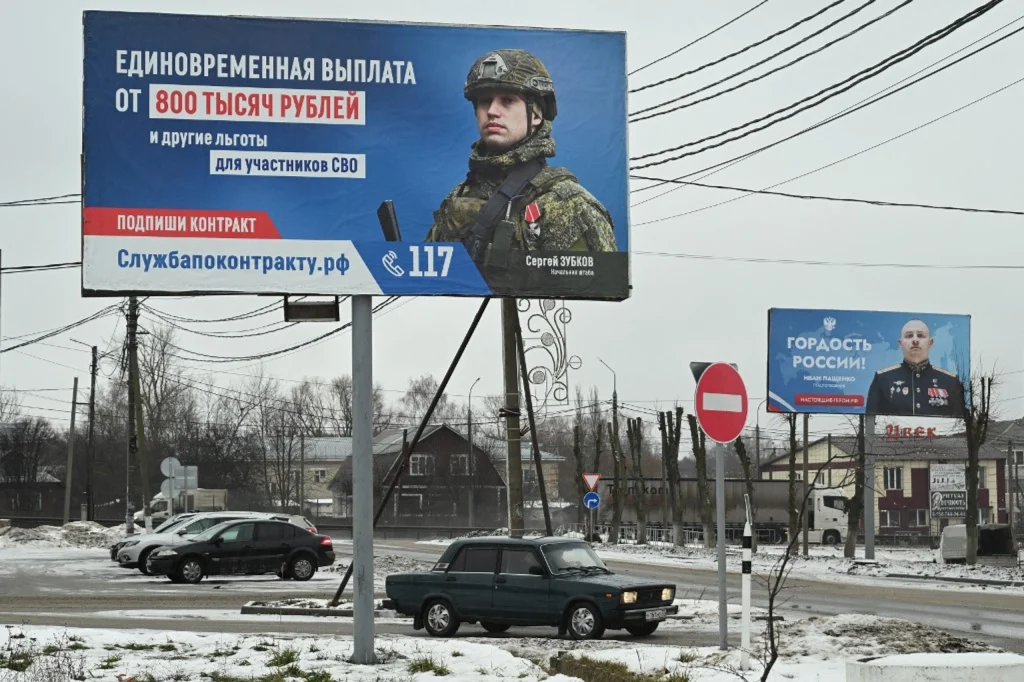
Kremlin analyses of military manpower trends say that Russia pays more rubles for soldiers already killed in battle than it does to pay the salaries of soldiers who are alive in the army's ranks or to recruit new ones.
More than a third of the Russian Federation's national military spending on Ukraine funds survivor benefits for relatives of hundreds of thousands of soldiers already killed in combat. That's more than the Kremlin spends on paying the salaries of living soldiers or on bonuses to recruit new ones, according to recent data published by two independent Russian think tanks.
Death benefits account for about 38 percent of the roughly $70 billion that Russian taxpayers pay each year to maintain an army of 700,000 soldiers in Ukraine, while army salaries account for 33 percent and regional enlistment bonuses absorb about 20 percent, the Conflict Intelligence Team (CIT), an OSINT research group founded by independent Russian political analyst Ruslan Leviev, said in a report on Monday.
The cost to the Russian state of both finding and paying soldiers to fight in Ukraine, as well as paying relatives of soldiers killed in that fighting, has increased significantly, the report said, from total military personnel payments of about $39 billion from mid-2023 to mid-2024 to $52 billion in 2025, the report said.
Russia's military leadership in mid-2023 changed tactics from high-speed armored attacks to slow-paced infantry attacks to avoid losses of tanks and other combat vehicles, in response to the Ukrainian forces' increasingly heavy use of military drones carrying anti-vehicle munitions.
Since then, Russian attacks have made increasingly slow progress with the cost of casualties mounting. Russian military recruiters have struggled to recruit new soldiers to fill gaps in the ranks, and in mid-June, the national average signing bonus for a private soldier willing to go to Ukraine and fight was the equivalent of $31,500 — a significant sum and in some Russian regions a life-changing sum.
Under Russian law, signing bonuses are paid from regional budgets, which has left many regions unable to finance road repairs or schools because the bulk of the local budget is paid in signing bonuses to meet recruitment quotas dictated by the Kremlin. In regions with strong economies, even giant signing bonuses have failed to find enough recruits because men prefer a steady job at home to possible death or mutilation in Ukraine.
This dynamic has turned Russia’s poorest regions – including Buryatia on the border with Mongolia and Chukotka near Alaska – into the territories suffering the highest casualty rates in the Russo-Ukrainian War. The unintended effect of Moscow’s pressure on regions to meet conscription demands has been to strip local governments of much-needed funds for schools, roads and social services.
If Russia were to end its occupation of Ukraine, the savings to the government in war-related payments that would no longer need to be made would eliminate Russia's national deficit and drive state spending into the black, the CIT report said.
The Ukrainian military and some Western allies estimate that Russia has suffered about 1.2 million casualties, of which 400,000 to 500,000 were killed in action since the second invasion of Ukraine in February 2022. The most conservative and reliably confirmed number of Russian military personnel killed in the war in Ukraine comes from open-source investigations by the independent Russian media outlet Mediazona. As of February 13, that platform, using verified identifications, had confirmed the deaths of 177,433 Russian soldiers and fighters. Researchers for that group have said the figure is probably 45 to 65 percent of the actual total.
In a February 13 analysis titled “The Price of Donbas: Kremlin’s Manpower Costs in Case of a New Offensive Will Exceed 5 Trillion Rubles,” independent Russian political analyst Kirill Rogov argued that the sharp increase in death benefits and the costs of live troops have left Moscow struggling to find manpower to support continued attacks and have already prevented the Kremlin from forming a strategic reserve of troops for a planned spring-summer offensive in Ukraine.
According to the analysis, the Russian casualty rate is unlikely to change quickly because Ukraine's defensive tactics aimed at inflicting maximum casualties have been consistently effective for more than a year and have a history of improving effectiveness over time.
The commander of the Ukrainian army, Oleksandr Syrsky, declared in mid-January that for the first time in the war, his troops had confirmed that they had killed or seriously wounded more Russian soldiers in a month than the Kremlin had been able to recruit. On February 11, Syrsky’s boss, President Volodymyr Zelensky, told reporters that the situation was still the same. Western sources, including the US-based Institute for the Study of War (ISW) and the British Ministry of Defense (MoD), confirmed in February that Russian forces appeared to be losing troops faster than the Kremlin could recruit them.
Dmitry Medvedev, Deputy Chairman of Russia's Security Council, stated on January 16 that Russian military recruitment was going well and that in 2025 the government had slightly exceeded recruitment targets.
On the front lines, according to daily situation reports from the Ukrainian army and battle information from units in sectors most targeted by Russian army attacks, on a typical day of winter fighting, Russian Federation forces launch between 5 and 15 small infantry attacks across the entire 1,100-kilometer (684-mile) battle front, and most of the attacks are usually crushed by Ukrainian drones and artillery.
The pressure and sometimes lawlessness from Russian recruiters seeking more men to serve as volunteers in the forces occupying Ukraine, and the coercion of those unwilling to fight, have been widely documented.
The CIT report cited a military police raid in the central city of Saratov that targeted 250 non-Russian migrant workers, 20 of whom were detained by authorities and taken to a local recruitment office. In another incident described in the report, Russian recruits traveling by train to a non-combat unit in a region of the Far East were subjected to physical and mental abuse for several days by escort officers who wanted them to volunteer for war service.
Ukrainian military activist platforms have documented the Russian military's reluctance to recognize soldiers killed in action, using open-source complaints from thousands of family members seeking information about husbands, sons, or brothers sent to Ukraine in uniform and missing in action.
On February 16, the Russian-Ukrainian activist group “Ne Zhdi Khoroshie Novosti” published details of claims by four members of Russian families demanding that authorities either find a serviceman or declare him dead in order to pay death benefits, as well as video accounts from two soldiers who stated on documents that their commanders had thrown them into battle unprepared and with virtually no chance of survival.
A video complaint from the wife of Aleksandr Makarov, a soldier in Russia’s 254th Motor Rifle Regiment, 20th Guards Combined Arms Army, said that unit doctors ignored her husband’s medical disabilities, including open wounds, a withered leg and an inability to walk without crutches, to declare him fit for service. Kyiv Post could not independently confirm the account, but the documents supporting the woman’s complaint were consistent with Russian military practice.
A video complaint from wife Nadezhda Ivanova said that her husband, while serving in the 506th Guards Motorcycle Regiment of Russia, had disappeared in the fall of 2024 after being sent into combat despite a debilitating wound (shrapnel hit his eye) from a previous battle, and that since then his unit had refused to acknowledge that he was missing in action and had instead declared him a deserter.
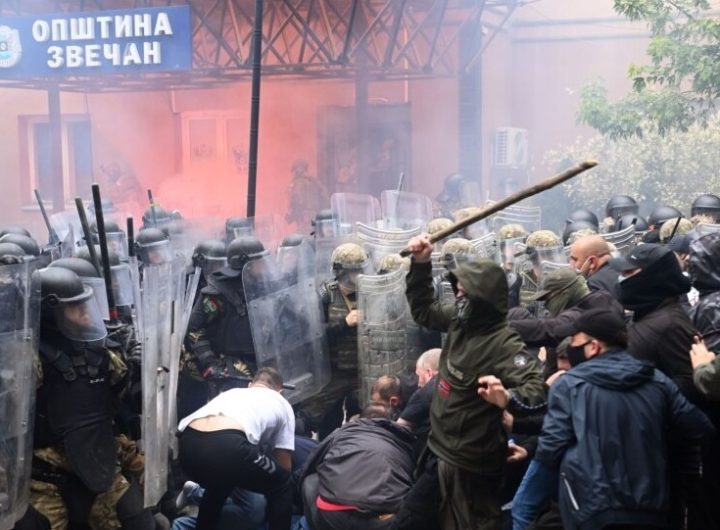 Three years since the attack on NATO soldiers: Vučić's direct role through Radoić in the destabilization of the north
 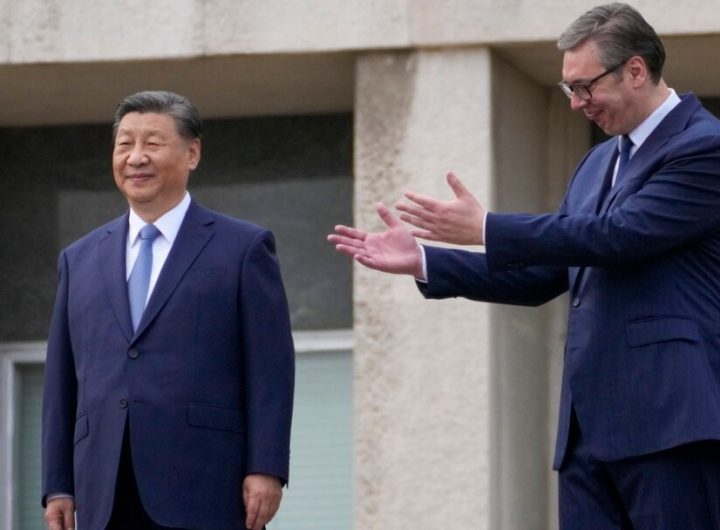 Vučić in Beijing: Complains about the EU, but ties Serbia ever more closely to China
 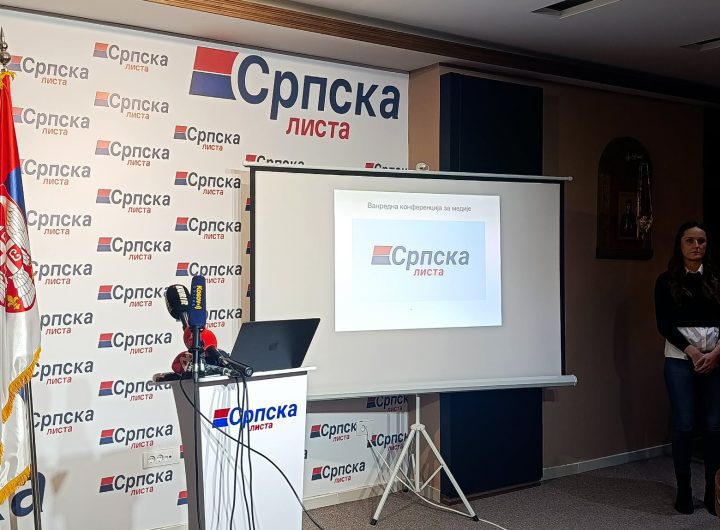 Both the Vučić regime and the Serbian List are using blackmail and threats against Serbs in Kosovo
  RT Balkan misinforms about the KSF and the arming of Kosovo
 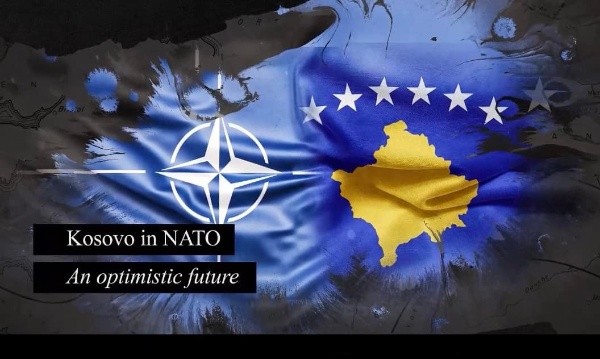 Kosovo in NATO: the end of the security vacuum in the Balkans
 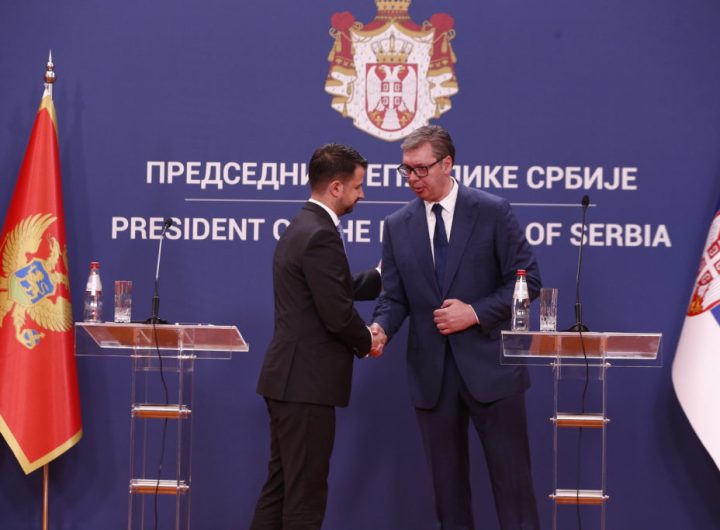 The tendency for intervention in Montenegro for Kosovo and Vučić's dream that remains unfulfilled