
There was a time when disinformation was relatively easy to identify. An anonymous portal, a poorly manipulated photo, or an exaggerated headline were enough to raise suspicions. The reader could be wrong, but there were often some signals that helped him distinguish truth from manipulation.
Today, these signals are disappearing.
Disinformation is no longer an amateur product. It has become more sophisticated, more organized, and much harder to identify. Instead of creating trust from scratch, modern propaganda has chosen a different strategy: to appropriate the trust that already exists.
One of the most significant examples of this approach is the operation known as “Doppelgänger.” The name comes from the German language and means “double” or “copy.” In practice, this method consists of cloning well-known media outlets, copying their visual identity, and publishing fabricated articles that appear to have been written by the original editorial staff.
At first glance, everything looks authentic. The logo is the same. The design is identical. The headlines are similar. Even the way the information is presented creates the impression of a reliable source.
However, the difference is hidden in a small detail that most users don't notice: the website address.
This transformation shows that propaganda no longer aims to simply create false content. It aims to create an alternative reality, using the identity of institutions that enjoy the public's trust.
If the “Doppelgänger” manipulates the source of information, artificial intelligence is transforming another element: the evidence.
For decades, photography, audio, and video have been considered the most reliable forms of evidence. Society has built a special relationship with images. We tend to believe what we see and hear.
But this relationship is changing rapidly.
Deepfake technology has made it possible to create videos where politicians appear to make statements they never made. Voices can be cloned with incredible accuracy. Photographs can be created by artificial intelligence and appear completely real, even though the people or events depicted in them never existed.
The biggest paradox is that deepfake doesn't just attack the truth.
He attacks the very concept of truth.
When the public begins to doubt every video, every photo, and every audio recording, then even verified facts begin to lose their power. At this point, the problem is no longer just the spread of false information. The problem is the erosion of collective trust.
The case of Slovakia in 2023 clearly illustrates this phenomenon. Just two days before the parliamentary elections, an audio recording was published on social media that purportedly included an opposition politician in a conversation about manipulating the electoral process.
Later, the recording was exposed as fake.
However, the most important question is not whether he changed the outcome of the election.
The question is why it was published exactly two days before the vote.
The answer lies in the way social psychology works. In tense times, emotions dominate over reason. Time for verification is limited, while reactions are immediate. In such an environment, even false information can have real consequences.
For this very reason, researchers no longer measure the impact of disinformation simply by analyzing the number of people who believe it.
Often, a piece of fake news is enough to create confusion, stir up anger, or deepen existing divisions.
Even more worrying is the fact that isolated individuals are not always behind these operations.
Documents analyzed by European researchers show that many disinformation campaigns operate according to an industrial logic. They have organizational structures, companies, budgets, strategic objectives, and mechanisms for measuring results.
Propaganda is no longer a sporadic activity.
It has become a global industry.
The narratives promoted are almost always similar. The aim is to weaken democratic institutions, increase distrust of the media, polarize public debate, and create the impression that no reliable source of information exists anymore.
But what does this mean for the Balkans?
The answer is not optimistic at all.
The Balkans remains a region where history continues to influence present-day politics. Ethnic issues, unresolved conflicts, national identity, and political rivalries create a much more favorable terrain for information manipulation.
In such an environment, facts often compete with emotions, while perception becomes more important than reality.
A short video, published without context, can provoke immediate reactions. A manipulated photograph can be interpreted as evidence. A fabricated article can be turned into a political argument.
In this respect, Kosovo is particularly vulnerable.
Issues related to the north of the country, the dialogue with Serbia, security, relations with the European Union, partnership with the United States, and interethnic relations are topics that produce strong emotional reactions.
Imagine a situation where a fake document is published that is claimed to have been leaked from a security institution. Or a video where an international diplomat appears to have made a statement that he never made. Or a portal that copies the identity of a well-known media outlet and publishes a fabricated article about developments in the north.
In a society where social networks have become the main source of information for a large portion of citizens, such content can spread at an incredible speed.
Often, the damage occurs long before the verification process begins.
Another factor that increases Kosovo's vulnerability is its media structure.
Information circulates simultaneously in Albanian, Serbian, regional and international space. A narrative produced abroad can be translated, adapted and distributed in Kosovo within a few hours.
This means that disinformation is no longer a problem confined within national borders.
It is a transnational phenomenon.
And this is precisely where the biggest challenge lies.
Institutions cannot win this battle alone. Neither digital platforms nor the media can face this challenge alone.
The strongest defense remains education.
Checking the source, verifying the web address, comparing information with other sources, and avoiding immediate reactions are some of the simplest, yet most effective mechanisms.
Journalism must also adapt to the new reality.
Quick reporting is no longer enough. The media must invest more in fact-checking, source transparency, and media education of the public.
Because today the challenge is not just identifying a lie.
The challenge is that lies have learned to speak with the voice of truth, to appear like the truth, and to use the instruments of truth to manipulate the public.
In the end, the question is not whether deepfakes and operations like "Doppelgänger" will reach the Balkans.
They are already here.
The real question is whether our societies will be able to protect public trust at a time when appearance, voice, and the very source of information are no longer guarantees of authenticity.
Because the greatest battle of the 21st century is not being fought over territory, weapons, or natural resources.
It is being developed for truth control.
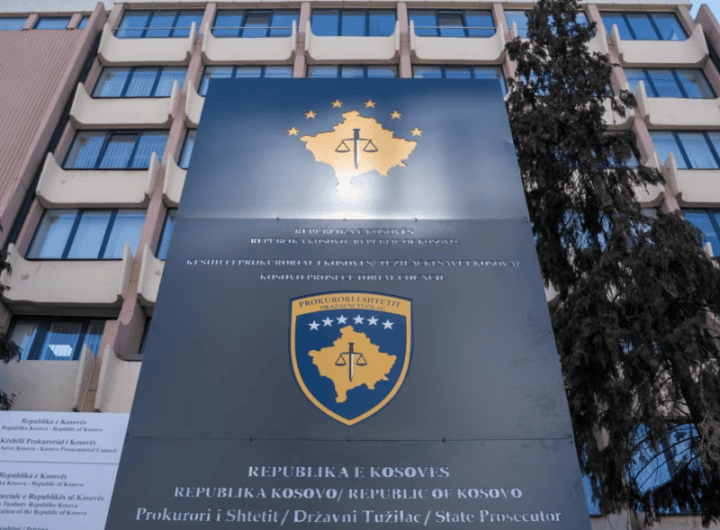 FULL INDICTMENT: Fatmir Sheholli implemented the plan prepared by the BIA official with the aim of damaging the interests of Kosovo
 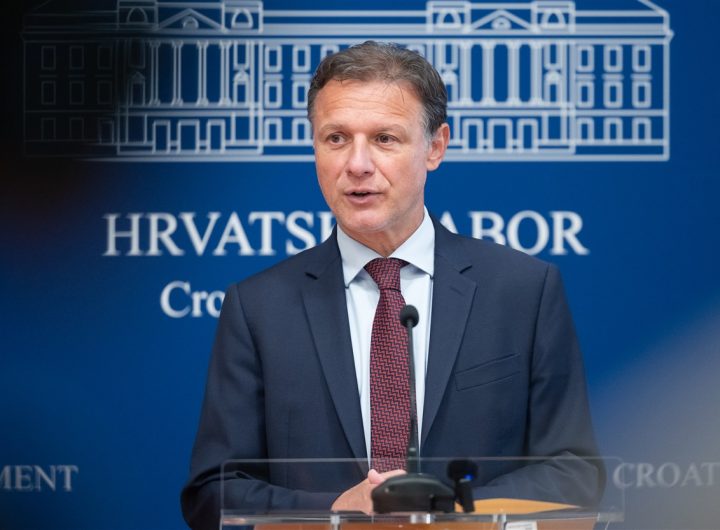 Croatia warns Western allies, Jandrokovic: Serbia is arming itself with assault weapons
 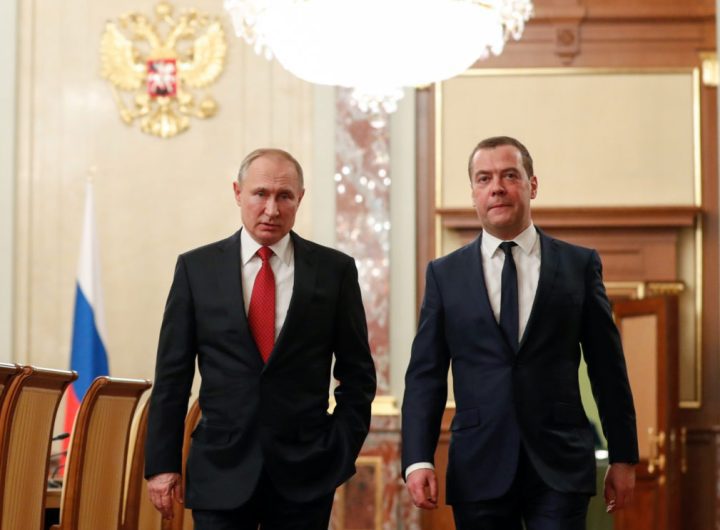 Kosovo again in Moscow's propaganda - Medvedev mentions Kosovo's recognition and threatens the West with "consequences"
 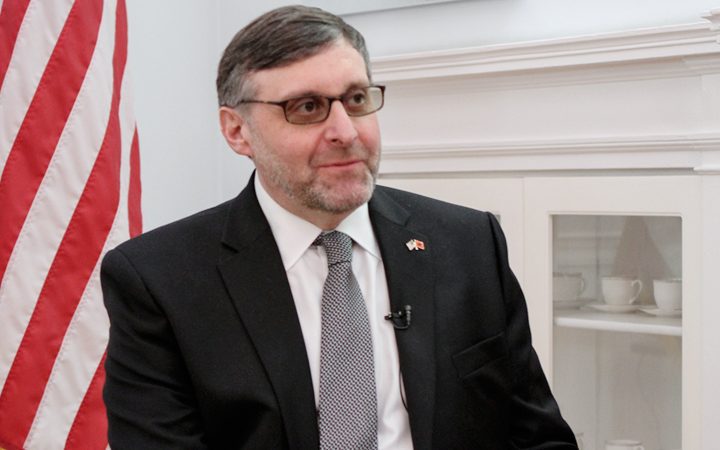 Palmer warns of Russian influence in the Balkans: Delaying EU and NATO integration leaves the region vulnerable
 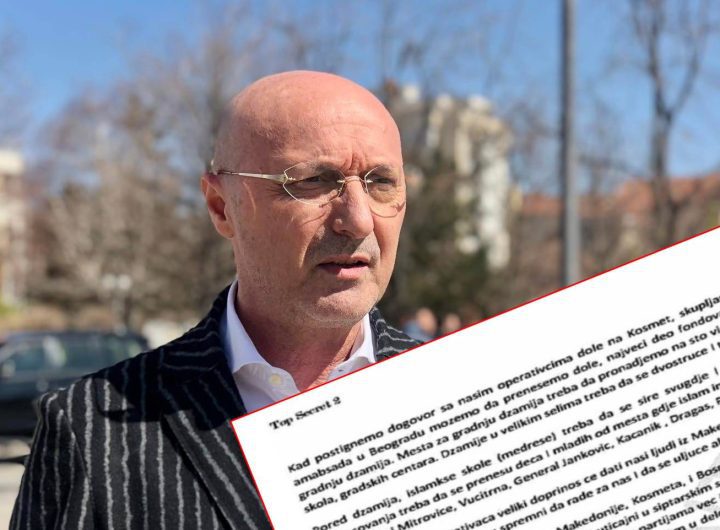 Indictment filed against Fatmir Sheholli for espionage and blackmail
 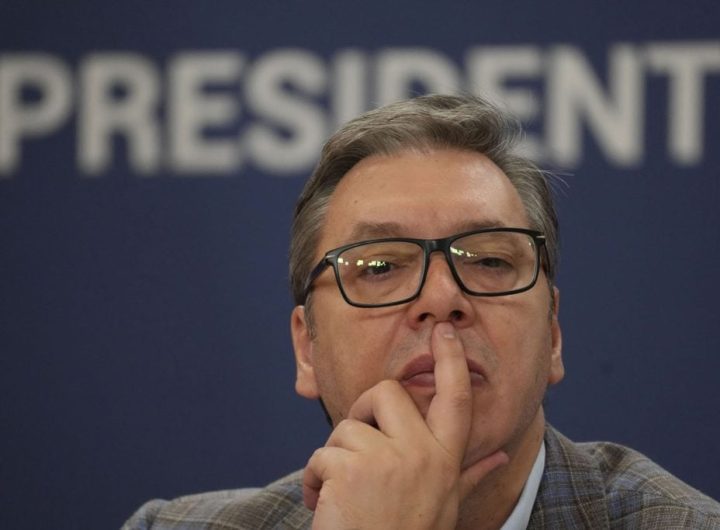 The elections that scare Vučić: Promises to voters, destabilizing scenarios behind the ballot boxes