
American professor Andrew Michta has raised the alarm that the West is facing a crucial moment for global security, while warning that the lack of investment in the defense industry and military infrastructure could have serious consequences for the strategic balance.
In the second part of an interview for Defence24, Michta analyzed the situation in the Middle East, the impact of the war with Iran on American policy, the state of US ammunition reserves, and the changes taking place in American military doctrine.
According to him, President Donald Trump's administration is facing great political pressure, while the upcoming elections are making the climate in Washington even more tense.
Michta said that the conflict in the Middle East is becoming a heavy burden for the US administration, affecting not only foreign policy but also domestic debate.
He assessed that the war with Iran is consuming American reserves of ammunition and air defense systems, forcing the Pentagon to shift some of its military capabilities from other strategic regions, such as the Pacific and Europe.
However, according to him, the effort to increase the defense budget to $1.5 trillion is a necessary, albeit overdue, step.
The American professor emphasized that modern wars are fundamentally changing the way military operations are conducted.
He argued that the massive use of drones has created an almost completely transparent battlefield, where the movement of military units has become much more difficult due to the risk of detection and immediate attack.
According to him, the main challenge of modern armies is not only the production of more interceptor missiles, but the restoration of mobility through dominance of the electromagnetic spectrum.
"Electronic warfare will be the key to neutralizing drone guidance systems and restoring the maneuverability of ground forces," he stressed.
Michta also warned that one of the West's most serious problems remains the weakening of the defense industrial base.
According to him, years of reduced production capacities have led to the loss of production lines, a lack of engineers and a reduction in industrial capacities, while their reconstruction will take a long time.
"We are living in phase zero of a potential major conflict. If the West, especially the countries on NATO's eastern flank, with Poland at the forefront, do not move from declarations to concrete actions, the cost of restoring the strategic balance could be extremely high," he said.
The American professor also commented on the announced changes in US nuclear doctrine, emphasizing that Washington is facing a new strategic reality.
For the first time, the United States must prepare to simultaneously confront two nuclear powers, Russia and China, while at the same time considering the growing threat from North Korea.
He added that modernizing the US nuclear triad has become a necessity, as conventional capabilities, cyber defense, and nuclear deterrence are increasingly integrated into a single strategic system.
According to Michtas, the biggest challenge for the West is not just confronting its adversaries, but restoring industrial and military capabilities that have been neglected for years.
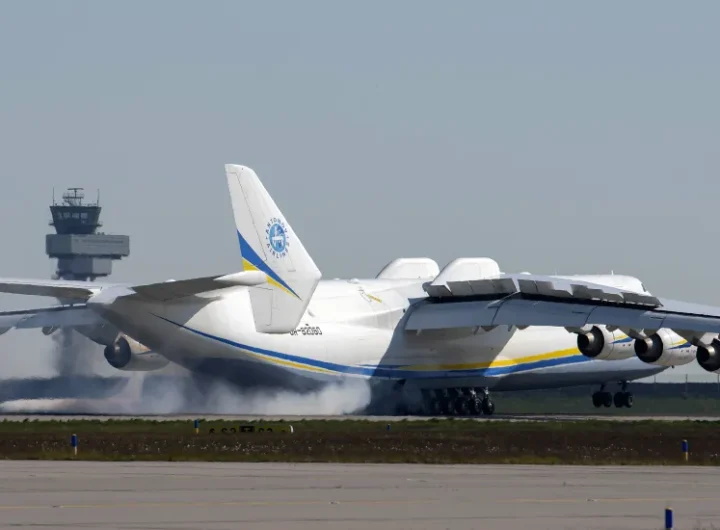 Germany discovers third drone and explosives near Leipzig – Threat to NATO logistics?
 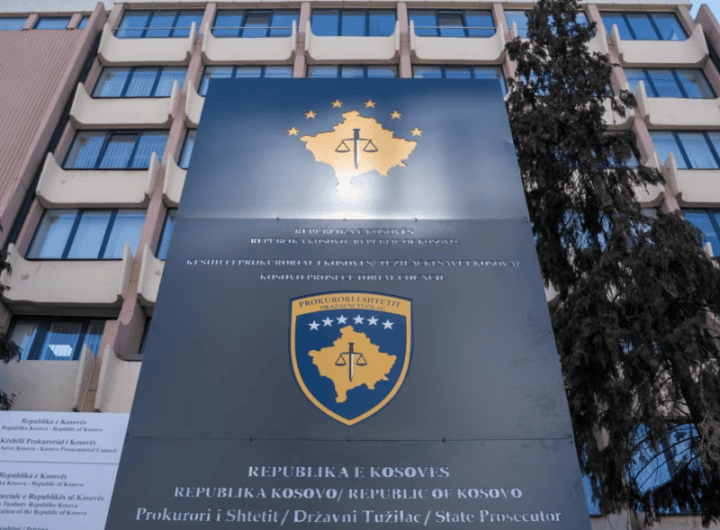 FULL INDICTMENT: Fatmir Sheholli implemented the plan prepared by the BIA official with the aim of damaging the interests of Kosovo
  Kremlin opens new propaganda front: Climate as a weapon against Europe
 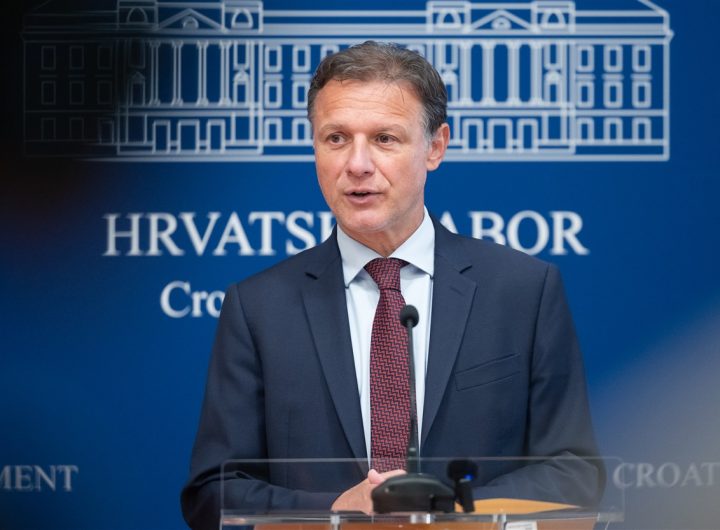 Croatia warns Western allies, Jandrokovic: Serbia is arming itself with assault weapons
 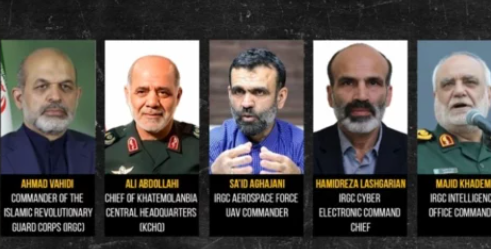 US offers up to $10 million reward for information on five senior Iranian officials
 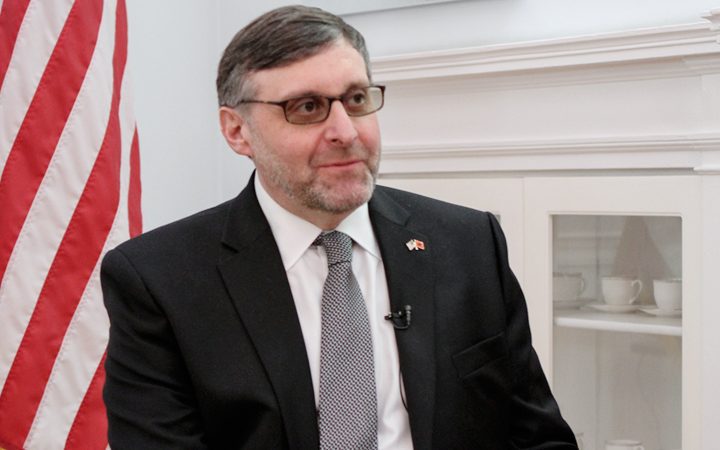 Palmer warns of Russian influence in the Balkans: Delaying EU and NATO integration leaves the region vulnerable