

Milan Radoicic, suspected of organizing the terrorist attack in Banjska, northern Kosovo, has been banned from entering Bosnia and Herzegovina after being declared a threat to national security, security sources confirmed to Radio Free Europe.
According to the same sources, the decision to ban entry into Bosnia and Herzegovina was made on November 13, four days before the Supreme Court in Belgrade made the decision to order detention and issue an arrest warrant for Radoicic, after he failed to report to the police on November 15.
Mandatory reporting to the police was one of the supervision measures imposed in the ongoing proceedings against him in connection with the Banjska case.
The responsible institutions of Bosnia and Herzegovina have not published details of the decision or the reasoning behind why Radoicic has been designated a security threat. The ban means that if he attempts to enter BiH, he will be refused entry or stopped at the border crossing or other entry point into the country.
This decision comes at a time when the whereabouts of Radoicic, who has been inaccessible to the justice systems in Serbia in recent days, are still unknown.
Radoicic's passport had previously been confiscated, while measures were also imposed against him that prohibited him from leaving his residence without the approval of the relevant authorities, as well as from traveling to Kosovo.
His disappearance occurred after the Serbian Progressive Party (SNS) lost the Serbian elections in late October. A few days before the arrest warrant was issued, unconfirmed reports emerged that he had left Serbia for Russia.
Serbia's Ministry of Internal Affairs, the Information and Security Agency (BIA), and the Russian embassy in Belgrade have so far not confirmed these claims.
RS MUP: We have no information that Radoicic stayed in Republika Srpska
Regarding the claims of some media outlets that Milan Radoić is in Republika Srpska and that he enjoys the protection of certain government structures, the Ministry of Internal Affairs of Republika Srpska has stated that they have no information that he has stayed or is staying in the territory of this entity.
"The Ministry of Internal Affairs of Republika Srpska has no information that the person in question has stayed or is staying on the territory of the Republic, and in particular we reject as untrue and malicious the claims that he is protected by members of the MUP of Republika Srpska," the RS MUP response states.
They added that the Border Police of Bosnia and Herzegovina, which has data on entries and exits from the country, is responsible for controlling the crossing of the state border.
The RS MUP also emphasized that they are acting on the basis of all international arrest warrants and that they have good and professional cooperation with police services in the region and beyond.
Radoicic has claimed responsibility for organizing the armed group that carried out the terrorist attack in Banjska, northern Kosovo, on September 24, 2023. During the clash, a Kosovo police officer was killed, while three attackers also lost their lives.
Although an investigation has been launched against him in Serbia for several criminal offenses related to supplying weapons and causing general danger, no indictment has been filed even after three years.
Kosovo authorities, who charge a total of 45 people with the attack, have issued an international arrest warrant for Radoicic through the United Nations Mission in Kosovo (UNMIK). He is also among the defendants being tried in absentia in Kosovo.
The United States and the United Kingdom have previously imposed sanctions on Radoicic due to suspected involvement in organized crime and corruption.
Bosnia and Herzegovina's decision to ban Radojicic's entry came just days after his longtime business partner, Zvonko Veselinovic, also left the country.
Security sources in BiH previously confirmed to Radio Free Europe that Veselinovic had traveled to Turkey via Sarajevo on November 11, using a Serbian passport.
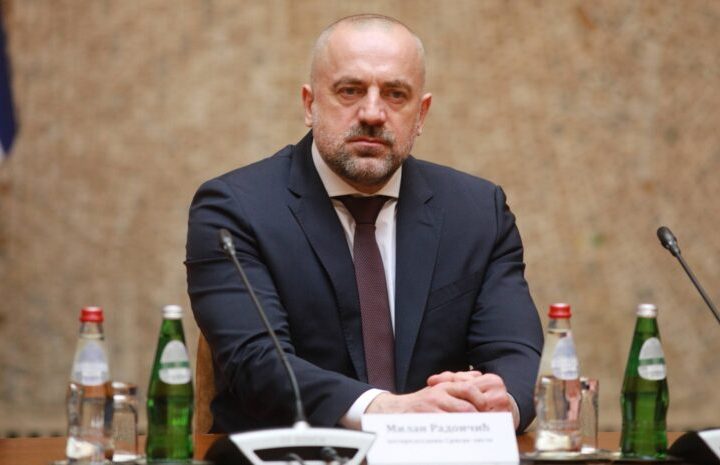 Belgrade court issues arrest warrant for Milan Radoicic
 Selimi: The influence of Russian media in the Balkans is greater than ever
 Student List, new in name but with old attitudes towards Kosovo
 Serbian nationalist melody in Brussels against Kosovo, Marta Kos and the shadow of UDB
 Fetoshi: Vučić's 'warning' despair
 Serbian Minister in Moscow: We are not giving up on Kosovo, partnership with Russia and China remains strategic