
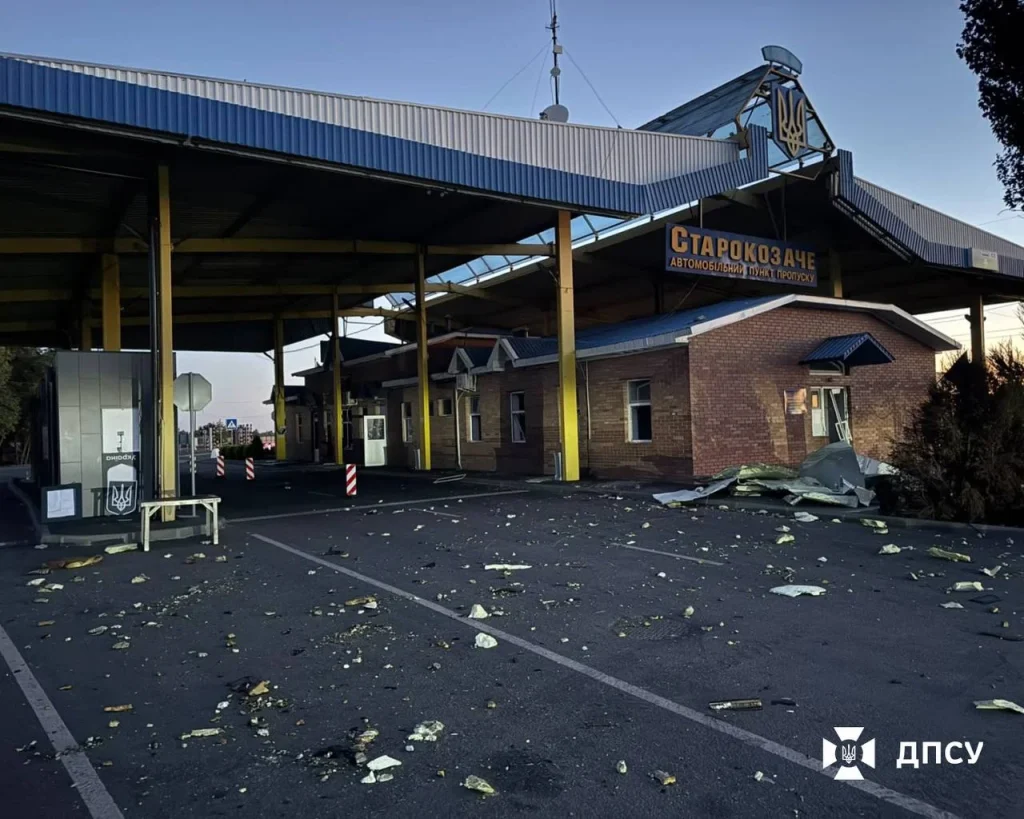
Russian drones have crossed into Moldovan airspace more often in 2026 than at any other time since Russia's full-scale invasion of Ukraine more than four years ago.
Chisinau International Airport has been forced to suspend operations for certain periods of time to protect civil aviation, and Moldovan authorities have admitted that, while they can detect drones, they do not have the capacity to intercept them.
A French radar system purchased with public money and another with European Union assistance sound the alarm, but Moldova does not have the resources for military aircraft or other systems to shoot them down.
Neighboring Romania has F-16 fighter jets, but Moldova cannot benefit from their support because its neutrality blocks such military cooperation.
The national military's Air Operations Service has reported at least 81 instances of Russian drone interference in the past four years. The frequency of such incidents has gradually increased from a few cases in 2022 to more than 40 so far this year . Six missiles have also been detected.
Most were believed to be heading towards targets in Ukraine and diverted into Moldovan airspace.
Debris from downed drones has been found in Moldovan territory, particularly in the districts bordering Ukraine's Odessa region, where Moscow has targeted port facilities and logistics centers . One of them set fire to a vineyard and blew out windows. Another fell 100 yards from a residential building. No casualties have been reported so far.
Moldovan authorities have condemned Russia for violating its airspace, and ministers have reiterated plans for an integrated air defense system.
Unlike Ukraine, which joined the European Drone Wall and Eastern Wing Surveillance, EU initiatives to combat unmanned aerial vehicles (UAVs), Moldova is missing from the equation.
However, Moldova could benefit from the collective EU-Ukraine anti-drone defense, which is now being established as part of the EU’s Eastern Bloc anti-drone effort. But as things stand, it cannot reduce the cost of its own system by taking advantage of the EU’s broader integrated air defense capability.
Moldovan authorities say Russian drones enter their airspace when they try to bypass blockades and other countermeasures over Ukraine. This not only puts Moldovans at risk, but also represents a form of shadow warfare against the country, copying Russian behavior toward NATO neighbors, including Romania and the Baltic states.
Although most drones are now leaving Moldovan airspace, they still pose a risk, Defense Minister Anatolie Nosatîi said. Chisinau summoned Russia's ambassador on October 4 to protest the drone and missile intrusions.
The ambassador, Oleg Ozerov, said he had not been shown evidence that they were Russian. However, a month ago, he acknowledged that some of the drones may have been manufactured in Russia, but denied that Moldova was the “ target ” of the attacks.
After almost five years of war in Ukraine, the Moldovan government is seeking to update the law to address this threat. The ruling Action and Solidarity Party (PAS) has proposed legislation to allow the production of dual-use drones, which can be used for national security along with agricultural and other civilian uses.
Such legislation walks a fine line between Moldova's integration into an export-oriented military industry and its constitutional neutrality.
It also raises questions about Moldova's institutional capacity to implement an effective traceability mechanism to prevent military or dual-use equipment from falling into the wrong hands.
PAS lawmakers say Moldovan drones, if approved for production, will not be destined for Ukraine. The assurance came in response to Russian accusations that Moldova is being “ militarized ” with the help of EU financial aid.
Russian officials, including Foreign Ministry spokeswoman Maria Zakharova , said in October that they are aware of existing drone production in Vadul-lui-Vodă, a town 30 minutes by car from Chisinau.
Her comments came after Russia's Defense Ministry hinted at possible attacks on European factories that produce drones for Ukraine, including facilities in London, Munich, Madrid and Prague.
As Moscow seeks to force Ukraine to capitulate by destroying its energy assets, Moldovan territory is likely to remain at high risk from Russian drones.
The GeoPost
 British Air Force uses drones for first time to monitor Russian naval activity near British coast
 US reacts as China and Russia deepen cooperation in the Arctic
 A Serbia without Vučić, but with the same policy towards Kosovo?
 US sells 500 Patriot missiles to Ukraine, but deliveries not expected to begin until after 2030
 Kallas says Putin's possible return to G20 risks normalizing Russian war crimes
 Zelenskyy in Turkey: Ukraine wants Turkish weapons to be tested against Russia