
Germany is preparing a new security plan, called a "defensive shield", to prevent and neutralize sabotage, cyberattacks and drone threats, at a time when Berlin accuses Russia of intensifying hybrid warfare on European territory.
According to the German newspaper Bild, the plan envisages the creation of a new digital defense network, called "Cyberdome", which will consist of advanced sensors aimed at detecting and thwarting attempts at cyberattacks on critical infrastructure.
German Interior Minister Alexander Dobrindt said that Russian hybrid attacks have become an "everyday reality" and that the threat is expected to grow. However, he stressed that Germany has the means to defend itself and respond to these threats.
Another part of the plan is related to strengthening defenses against drones. The German police are expected to expand their mobile capabilities and create units that can be rapidly deployed in strategic cities such as Berlin, Munich and Hamburg.
These units will be tasked with protecting the airspace over major transportation hubs, including airports and other critical infrastructure, the Telegraph reports.
Germany also intends to make more extensive use of artificial intelligence and facial recognition technology to identify people suspected of involvement in attacks or sabotage.
According to the report, private companies would also be given more opportunities to detect drones and take active defensive measures against them.
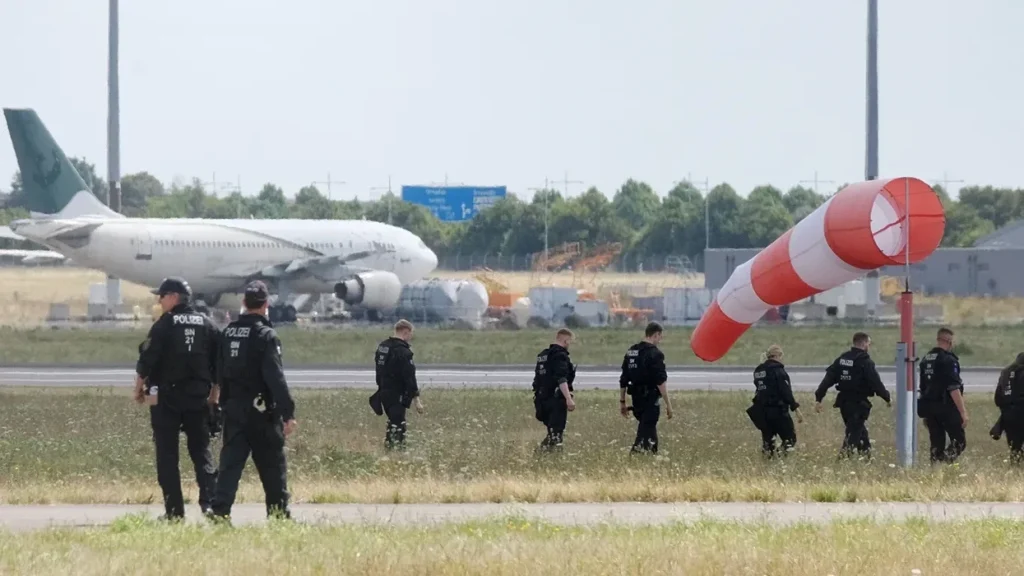
The plan comes after a serious incident at Leipzig/Halle Airport, where a drone equipped with explosives was found on August 4. The airport, one of Germany's major freight hubs, was forced to temporarily close its runways and divert flights.
The German government has officially accused Moscow of the alleged hybrid attack.
Foreign Minister Johann Wadephul said Germany would take action against Russia for its responsibility for the incident. Berlin has also decided to close the Russian consulate general in Bonn until September 18, tighten border controls on Russian citizens and increase pressure on Russia's so-called "ghost fleet."
Moscow has categorically denied the accusations. The Russian ambassador to Berlin, Sergey Nechayev, called the German claims “unfounded and absurd,” warning that Berlin’s measures constitute an unprecedented escalation in Russian-German relations and will not remain without consequences.
Meanwhile, European Commission President Ursula von der Leyen has expressed full solidarity with Germany, saying that the incident in Leipzig involved military-grade materials and, according to her, was carried out by Russian operatives on European Union territory.
Its message was clear: if the aim of the attack was to make Europe think twice before continuing its support for Ukraine, the effect has been the opposite.
With the "Cyberdome," anti-drone defenses, artificial intelligence, and a greater role for private companies, Germany is preparing for a new security reality, where the threat does not necessarily come from a traditional military attack, but from sabotage, cyberattacks, and covert operations in the heart of Europe.
 The two faces of Serbia
  Trump: Putin wants deal to end war in Ukraine
  EU gives green light to 3.2 billion euros for Ukraine's Patriots, new shield against Russian attacks
  Romanian intelligence thwarts suspected sabotage operation coordinated by Russia
  From state and church leaders to the 'Night Wolves': Who was at Ratko Mladic's funeral? (PHOTOS)
 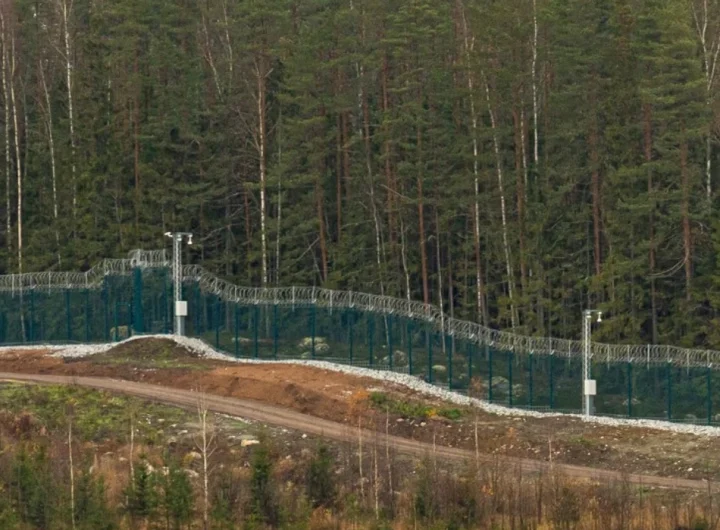 Finland completes 200 kilometers of wall along border with Russia