
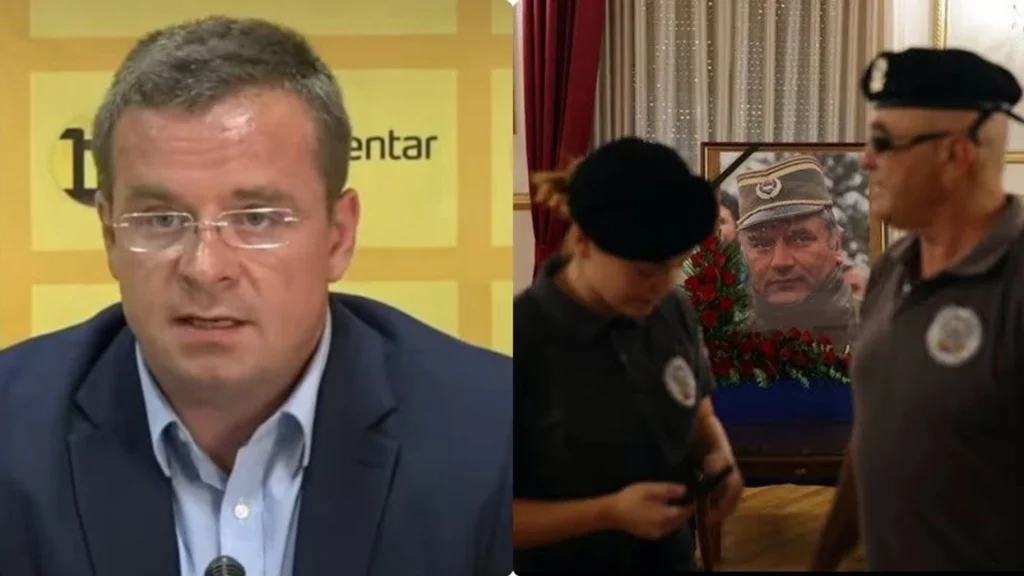
Serbian lawyer Cedomir Stojkovic has leveled harsh accusations at Serbian President Aleksandar Vucic following the memorial ceremony held on September 5 in Belgrade for Ratko Mladic, the former commander of the Army of Republika Srpska, convicted of genocide, crimes against humanity and war crimes.
According to Stojkovic, the ceremony organized at the House of the Serbian Army cannot be presented as a private activity or detached from institutions, as the facility is state-owned and administered by the Ministry of Defense.
"Don't let them fool you - the Ministry of Defense and the Government of Serbia have held a ceremony for Ratko Mladic in the most solemn military building in the center of Belgrade, opposite Republic Square," Stojkovic wrote.
He recalled that the Army House is used for state, military ceremonies and high-level protocol events, arguing that only the choice of this location gives the commemoration a clear institutional character.
At the ceremony, according to Stojkovic, the Serbian government was represented by Justice Minister Nenad Vujic. Also present were the president of the Republika Srpska entity, Sinisa Karan, two ministers from this entity, and former Serbian Prime Minister Nikola Šainović.
For the Serbian lawyer, this is not simply another case of glorifying Mladic, but the "fifth and so far greatest state honor" bestowed upon him.
"The greatest state honor is to have a memorial at the House of the Serbian Army, in the center of Belgrade," Stojkovic declared.
He directly accused the authorities in Belgrade of sending a message diametrically opposed to declarations of European integration and regional reconciliation through such a ceremony.
According to him, there can be no talk of commitment to European values while a person convicted of genocide is honored in one of the most symbolic institutions of the state.
Stojkovic said that such a ceremony, according to his interpretation, means that the Serbian authorities are not distancing themselves from the criminal legacy for which Mladic has been convicted by international justice.
In this context, he also mentioned the genocide in Srebrenica, where more than 8 Bosniak men and boys were killed in July 1995.
But Stojkovic reserved his strongest criticism for Serbian President Aleksandar Vučić.
He accuses Vučić of playing a "double game": in front of European officials he speaks of integration, stability and cooperation with the West, while inside Serbia, according to him, he allows actions that are in direct contradiction to these statements.
According to Stojkovic, Vučić's political formula is for his people to implement controversial decisions, while he himself tries to maintain a public distance and convince Western partners that he is not responsible for them.
"This state ceremony of the Government of the Republic of Serbia for a person convicted of genocide erases any possibility of Serbia's rapprochement with the European Union," Stojkovic declared.
He added that such an event could not have happened without Vučić's knowledge or consent, arguing that in the current political system in Serbia, important government decisions are directly related to the president.
"Even small children and birds on branches know that in an autocratic state every such important government decision is a decision of the autocrat," he wrote.
Stojkovic also made a symbolic parallel with the building where the ceremony was held. The Army House, built in 1931, was historically associated with the strengthening of Yugoslav identity, and, according to him, it is in this space that a figure who was among the main protagonists of the war that destroyed that order is being honored today.
For Stojkovic, this is also evidence of the contradiction of today's Serbian politics: on the one hand, Belgrade seeks to present itself as a candidate for the European Union, while on the other hand, it tolerates and institutionalizes the glorification of figures convicted of the most serious war crimes.
According to him, it is this contradiction that exposes what he calls Aleksandar Vučić's "double game" - one language for Brussels and another policy for the domestic public.
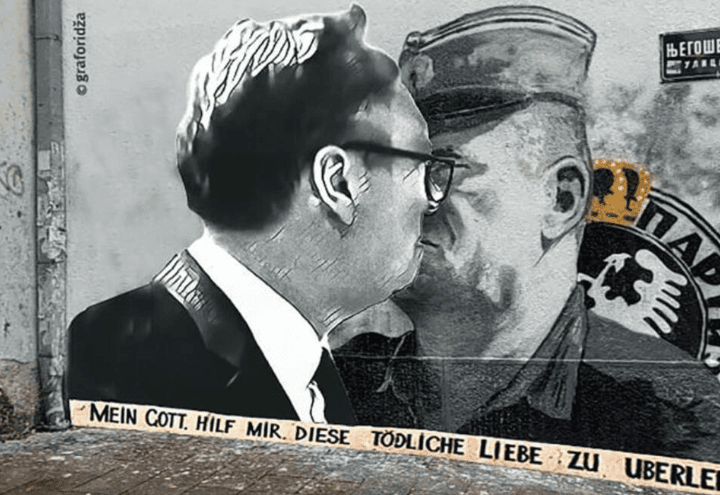 The two faces of Serbia
 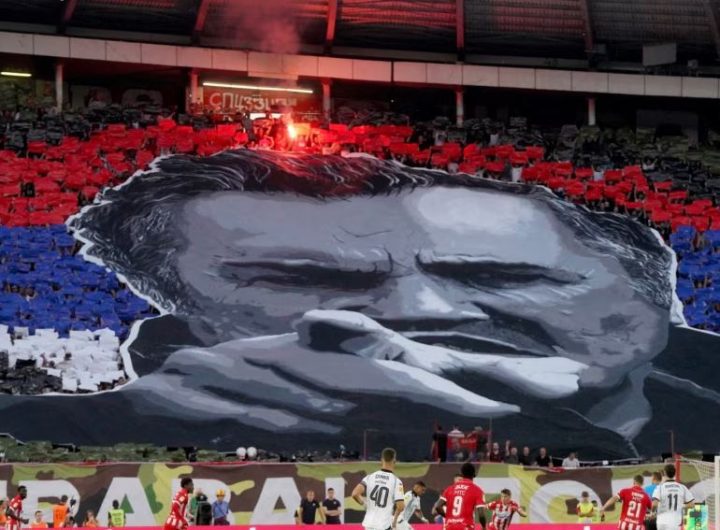 The connections between politics, clubs and fans: Glorifying Mladic without reactions and sanctions
 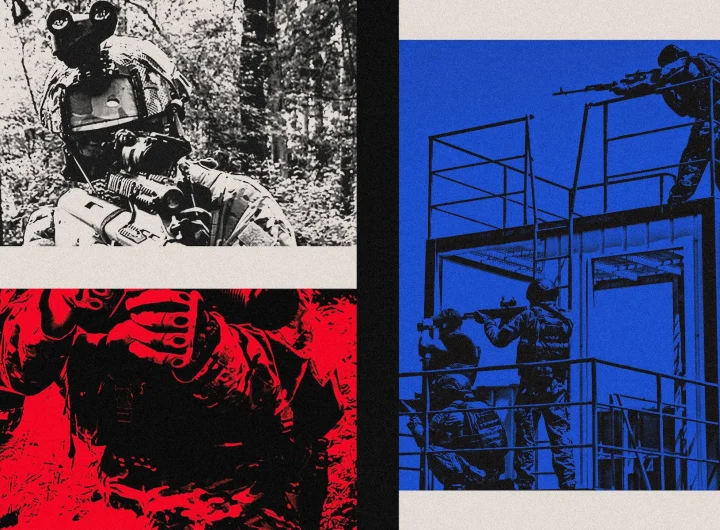 SAS veterans train Russians in camps in Serbia and Bulgaria to fight in Ukraine
 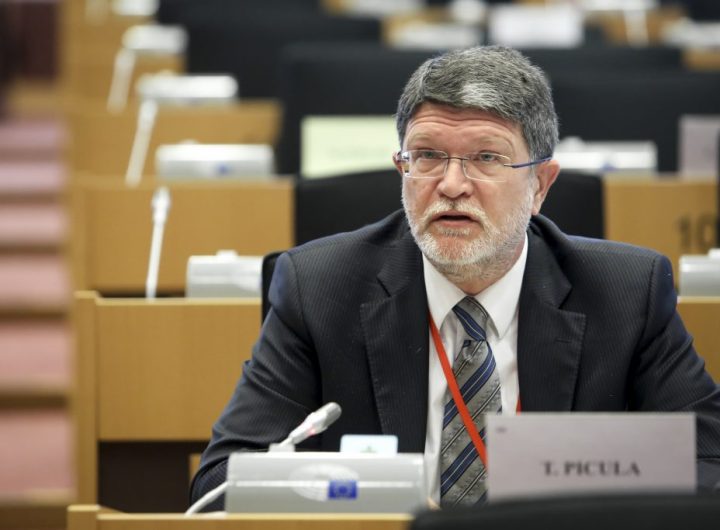 "The time has come for tougher measures": Picula calls for an end to EU tolerance towards Serbia and Vučić
 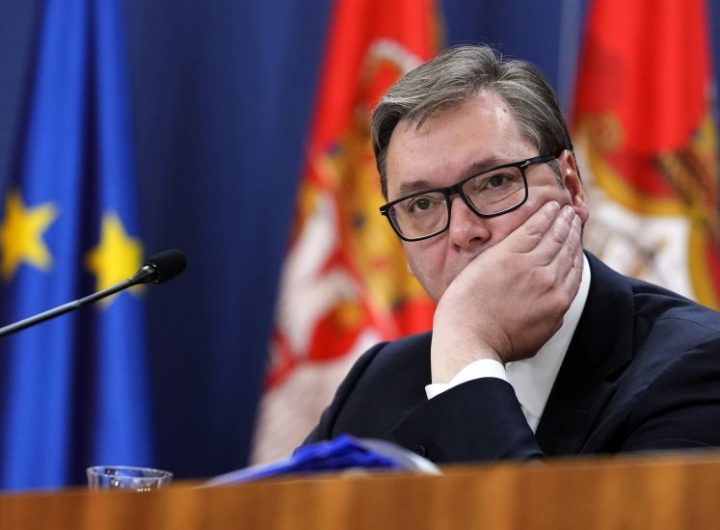 Serbia glorified Mladic, Vucic is victimized after EU reaction
  Serbs from the front in Ukraine with threatening messages for Kosovo (Video)