
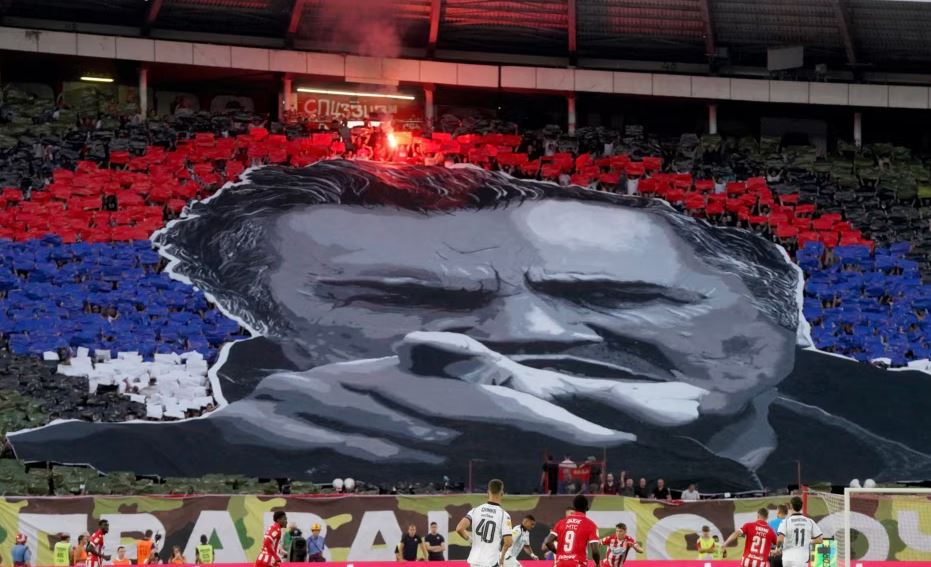
From banners in the stands to chants of his name on the eve of his funeral.
Fans of one of the two biggest football clubs in Serbia continue to glorify the figure of convicted war criminal Ratko Mladic and send threatening messages – without reaction and without sanctions.
They are also being supported by their club, "Crvena Zvezda", which has shared content on social media such as a photo of Mladić with the inscription "Towards Potocari", which appeared on September 6 during a match in Belgrade.
Potocari is linked to the genocide of more than 8.000 Bosniaks in Srebrenica, for which Mladic, among other war crimes in Bosnia and Herzegovina, was sentenced to life imprisonment.
Neither "Crvena Zvezda" nor the Football Federation of Serbia, which has the authority to initiate disciplinary proceedings, responded to Radio Free Europe (RFE/RL)'s questions.
"Behind such messages from fans lies the power in Serbia," says journalist Fillip Shvarm, who deals with the connections between crime, politics and fan groups.
He says that a similar message was sent from Belgrade through the funeral of Ratko Mladic, which was held with state and military honors and in the presence of senior state officials.
The European Football Association (UEFA) has already punished Crvena Zvezda for racist behavior and chanting during a match in the Czech Republic on August 27, the day Mladic died. UEFA did not respond to REL's question about whether it will take further steps.
The European network Football Against Racism (FARE), which the Srebrenica-Potočari Memorial Center has asked to initiate the suspension of the Football Federation of Serbia due to its failure to respond to the incidents, also did not respond to the questions.
Graffiti, torches and cheers
The Telegram channel of "Crvena Zvezda" fans, "Delije Sever", has been filled with photos and videos with messages "in tribute" to Ratko Mladic in recent days.
The photographs show graffiti with Mladic's portrait in various locations in Serbia, while in some of them men hold flaming torches and a banner with the inscription: "General, eternal glory."
On the day of Mladic's funeral in Belgrade, fans released a video in which a group of men chanted the name "Ratko Mladic."
That same day, a photo of a graffiti dedicated to Mladic was published on the official Instagram profile of the "Crvena Zvezda" club, accompanied by an emoji showing a military salute.
The glorification of the convicted war criminal has so far cost Crvena Zvezdas 100.000 euros.
This is the amount of the fine that UEFA imposed on the club for racist behavior and inappropriate chanting during the match that took place on the day of Mladic's death.
During the match in the Czech Republic on August 27, fans of the Belgrade club displayed banners with the inscription "General, great glory and gratitude," while chanting Ratko Mladic's name.
UEFA also banned Crvena Zvezda from selling tickets to its fans for its next away match in a European competition.
Even after this punishment, the club published on its official social media profiles photos of banners glorifying the figure of Mladic.
No reactions in Serbia
Neither the police nor the judiciary reacted to the “Towards Potocari” message at the Belgrade stadium, which the Foreign Minister of Bosnia and Herzegovina described as the “final alarm”, although the law in Serbia provides for sanctions for public approval or denial of the genocide.
The Criminal Code stipulates that crimes must have been proven by a final decision by a court in Serbia or by the permanent International Criminal Court.
Article 387 of the Code does not expressly mention the Hague Tribunal and the International Court of Justice, which have issued decisions regarding the genocide in Srebrenica and the sentencing of Ratko Mladic to life imprisonment.
Even state authorities did not distance themselves from the actions of the fans and their club.
The only person who, according to media reports, left the stadium during the tribute to Mladic was the president of the Partizan club and former minister in the Serbian government, Rasim Lajic. He did not respond to REL's calls.
Describing the messages in support of Mladic as shameful, the editor of the weekly "Vreme", Filip Shvarm, recalls that representatives of the government also paid tribute to Mladic at the funeral.
He also points out the strong ties between the government and football clubs.
"Through various forms of financing football clubs, especially 'Crvena Zvezda', the regime creates a kind of informal support army from among the fans, who are known for violence and hooliganism," he says.
According to Shvarm, the government also uses such messages to attract right-wing voters.
"The regime has not declared itself against these messages, which means it stands behind them," says Shvarm.
The ruling Serbian Progressive Party did not respond to REL's request for comment regarding the messages from the stands.
Far-right fan incidents
Recent years have seen several incidents in which fans of football clubs have spread hate messages.
In 2023, Crvena Zvezda fans displayed banners in honor of the three killed members of the armed group that attacked the Kosovo Police in Banjska on September 24.
Their banner with the message "Glory to the heroes of Banjska" then appeared in dozens of cities in Serbia.
"When the army returns to Kosovo" was another message from this club's fans in 2023.
They displayed the banner with this message during a friendly match with Italian club Fiorentina in July of that year in Belgrade.
The Serbian army and police withdrew from Kosovo after the 1999 war, and Kosovo declared independence about a decade later. Serbia continues to not recognize it.
The connections between the state, clubs and fans
Although football clubs in Serbia are sports associations in which the state has no formal ownership, they are also financed through the Football Federation.
REL had previously found that during 2026 the Football Federation of Serbia had received more than six million euros from budget reserves.
In its response to REL, the Federation said that the money, among other things, was intended to assist clubs, at their request.
The federation did not specify which clubs had benefited from this assistance, while it described the criticisms of some in the public opinion that the government in Serbia, through financing, ensures their loyalty as "unfounded".
The issue of connections between politics and fans came back into sharp focus in 2021, when Velko Bellivuk, former leader of the Partizan fans' group, "Principi", was arrested and accused of being the leader of an organized criminal group.
Some opposition members claimed that members of Belivuk's group had on two occasions been part of the personal security of Serbian President Aleksandar Vučić. Authorities denied these claims.
The connections between the stands and politics in Serbia stretch back to the 90s.
Zeljko Raznatović Arkan was the leader of the Red Star fans, known as the “Delije” in the late 80s. A few years later, members of these groups formed the core of the Serbian Volunteer Guard, his paramilitary formation that participated in the wars in Croatia and Bosnia and Herzegovina.
The Serbian Volunteer Guard had its barracks at that time in a Yugoslav People's Army military facility in Erdut, Croatia.
Even in the late 90s, the democratic opposition established ties with fan representatives, who also played a role in the October 5 protests and the overthrow of Slobodan Milosevic's regime.
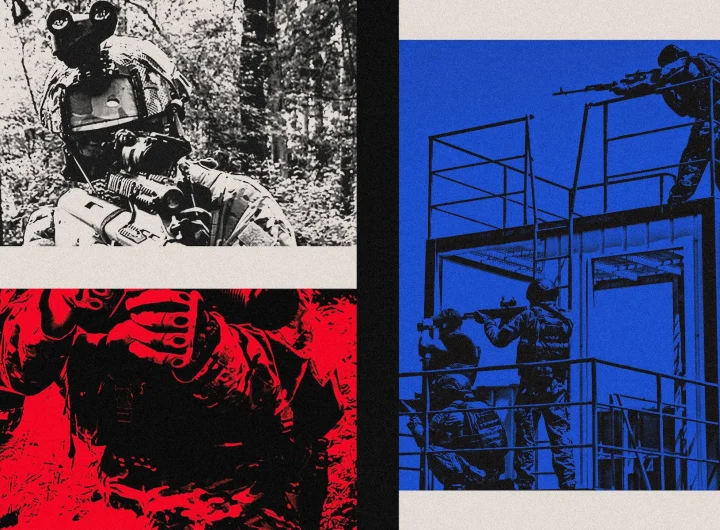 SAS veterans train Russians in camps in Serbia and Bulgaria to fight in Ukraine
 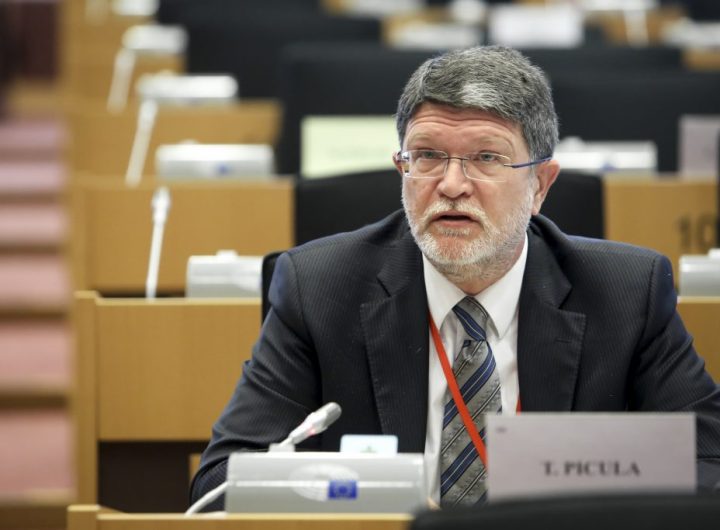 "The time has come for tougher measures": Picula calls for an end to EU tolerance towards Serbia and Vučić
 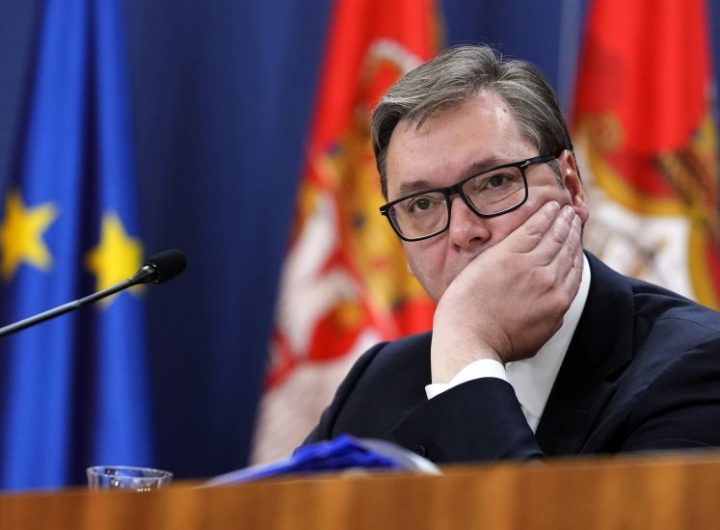 Serbia glorified Mladic, Vucic is victimized after EU reaction
  Serbs from the front in Ukraine with threatening messages for Kosovo (Video)
  Alarm from former US ambassador: The West must urgently change its strategy towards Serbia
 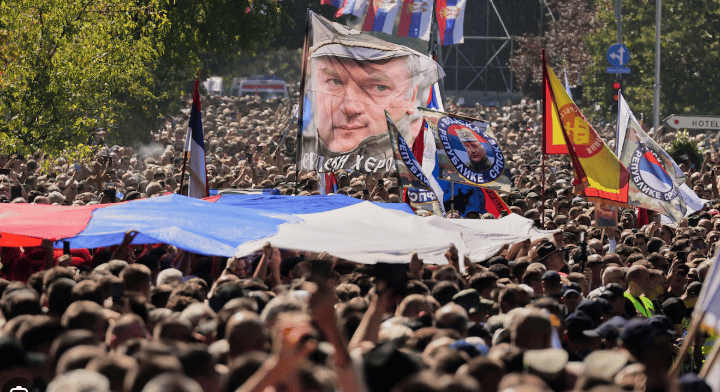 "Time for Serbia to face the consequences": Brussels changes tone after Mladic's funeral