
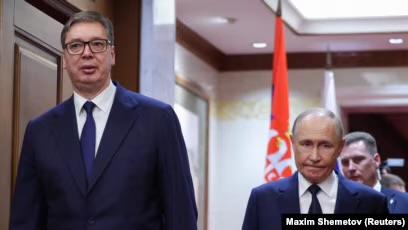
Voters in Serbia have dealt a blow to Moscow, while rising tensions with Kiev have raised questions ahead of an expected resumption of trilateral talks to end the war in Ukraine. Prospects for progress are deeply clouded by doubts about the Kremlin's intentions and differences over key issues, including territory in the Donbas.
Here are some of the main events in Russia over the past week and the conclusions for the period ahead.
'It takes two to tango'
Russia has few, if any, real allies abroad, and the year 2026 brought the downfall of two leaders who were the closest allies that President Vladimir Putin had in Europe, at least in western Belarus.
In April, Prime Minister Viktor Orban's party was ousted from power in Hungary, ending the long dominance of the authoritarian leader who told Putin last year: "I am at your service."
This week, it was the turn of another long-time but increasingly vulnerable hardliner: the party of former Serbian President Aleksandar Vučić has convincingly lost the momentum it gained during two years of student-led protests that shook another Moscow stronghold in the heart of Europe.
“This has not been Putin’s best year,” Ruth Deyermond, a Russia expert at King’s College London, wrote on X Network shortly after Vucic conceded defeat and accused his opponents of “simply doing the dirty work that someone else concocted to overthrow a sovereign state.”
Putin’s spokesman, Dmitry Peskov, softened the blow with a direct approach, saying the Kremlin hopes that “these new political forces will understand that cooperation with Russia is in Serbia’s interest.” In other words, when it comes to imposing sanctions on Moscow, stick to the existing policy: Don’t go down that path.
Russia, as Peskov said, "will continue to do everything it can to encourage the development of relations with Belgrade. But, as you know, it takes two to tango."
Putin may hope that Serbia will remain among Russia's partners in the dance, with some changes in steps.
“The student movement in Serbia is ideologically diverse: pro-Western, pro-Russian, and neutral voices coexist. What united them was the demand for the restoration of the rule of law,” Ivana Stradner, a researcher at the US-based Foundation for Defense of Democracies, wrote in X. “By focusing on democracy rather than foreign policy, they avoided Vučić’s strategy of using geopolitics to polarize society.”
Serbia and sanctions
The new government, once formed, is not expected to immediately change Serbia's policy on sanctions against Russia. However, in an interview with Radio Free Europe on October 27, one of the leading candidates for the Student List, Ilija Srdanović, said that the country's stance on the issue could be reconsidered through a public debate.
The Kremlin will presumably seek to preserve what Stradner called Russia's structural influence.
“Energy dependence gives Moscow an opportunity for political blackmail, while its deep-rooted ties to the Serbian intelligence and security apparatus present another challenge,” she wrote in X.
Still, the focus on the rule of law and democracy should raise alarms in Moscow. Not to mention the rise of a student-led movement through peaceful protests and free elections – precisely the kind of development that has fed the Kremlin’s fears for a quarter of a century and prompted an increasingly harsh crackdown on free speech, civil society and all forms of dissent in Russia.
Another thing that hasn't gone as Putin perhaps hoped this year is the ground war in eastern Ukraine, where small Russian advances have come at a high cost, and a sudden Ukrainian counterattack has placed new obstacles in the way of one of his main goals: capturing the part of Donbas that Russian forces have so far failed to conquer.
Does this mean that Russia is ready to make concessions to Ukraine, while the US-brokered trilateral talks – suspended since the start of the US-Israeli war against Iran in late February – will resume next month?
The short answer from many analysts: no.
“Officials in regular contact” with Putin say he “increasingly believes that military escalation and increased airstrikes will force Kiev to make concessions in the coming months,” Farida Rustamova and Howard Amos wrote in the Vlast newsletter on October 23. “They do not think Putin intends to agree to any compromise in the ongoing peace talks brokered by Washington.”
Under pressure
This raises another question: will Kiev accept compromises?
In recent weeks, a series of events have raised concerns in Ukraine and Europe that US President Donald Trump is determined to force him to do so.
On October 10, Trump accused President Volodymyr Zelensky of missing several opportunities for a peace deal and said Ukraine needed to “find a new leader.” He also said Zelensky “had better stop” Ukraine’s attacks on Russian oil refineries.
The day before, Trump announced that he had reached a deal with Putin to supply Russian oil to the United States and other world markets. And on October 17, the US president made exemptions from tough new sanctions on Russia just before they were due to take effect.
Tensions have been further escalated by instances in which Ukraine claimed it had not received early warning information from the US about Russian air strikes, as well as a period of uncertainty in which Kiev reported that Elon Musk's SpaceX's Starshield satellite communications system, on which it relies heavily for frontline logistics and drone defense, was operating at limited speed for the Ukrainian military.
The events represented the biggest clash between Washington and Kiev since February 2025, when Trump and Vice President JD Vance criticized Zelensky in the Oval Office of the White House.
With early warnings and Starshield's speed seemingly back to normal, attention is shifting to the expected November talks, which could be held in Abu Dhabi. Plans for this round stem from talks by Trump envoy Steve Witkoff with Putin in Moscow and a meeting in Oslo involving Zelensky, Witkoff, Norwegian Prime Minister Jonas Gahr Store and Finnish President Alexander Stubb.
No date has been set. So far, there is little sign of progress, even if a local ceasefire — brokered in part by U.S. First Lady Melania Trump and Pope Leo, aimed at delivering humanitarian aid and allowing residents to leave the starving town of Oleshki in southern Ukraine — succeeds.
“Russia is serious about escalation, not peace talks,” Rustamova and Amos write.
Tatyana Stanovaya, a senior fellow at the Carnegie Center for Russia and Eurasia, put it this way: “Moscow sees little room for substantial progress toward its goals at this point, but sees the trilateral talks as a way to prepare the ground for a final settlement on its own terms.”
Analyst and author Mark Galeotti (Galeotti) seemed a little more optimistic, saying in his podcast on October 25 that “the way the peace process is unfolding shows some promise.”
'Embedded' in Donbas
The leaked information, he said, suggests that the ideas now being considered are “a departure from the original plan, which was clearly very, very pro-Russian,” and aim for a solution that would give Ukraine the security guarantees it needs, but at the same time be attractive enough for Russia to stop the fighting.
It is also encouraging, he added, that “there are more indications that the Europeans are involved” in the whole process. Stubb and Stere spoke with Putin on October 27 – although the Kremlin’s statement was lukewarm, and The Financial Times reported that Putin spent much of the 90-minute conversation delivering one of the deeply controversial history lessons he often uses to shift blame for Russia’s war in Ukraine onto others.
With “many caveats,” Galeotti said, “one major obstacle remains” – a part of the Donetsk region that Russian forces have failed to capture during years of bloody and destructive fighting.
Darkness over Donbas: Nighttime satellite images document Ukraine's depopulation
Putin and other Russian officials have repeatedly said that Ukraine must surrender it, in battle or otherwise, but Zelensky and the vast majority of Ukrainians see no reason to surrender the country that their soldiers defended and died for.
“For now, both sides seem to be set” in their positions on Donbas, Galeotti said, adding that in any case, “I certainly don’t think we’ll have peace before spring… If anything, Putin will think, ‘Let’s have another winter destroying the Ukrainians.’”
Ukrainian officials claim the relentless Russian attacks are terrorism. In an October 26 report, the UN Independent International Commission of Inquiry on Ukraine said Russian authorities committed war crimes and crimes against humanity by attacking civilians and critical energy infrastructure, among other violations of international law.
A Russian drone struck the main railway station in Dnipro on October 29, killing at least 14 people and wounding several others, Ukrainian officials said. Zelensky said “just and decisive action is needed from America and Europe against Russian escalation.”
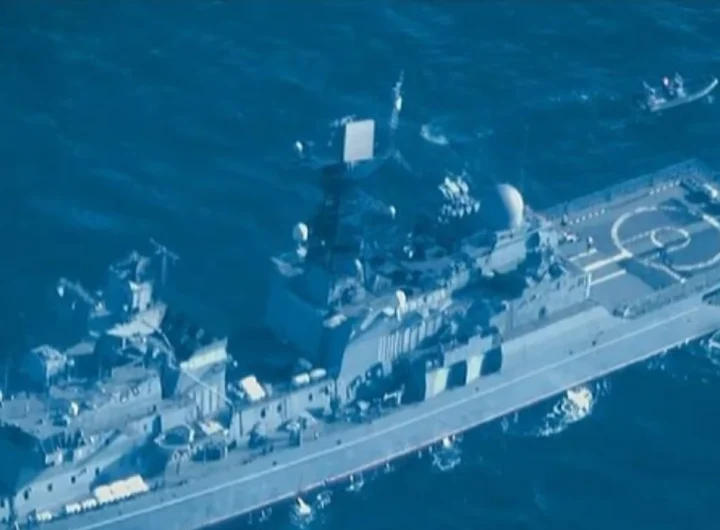 British Air Force uses drones for first time to monitor Russian naval activity near British coast
 Zelensky: Ukraine liberated more territory than it lost in October, Russia suffered over 54 thousand losses
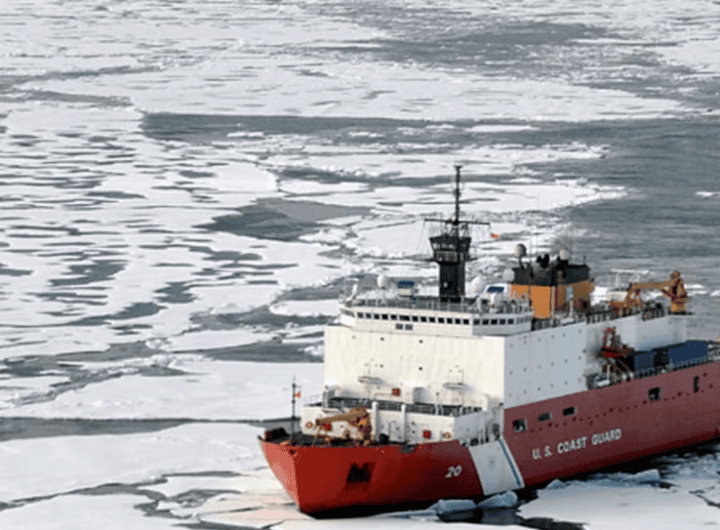 US reacts as China and Russia deepen cooperation in the Arctic
 A Serbia without Vučić, but with the same policy towards Kosovo?
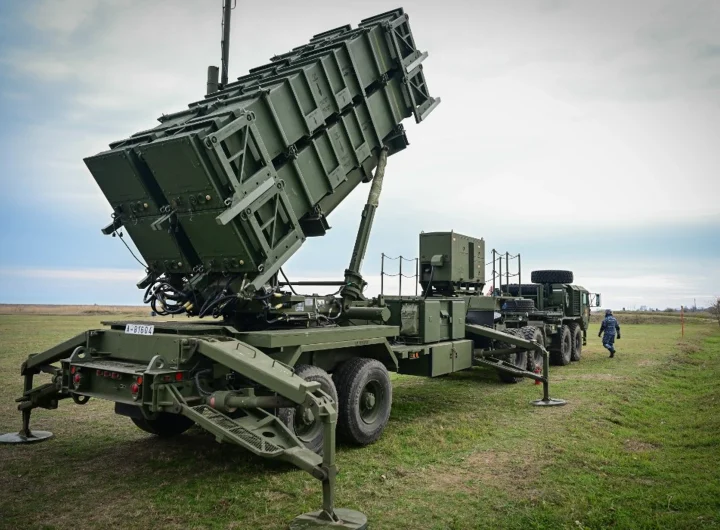 US sells 500 Patriot missiles to Ukraine, but deliveries not expected to begin until after 2030
 Kallas says Putin's possible return to G20 risks normalizing Russian war crimes