

The United States announced that it has made the largest deployment of US troops to the Middle East in a generation, as part of Operation Epic Fury, which targets Iran.
Over 50.000 military troops, 200 fighter jets, two aircraft carriers and a host of long-range bombers were said to be involved in the war against Iran.
The war began in coordination with Israel on February 28, and as a result, Iran's top leaders were killed and its military infrastructure was severely damaged.
In retaliation, Iran launched drones and ballistic missiles at Israel and US military bases in the Persian Gulf, including Bahrain, Kuwait, Saudi Arabia, the United Arab Emirates and Oman. In some of these countries, US embassies have been closed until further notice.
However, the United States has made it clear that it will not stop until its objectives are achieved. The White House has come out with a clear stance. Through this war, it aims to:
To destroy the Iranian regime's missiles;
Completely destroy the Iranian navy;
To make it impossible for Iranian terrorist offshoots to destabilize the world;
To prevent Iran from possessing nuclear weapons;
Simply put, the goals relate to Iran's future military capabilities and political leadership.
What has happened so far?
The short-term indicator of the success of the American operation will be how quickly the intensity of Iran's attacks decreases, said former US ambassador in charge of counterterrorism, Nathan Sales, in an interview with Radio Free Europe.
The Chief of Staff of the US Army, General Dan Caine, claimed on Wednesday that the number of ballistic missiles launched by Iran since the start of the war has decreased significantly - 86 percent, while the intensity of drone attacks has decreased by 73 percent compared to the initial days.
Regime change
When US President Donald Trump launched the military campaign, he addressed the Iranian people with these words:
"When we're done, take over your government. It will be yours. This may be your only chance in generations."
Iran's Supreme Leader, Ali Khamenei, and dozens of other political and military figures were killed on the first day of the war. Trump warned on February 4 that anyone who aspires to high office "will end up dead."
The clerical leadership has been at the helm of Iran since the 1979 Islamic Revolution, which toppled the US-backed monarchy of Shah Mohammad Reza Pahlavi.
The Iranian regime has been criticized over the years for having stained its hands with the blood of its own people, as in several anti-government protests, the government has used an iron fist, leaving dozens of people dead.
Retired American General Jack Keane, once the deputy chief of staff of the US Army, said in an interview with Radio Free Europe that the US wants the Iranian people to own and govern their own country.
“For the public to understand: usually, when authoritarian regimes fall, they are replaced by another authoritarian regime – perhaps less ideological, which could happen here too – perhaps more nationalist, but a regime that can be worked with and that can be directed towards a transition process, towards elections and democracy. This does not happen immediately. It is not happening immediately in Venezuela either – although that is another case – but it serves as a useful illustration.”
Who can lead Iran?
For the first time in 36 years, the so-called Assembly of Experts is set to convene to elect Iran's next supreme leader.
At the top of the list appears to be Mojtaba Khamenei, the son of Ali Khamenei, although he has never held an official government position.
Also on the list is Ayatollah Alireza Arafi, the 67-year-old who is considered "the typical man of the system," as well as Hassan Khomeini, the grandson of the founder of the Islamic Republic, a moderate cleric with close ties to the reformist camp.
Beyond Iran, the name most often mentioned is that of Reza Pahlavi, the son of the last shah, who has been living in exile for years.
Recently, the US president expressed skepticism about whether he could lead Iran in the future, but he did not mention any other potential leaders.
Trump acknowledged that "some people love" Pahlavi inside Iran, but that the administration has not given much thought to it.
Pahlavi, 65, on the other hand, claims to be the ideal figure to lead a government in transition, and is willing to return to Iran as soon as possible, for the first time in 47 years.
US officials have repeatedly stated that the war against Iran will not be endless, and could last at least four weeks. According to them, this operation is almost the only chance to reshape the Middle East.
The Geopost
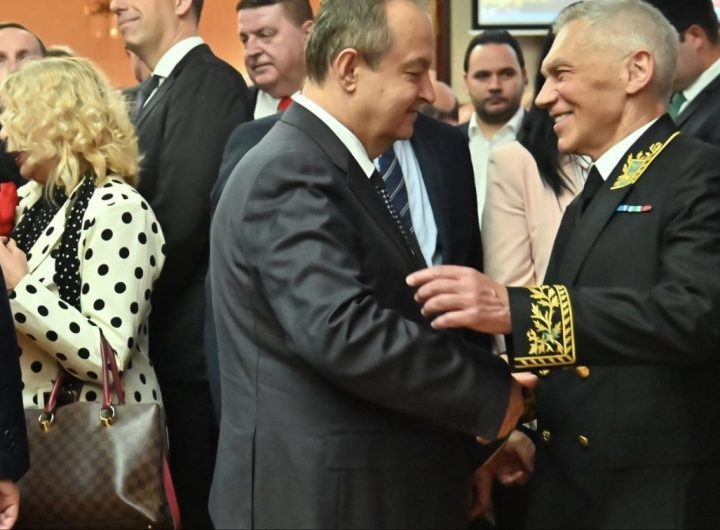 'Russia Day' in Belgrade: Exposing Deep Ties to the Kremlin
  Council of Europe Commissioner expresses concern over handling of police violence case in Serbia
  United Kingdom updates travel advice for northern Kosovo
  Serbian arms dealer's firm earns millions under Vucic's rule despite US sanctions
 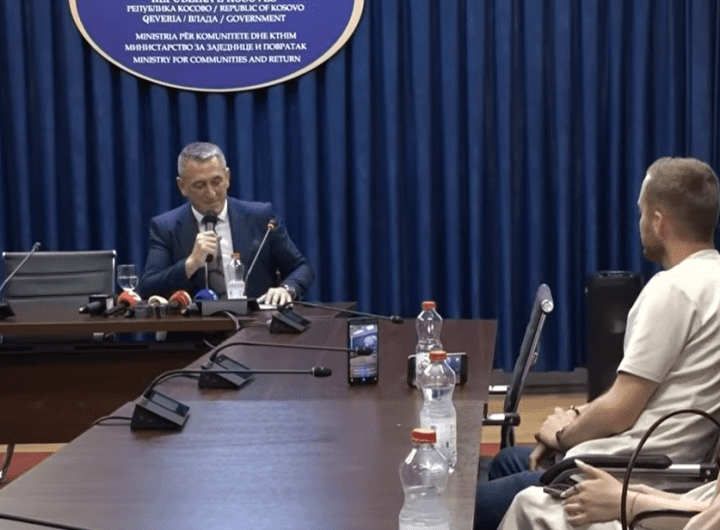 Rašić: Pressures continue even after the elections, my son was stopped at the border by the Serbian BIA
 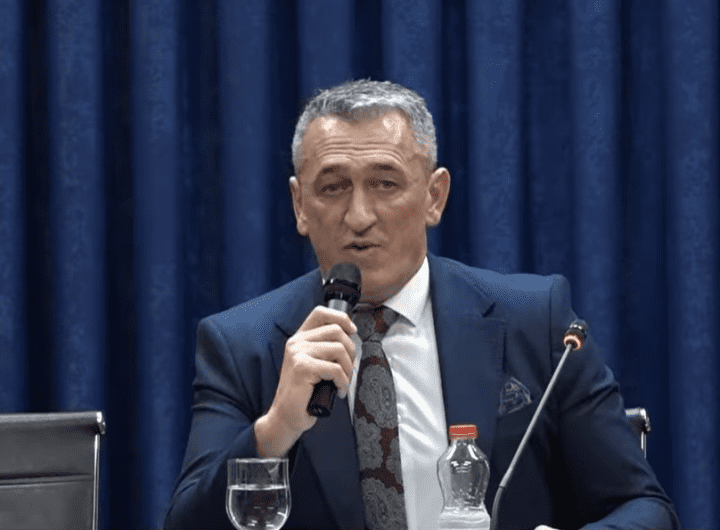 Rašić raises accusations of "electoral engineering" and pressure from Belgrade in the elections in Kosovo