

After Russia invaded Ukraine last February, the European Union moved to block RT and Sputnik, two of the Kremlin's main channels for spreading propaganda and disinformation about the war.
Nearly six months later, the number of sites pushing the same content has exploded as Russia found ways to circumvent the ban. They have renamed their work to disguise it. They have shifted some propaganda duties to diplomats. And they have moved much of the content to new websites — ones that until now had no apparent connection to Russia.
NewsGuard, a New York-based firm that studies and tracks online disinformation, has now identified 250 websites actively spreading Russian disinformation about the war, with dozens of new ones added in recent months.
The claims on these pages include claims that the Ukrainian military has orchestrated several deadly Russian attacks to garner global support, that Ukrainian President Volodymyr Zelensky is falsifying public appearances, or that Ukrainian refugees are committing crimes in Germany and Poland.
Some of the sites pose as independent think tanks or media outlets. About half are in English, while others are in French, German or Italian. Many were created long before the war and had no apparent connection to the Russian government until they suddenly began parroting Kremlin talking points.
“They could be creating sleeper pages,” said NewsGuard co-CEO Gordon Crovitz. Sleeper pages are websites created for a disinformation campaign that lie mostly dormant, slowly building an audience through innocuous or unrelated posts, and then switch to propaganda or disinformation at a certain time.
While NewsGuard's analysis found that most disinformation about the war in Ukraine comes from Russia, it did find instances of false claims with a pro-Ukrainian slant. They included claims about a fighter known as the Ghost of Kiev that officials later admitted was a myth.
YouTube, TikTok and Meta, which owns Facebook and Instagram, all pledged to remove RT and Sputnik from their platforms within the European Union. But researchers have found that in some cases, to avoid the ban, all Russia had to do was post it from another account.
The Disinformation Situation Center, a coalition of disinformation researchers based in Europe, found that some RT video content was appearing on social media with a new brand name and logo. In the case of some videos, the RT brand was simply removed from the video and reposted on a new YouTube channel that is not covered by the EU ban.
More aggressive moderation of social media content could make it harder for Russia to circumvent the ban, according to Felix Kartte, a senior advisor at Reset, a UK-based nonprofit that has funded the work of the Disinformation Situation Center and is critical of the role of social media in democratic discourse.
“Instead of putting in place effective content moderation systems, they are playing into the Kremlin’s disinformation apparatus,” Kartte said.
YouTube's parent company did not immediately respond to questions seeking comment about the ban.
In the EU, officials are trying to strengthen their protections. This spring, the EU passed legislation that would require technology companies to do more to root out misinformation. Companies that fail could face large fines.
European Commission Vice-President Vera Jourova last month called disinformation “a growing problem in the EU, and we really need to take stronger measures.”
The proliferation of sites spreading disinformation about the war in Ukraine suggests that Russia had a plan in place in case governments or tech companies tried to restrict RT and Sputnik. This means that Western leaders and tech companies will have to do more than shut down one or two websites if they hope to stem the flow of Kremlin disinformation.
"The Russians are much smarter," said NewsGuard's other co-CEO, Steven Brill. /VOA
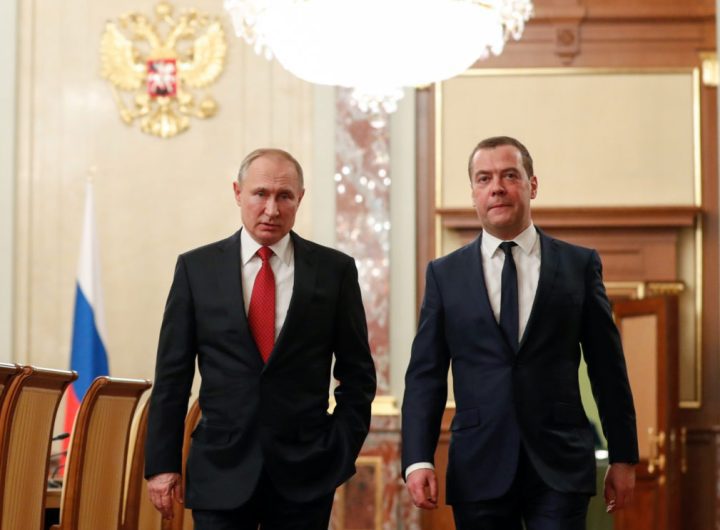 Kosovo again in Moscow's propaganda - Medvedev mentions Kosovo's recognition and threatens the West with "consequences"
 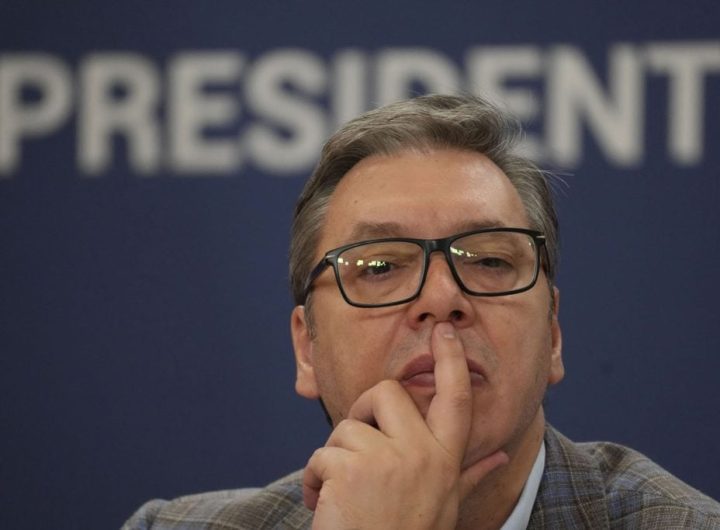 The elections that scare Vučić: Promises to voters, destabilizing scenarios behind the ballot boxes
  RUSSIAN OCCUPATION WITHOUT ANY SOLDIERS: How did Serbia become a training ground for Putin's hybrid operations?
 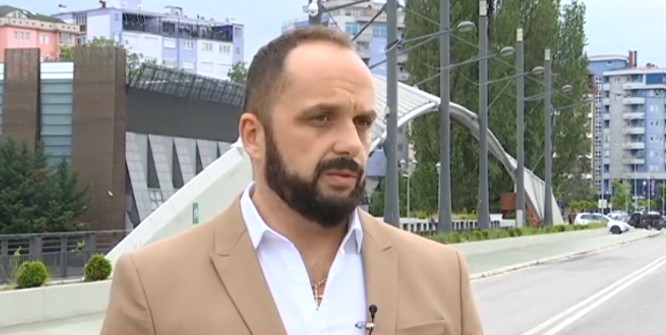 The Mayor of North Mitrovica is disinforming: He presents the improvement of security at the Ibar Bridge as "repression" against Serbs
  When propaganda clones the truth: How the Balkans is becoming the new battlefield of disinformation
  Serbia's failed espionage efforts in Kosovo