

Aleksandar Vučić's decision to call early parliamentary elections on October 18 or 25 plunges Serbia into a political period that could be among the most tense in recent years.
For the first time after a decade and a half of his almost unchallenged dominance of power, Vučić faces an opponent that is not a traditional opposition party, but a movement born of student protests and public anger.
This is precisely why the elections are not expected to be just a showdown over the number of seats in parliament. They could turn into a political referendum on Vučić himself and the model of power he has built in Serbia.
If the polls showing a close race between the Serbian Progressive Party and the Student List truly reflect the situation on the ground, then a loss or even a result that would seriously weaken Vučić's power could create an unpredictable situation.
When power begins to see defeat as an existential threat
The main problem is not only whether Vučić can lose the election, but what might happen if he becomes convinced that defeat is possible.
During his years in power, Vučić has built a centralized political system, where control over institutions, the state apparatus, the media, and local structures has become one of the main pillars of his governance.
An electoral defeat, therefore, would not simply be a change of power. It could pave the way for investigations into the manner of governance, suspected affairs, misuse of institutions, and political responsibility for events that have shaken Serbia.
In such a situation, the fear of losing can push the government not to treat the opponent as a normal political rival, but as a threat to its own political survival.
This is where the risk of crisis begins.
Scenario One: Campaign of Fear and Production of the Internal Enemy
One of the most likely scenarios is the intensification of the narrative that Serbia is under attack by external factors and that student protests or the opposition are instruments of foreign forces.
This language is already familiar in Serbian politics. Any mass protest can be presented as an attempt at destabilization, while any outcome unfavorable to the government can be accompanied by accusations of foreign interference.
It is no coincidence that the Russian ambassador to Belgrade, Aleksandar Botsan-Kharchenko, has issued a warning about a so-called "color revolution" after the elections.
Such a narrative serves the government in two ways. First, it mobilizes the electorate through fear. Second, it creates a political justification in advance for the tensions that may follow the elections.
In this way, the electoral battle can shift from the issue of who won the votes to the question of who is "attacking the state."
Second scenario: Contestation of the result and institutional crisis
If the result is very close, another scenario could be to contest the electoral process.
In Serbia, there is a risk that the elections will produce two parallel political realities. That is, one side will declare victory through official institutions, while the other side will contest the legitimacy of the result on the streets.
If the opposition or the student movement alleges manipulation, mass protests could erupt. But even if the government's result is weaker than expected, Vučić's structures could try to portray any post-election public pressure as an attempt to overthrow the constitutional order.
This would create a dangerous cycle of clashes: elections, accusations of manipulation, protests, counter-protests, police intervention, and deepening political crisis.
In a polarized country, a single incident is enough to escalate the situation.
Scenario Three: Provocations and Tensions Beyond Serbia's Borders
For Kosovo and the region, the greatest concern is related to the possibility that the internal political crisis in Serbia will produce tensions beyond its borders.
The history of the Balkans has shown that political leaders, when faced with great internal pressure, sometimes seek to shift attention towards national issues and external conflicts.
Kosovo, Bosnia and Herzegovina and relations with the West could return to the center of nationalist discourse. Increased rhetoric about Serbs in Kosovo, provocations in the north or the production of political and security incidents could serve to mobilize Serbian public opinion.
This does not necessarily mean that Vučić will opt for an open escalation. But even a limited crisis could produce domestic political effects, especially if the government wants to create the feeling that Serbia needs “stability” and a strong leader.
Precisely for this reason, developments in Serbia are not an isolated issue.
Scenario Four: Vučić as the man who creates the crisis and then offers himself as the solution
The most favorable political model for Vučić in the event of a decline in support may be to recreate his image as the sole guarantor of stability.
The logic is simple – the bigger the crisis seems, the stronger the leader who promises to control it can appear.
In this context, political tensions, protests, warnings of destabilization, and threats from abroad can serve to create an atmosphere where citizens no longer vote solely for political programs, but for fear of what might happen if power changes.
This is a mechanism often used by authoritarian-leaning regimes. The opponent is presented as a threat, change as chaos, and the current leader as the only guarantee against the breakdown of order.
Russia, the West and the Battle for Serbia
The Serbian elections have a dimension that goes beyond Belgrade.
Russia has an interest in maintaining its influence in Serbia, while the European Union and the United States do not want Serbia to become a new point of instability in the Balkans.
Vučić has survived politically by balancing these powers. He has maintained traditional relations with Moscow while cooperating with the West and keeping Serbia in the process of European integration.
But a change of power could alter this balance.
This is precisely what makes the election outcome important for Moscow, Brussels, and Washington. And it is precisely what creates space for Serbia to become the arena of a broader political and geopolitical war.
The elections may be just the beginning
The biggest danger for Serbia is not election day. The danger is what might happen after it.
If Vučić wins convincingly, he will try to present the result as a complete restoration of legitimacy. If the result is close, Serbia could enter a long period of contestation and protests. If the government loses or risks losing control, then much more dangerous scenarios could open up.
Fear of political defeat can produce institutional crisis. Institutional crisis can produce tensions in the streets. Internal tensions can turn into nationalism and the search for an external conflict.
This is why the October elections could be the most important moment for Serbia since Aleksandar Vučić came to power.
The question is not only whether Vučić can lose.
The most important question is whether he is willing to admit defeat – or whether, to avoid being removed from power, Serbia might deliberately plunge into a crisis from which no one knows how it will emerge.
The Geo Post
 Palmer warns of Russian influence in the Balkans: Delaying EU and NATO integration leaves the region vulnerable
  Margetić: Aleksandar Vučić killed civilians during the siege of Sarajevo
  From "Politika" to pro-Russian propaganda, Stojkovic: How Vučić took control of the media and oriented Serbia towards the Kremlin
  Slovenia on alert over Russian influence: President faces accusations of ties to Russia
 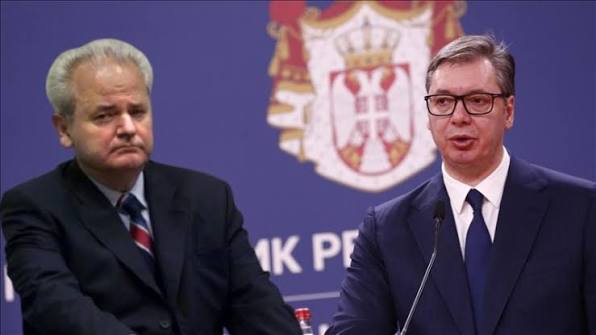 From Milosevic's propaganda to Vučić's politics: Is the same scenario returning?
 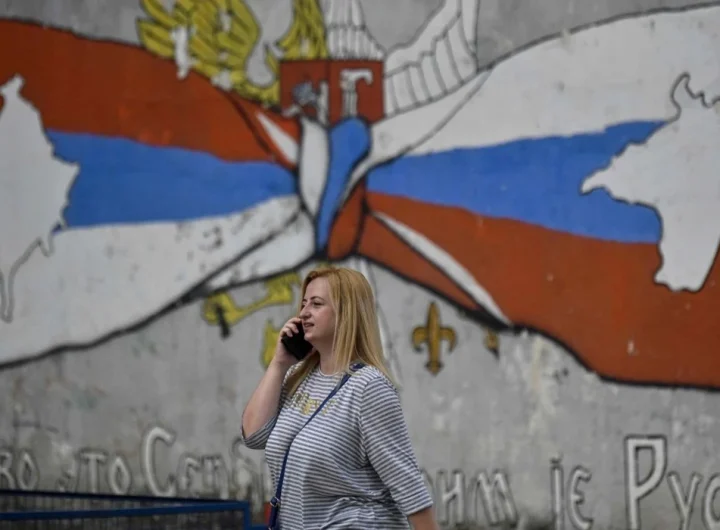 Serbia and Russia increase propaganda for Kosovo, experts: The goal is control over the Serbian community