

Russian President Vladimir Putin issued a little-publicized decree last month requiring many foreign men seeking permanent residency or Russian citizenship to sign a contract with the military, amid Moscow's war against Ukraine, a Radio Free Europe (RFE/RL) investigation has found.
State and private media in Russia have made almost no mention of this condition, which is highly unusual in international practice, since Putin signed Decree No. 821 on November 5.
However, the new measure is already forcing migrants who have built their lives in Russia to choose between joining the army and leaving the country, according to findings by Systema, REL's Russian research unit, and Azattyq Asia, its Russian-language unit covering Central Asia.
Akif, a 48-year-old who came to Russia from Azerbaijan four years ago, learned about the condition when he recently visited a Federal Migration Service office to ask what documents he needed for permanent residence, his wife, Maria, told REL. She spoke on condition of anonymity.
“We are at a crossroads”
Akif and Maria, who is a Russian citizen, married three years ago and have built a family farm in the Nizhny Novgorod region, where they keep sheep, goats and rabbits. Akif had met the other requirements, passing a Russian language test and obtaining a temporary residence permit.
But the couple has decided to leave the country, abandoning Akif's plan to seek permanent residency. "We don't know what to do. We're at a crossroads," Maria said.
The permanent residence permit gives migrants legal stability: they can leave and re-enter Russia without additional visas and work without the need for a special work permit. For many migrants from former Soviet republics, this is the only path to citizenship.
According to Putin's decree, however, to apply for a permanent residence permit, some men must present a military contract for at least one year of service, a service contract with the Ministry of Emergency Situations, or a certificate from the conscription office certifying that they are unfit for military service.
Similar rules apply to men seeking Russian citizenship: they must present a certificate proving they are unfit for service, or prove that they served in the army or the Ministry of Emergency Situations and were discharged from service before February 24, 2022, the day Russia began its full-scale occupation of Ukraine.
These requirements apply to men seeking permanent residence or citizenship on the basis of long-term residence or family circumstances. They do not apply to applicants in other categories, such as qualified specialists and those seeking residence based on studies in Russia.
The decree does not apply to men from Belarus, Russia's military ally. For citizens of Kazakhstan and Moldova, the requirement only applies to applications for citizenship, not for permanent residence permits. Special rules exist for citizens of Ukraine. The decree says the measures are temporary, but does not give a time limit.
"I stopped him from signing"
Another migrant who was suddenly faced with this condition is Burxon, 24, who arrived from Tajikistan about a year ago and works in the oil-producing region of Khanty-Mansiysk. He was told at a state office that to apply for permanent residence he would have to sign a military contract, according to his father.
"He listens to me. And I stopped him from signing the contract," Burxoni's father told Azattyq Asia in Tajikistan.
Aside from a repeat of the unpopular September 2022 mobilization, which prompted many to flee the country, the Russian military has used almost every opportunity to maintain its troop numbers in the war, in which Western intelligence agencies and other sources say more than 1 million Russian soldiers have been killed or wounded.
Russia has been recruiting men from all over the world and has attempted to mobilize male migrants since the beginning of the full occupation.
Some foreigners have voluntarily signed contracts in exchange for payments or simplified procedures for citizenship. Moscow has gradually expanded these incentives as the war has dragged on.
For example, foreign soldiers fighting in Ukraine do not need to pass a Russian language exam for citizenship. Russian lawmakers also recently considered a bill clarifying that foreigners who have fought on Russia's side will not be extradited to other countries seeking them for criminal prosecution or to serve a sentence.
In May, the head of the Russian Investigative Committee, Aleksandr Bastrykin, said that at least 20.000 naturalized men from Central Asia were fighting on the front lines, while another 10.000 had been sent “to dig trenches.”
For example, foreign soldiers fighting in Ukraine do not need to pass a Russian language exam for citizenship. Russian lawmakers also recently considered a bill that clarifies that foreigners who have fought on Russia's side will not be extradited to other countries for prosecution or to serve a sentence.
In May, the head of the Investigative Committee, Aleksandr Bastrykin, said that at least 20.000 naturalized men from Central Asia were fighting on the front lines, while another 10.000 had been sent “to dig trenches.”
Unusual practice
Newly naturalized citizens have been summoned to immigration offices and threatened with revocation of status if they refuse to fight. Recently, naturalized migrants have also been detained in large-scale raids and faced pressure to sign military contracts.
Officially, the decree marks the first time that the pressure has extended to non-Russian citizens. It marks a departure from the practice that is widespread globally: in most countries with compulsory military service, it applies to citizens and, more rarely, to permanent residents.
Even the media coverage, or lack thereof, is unusual.
Russian media usually publish or describe Putin's decrees, but in this case, reports in the mainstream media, both print and electronic, did not directly mention the condition, stating that there is a simplified procedure for obtaining a residence permit or citizenship for foreigners joining the military.
Temur Umarov, a researcher on Russia and Eurasia at the Carnegie Center in Berlin, said there appear to be two motives behind the decree.
"With these rules, the Russian government solves two problems," Umarov told Systema. "It increases mobilization at the expense of people who have limited opportunities to defend their rights, and it makes long-term migration to Russia less attractive."
"In the future, migrants will have to come to Russia exclusively as a source of labor and workforce," he said.
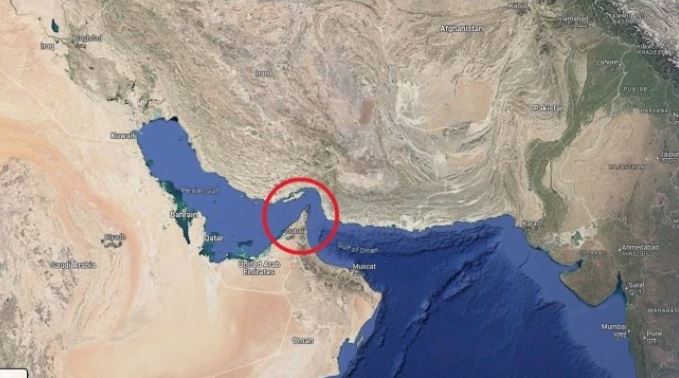 After US seizes 21 ships, Iran closes Strait of Hormuz
  The Kremlin's 'domino effect': How Putin's network of allies is collapsing
  The FSB that poisoned Navalny to death is now blocking the internet in Russia
  Russia and the pain of Hungary's defeat
  What is HAYI, the little-known pro-Iranian group that says it is behind attacks in Europe?
  Germany prepares to send minesweepers to the Strait of Hormuz