
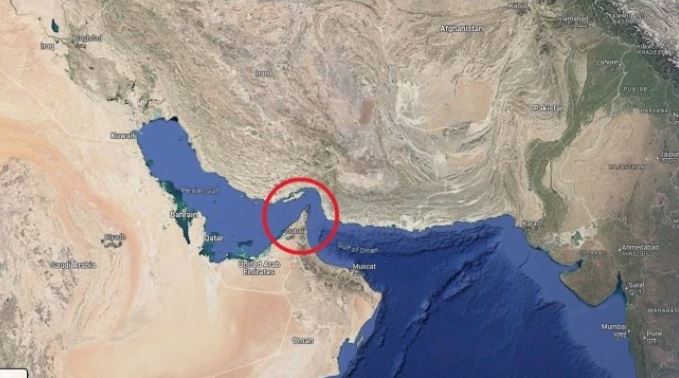
Iranian state broadcaster IRIB reported that the key sea route "has now been closed again and passage requires Iran's approval."
In a statement, the military had announced a few minutes earlier that the strait had "returned to its previous state" because the US refused to lift the naval blockade of Iranian ports in the Persian Gulf.
According to a statement by the Joint Command of the Iranian Army, the US has continued to maintain the so-called naval blockade, despite previous agreements that provided for limited passage of commercial ships and oil tankers.
A spokesman for the "Hazrat Khatam al-Anbiya" Central Headquarters said that Iran had accepted in good faith the facilitation of maritime traffic within the framework of the negotiations, but recent developments have changed the situation, writes skynews.
"The Islamic Republic of Iran, following previous agreements during negotiations, has accepted in good faith the managed passage of a limited number of oil tankers and merchant ships through the Strait of Hormuz. Unfortunately, the Americans continue the so-called blockade," the statement said.
According to the Iranian military, for this reason, control over the Strait of Hormuz has been restored to its previous state and sea passage will remain under strict surveillance of the armed forces.
Tehran also warned that the situation will remain as long as the US does not guarantee "complete freedom of movement of ships" to and from Iran.
The Strait of Hormuz is one of the most strategic points of global oil transportation, through which a significant portion of the world's energy supplies pass.
 Backstabbing 2.0: What's happening in the Russian Ministry of Defense?
  The Kremlin's 'domino effect': How Putin's network of allies is collapsing
  The FSB that poisoned Navalny to death is now blocking the internet in Russia
  Russia and the pain of Hungary's defeat
  Kosovo and Albania aim to co-produce military equipment
  Parliament approves sending KSF to Gaza