
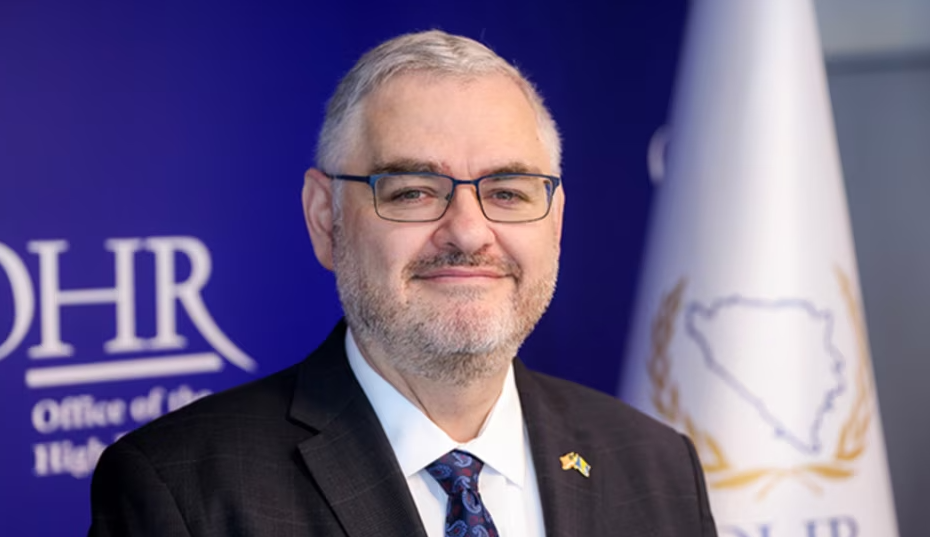
The moves by the authorities of the Republika Srpska entity, which bypass state institutions and create parallel legal and institutional arrangements, are leading to the gradual “de facto” separation of that entity from Bosnia and Herzegovina, according to a report by Acting High Representative Louis Crishock, which will be presented to the United Nations Security Council on October 30.
The 70th report on the implementation of the Dayton Peace Agreement, which covers the period from April 16 to October 15, 2026, says that blockades in the work of state institutions have continued over the past six months.
These include blockages in legislative processes, delays in appointments, problems with funding institutions, as well as failure to implement binding decisions of the state judiciary and the Constitutional Court of BiH.
"Combined with efforts to bypass state institutions and create separate structures in Republika Srpska, they are reinforcing a scenario of de facto separation," the report, which REL has had access to, says.
Crishock also warns that such practices weaken state institutions, make it more difficult to exercise their legal responsibilities, and slow down the country's Euro-Atlantic integration.
“The authorities of Republika Srpska continued to support the repeal of post-Dayton reforms and hinted at secession if these political goals were not achieved,” it said.
One of the significant events in the reporting period was the death of war criminal Ratko Mladić on 27 August, following which rallies and commemorations were held in Serbia and Republika Srpska, at which, it was reported, Mladić was praised and the crimes for which he was convicted were denied or minimized.
The report claims that the participation of Republika Srpska officials in these events raised concerns about the rule of law and the reconciliation process.
“At public commemorations and memorials in Banja Luka and other locations in Republika Srpska, speakers praised Mladic and denied or minimized the crimes for which he was convicted,” the report said.
The report also examines the general elections held on October 4, the first in which electronic voter identification and ballot scanners were used nationwide.
It is said that technology contributed to the transparency of the process and the faster announcement of results, but also that preliminary results indicate the continued dominance of ethnic-based parties and a potentially long and complex process of forming a government.
The United Nations Security Council will hold its regular biannual session on Bosnia and Herzegovina on October 30, the first since Christian Schmidt resigned as High Representative.
The session will be held at a time when the duties of the High Representative are carried out by his deputy Louis Crishock.
 Ukraine, Russia and US set for new peace talks in Abu Dhabi
 Kos: Serbia cannot progress towards the EU without sanctions against Russia
 Shocking Doubts About the Serbian Economy: Billions from Drugs Inflate Serbia's GDP
 FAZ: Student List Program for Kosovo Could Incite Conflict and Isolate Serbia
 After Vučić, what will the new government in Belgrade mean for Milorad Dodik?
 "The counterattack is coming": Former Serbian activist warns of Vučić's plans after defeat