
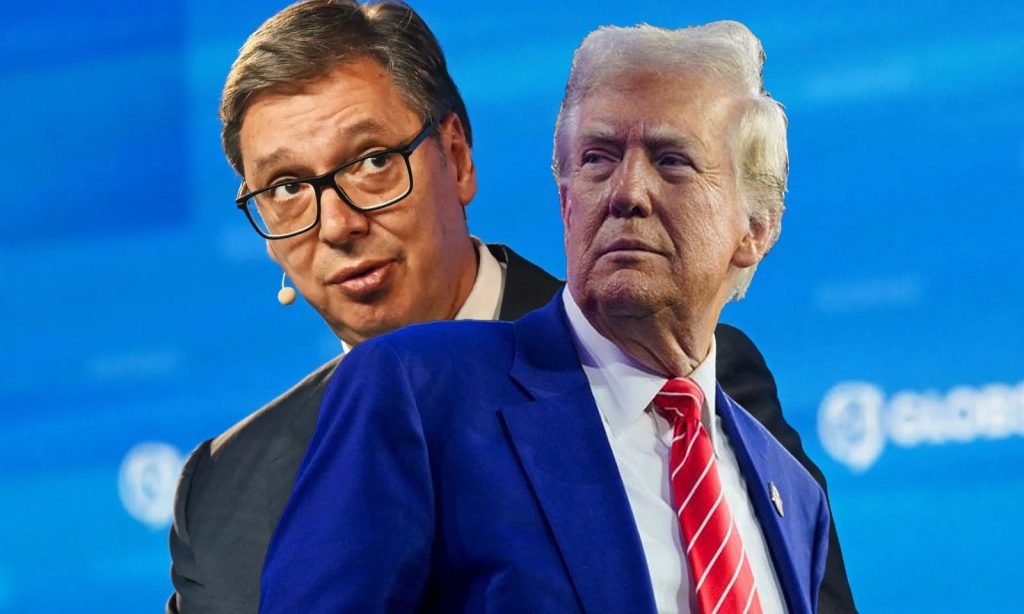
Aleksandar Vučić is once again playing one of his most familiar roles, the politician who adapts language to the power he needs at the moment. This time, the object of attention is Donald Trump, not as a symbol of America, but as an instrument of a political style that Vučić understands well: transactional, focused on "profit", allergic to moralizing and inclined to bypass traditional bureaucracies.
In his opinion piece for Fox News on May 22, Vučić does not go for the classic Western vocabulary of “values” (reform, democracy, rule of law). He goes for the vocabulary that Trump likes, tangible benefits. Serbia, he says, offers the US “strategic depth,” “political stability,” and a government “oriented toward implementation, not ideology.” There is no diplomatic romanticism here; there is geopolitical marketing. The message is simple: use us, because we are an important node.
Then comes the calibrated flattery, Vučić underlines the willingness of Trump and his circle to “listen seriously and without prejudice to Serbia’s position”, and even recalls long meetings at the White House where, according to him, “we were not ignored”. This phrase carries more weight than it seems. In it, Vučić tries to produce a political reality: the idea that Serbia has a direct channel with Washington, without the filters of Brussels and without the moral lessons that usually accompany relations with the West.
This is also why he contrasts Serbia with Europe. He describes the European establishment as confused and hostile to “America First,” while Serbia, he says, has “unadulterated” enthusiasm for Trump’s leadership. In other words,Europe annoys you, we welcome you'. He even goes so far as to promise a reception in Belgrade “unseen in Europe.” This is public flattery, destined to turn into political capital. So if Trump is a man of applause, Vučić is offering him the stage.
But this "Trump card" of Vučić is not constant, nor principled. It appears and fades according to the interests of the day and the audience.
This duality was clearly exposed by the Venezuela episode, after the American operation and the capture of Nicolas Maduro, Vučić switched from a tone of closeness to Washington to open criticism of the US. He declared that after what happened “it is clear that the international legal order and the United Nations Charter do not work”, that the world is governed by the “law of force” and the “law of the strongest”, while Serbia, according to him, must “rely on itself”, because “if someone from the region attacks us, no one will help us”. On a broader scale, criticism of the American action was also reflected in numerous international reactions that called it a dangerous precedent and a violation of the principles of the UN Charter.
So, at the same time, Vučić seeks to speak to Trump as a pragmatic partner and sell Serbia a “strategic” role in Southeast Europe, but without ever removing from his domestic arsenal the narrative that the West acts according to the “law of the strongest.” He uses this duality to manage two fronts, externally, to reduce pressure and to open channels internally, to keep alive the sensitivities of 1999 and the idea that Serbia must be vigilant, armed, and self-sufficient.
But the game becomes even more refined when it enters the memory of 1999.
Vučić admits that Serbia has had deep suspicions of the US because of the NATO bombings, a collective trauma that has become the foundation of the state narrative. However, he finds the propaganda “solution” in the supposed view of Serbian citizens as a peacemaker and a leader who values national sovereignty in the face of “faceless bureaucracy”. Thus, Vučić does not overthrow the myth of the victim of 1999 (because he needs it internally), but reorients it so that the problem is not “America”, the problem is “others”, Trump is presented as “acceptable America”.
However, contradictions quickly surface when his rhetoric about Iran again brings up the comparison with the 1999 bombings, "it happens like in Serbia", "they lied to us", "the goal was regime change".
This shows that Vučić is not building a coherent stance, he is managing internal emotions and external interests at the same time. For his public, 1999 is an automatic reflex, for Trump's Washington, Serbia must be sold as a pragmatic partner. These two languages clash, but he calculates that he can keep them parallel.
Why does it need this "Trump card" now? Because Serbia is walking a tightrope, it is an EU candidate although far, far away from the European Union, it is also maintaining ties with Russia and China, it is hit by sanctions (such as the case of NIS for Russian ownership) and economic pressures (tariffs).
In this reality, Vučić seeks a form of "security", not to remain hostage only to the East and at the same time not to surrender completely to the West. Trump, in this scheme, appears as the possibility of a less moral and more "bargaining" relationship.
Therefore, Vučić's flattery of Trump is not a sign of political love, it is an investment. He is trying to buy room to maneuver, to mitigate American pressure, to gain negotiating weight towards the EU and to produce domestic legitimacy with the idea that "I talk to the big guys". Serbia as a "critical corridor", Vučić as a "man of stability", Trump as a "leader who listens", this is the story being sold.
In the end, the question is not whether Vučić admires Trump. The question is: what does he want in return for this exposed admiration? And his political history suggests a simple answer: every public applause is a bargaining chip. UN/The GeoPost.
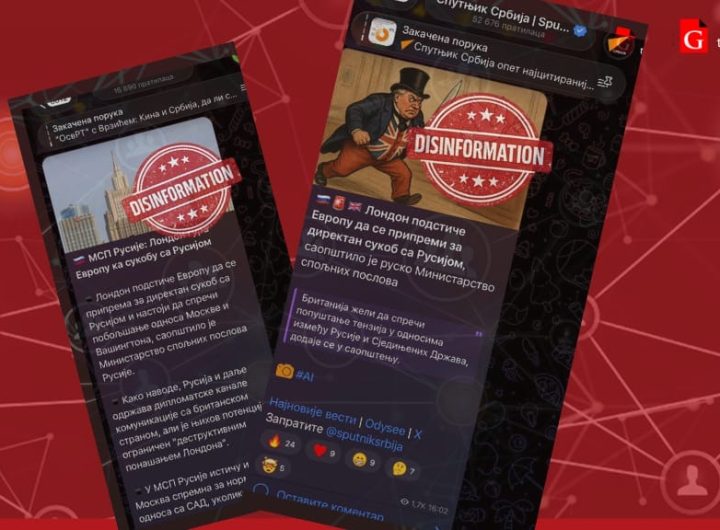 Russian Foreign Ministry misinforms that Britain is pushing Europe into war with Russia
 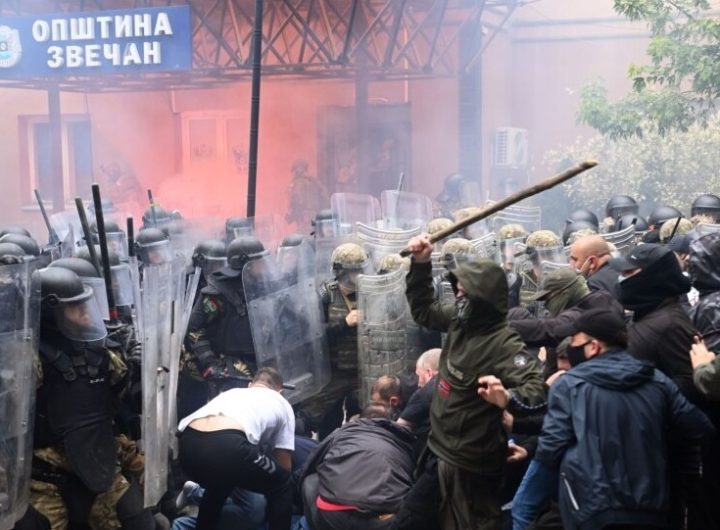 Three years since the attack on NATO soldiers: Vučić's direct role through Radoić in the destabilization of the north
 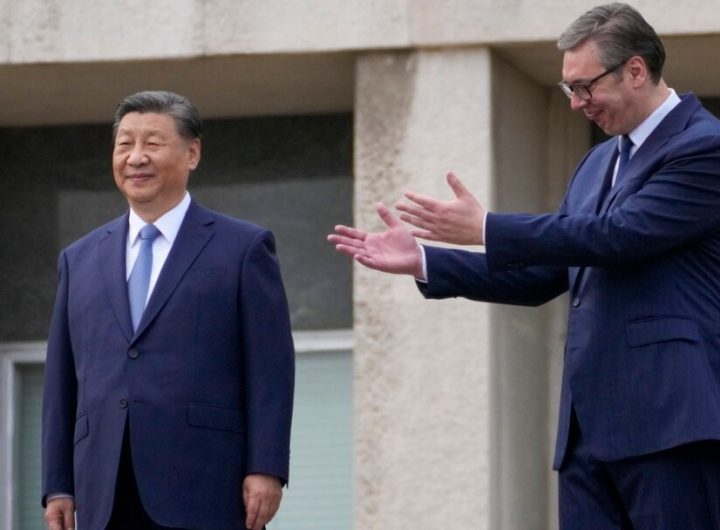 Vučić in Beijing: Complains about the EU, but ties Serbia ever more closely to China
  Both the Vučić regime and the Serbian List are using blackmail and threats against Serbs in Kosovo
 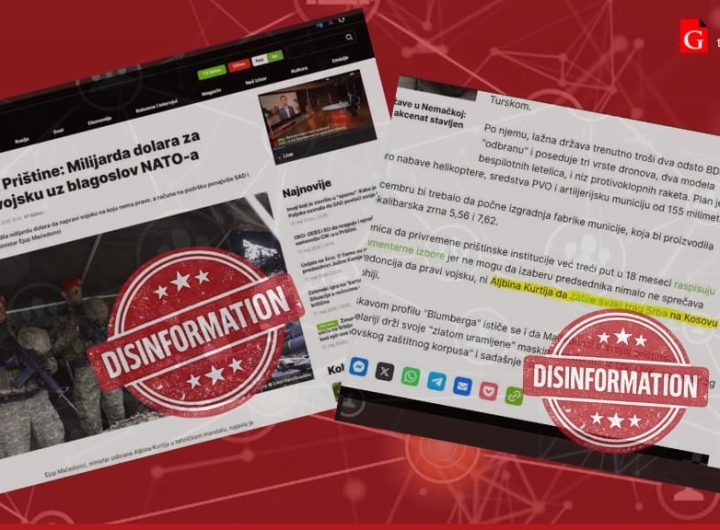 RT Balkan misinforms about the KSF and the arming of Kosovo
  Kosovo in NATO: the end of the security vacuum in the Balkans