
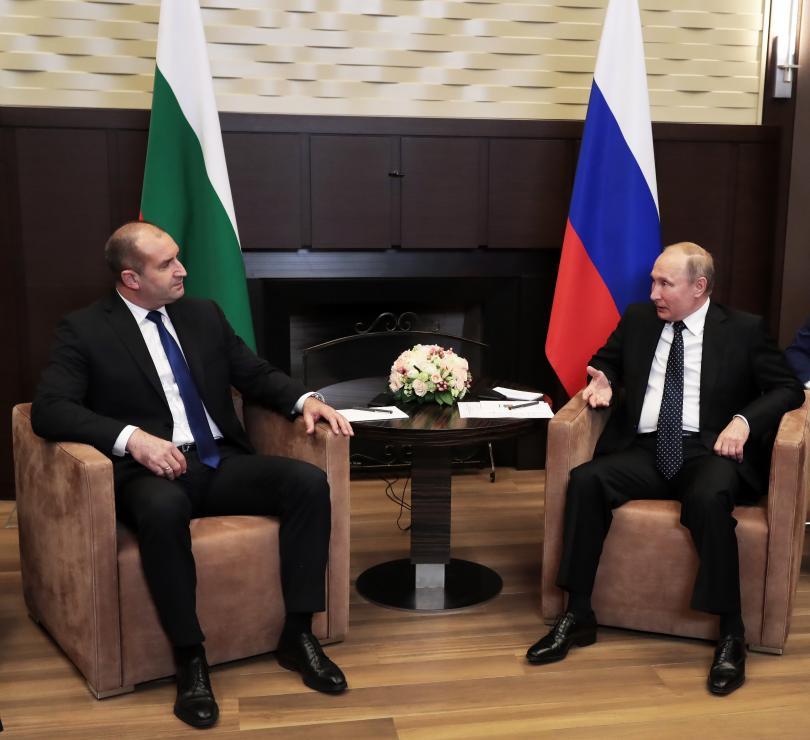
A new leader perceived as close to Moscow could soon enter the ranks of the EU and NATO, this time in the Balkans, as Bulgaria held early parliamentary elections on April 19.
Just a week after the Kremlin's main EU ally, Viktor Orban, lost elections in Hungary, former Bulgarian President Rumen Radev is expected to emerge victorious in new polls, following his resignation in January to lead the new "Progressive Bulgaria" coalition.
Radev, who has served two terms as president, has consistently distanced himself from Sofia's official pro-Ukraine line, opposing military aid to Kiev and sanctions against Russia - positions that have raised concerns that Bulgaria could become the next "spoiler" within the European bloc.
Hungary has proven that a single state can block decision-making across the EU, and analysts warn that a government led by Radev could delay or water down important EU and NATO decisions regarding sanctions, military aid and common positions on the war in Ukraine.
“The former president is a pro-Russian politician and there is great concern that he may try to move the country away from its pro-European line,” Emilia Zankina, a professor at Temple University in Rome, told the Kyiv Independent.
However, Ruslan Stefanov, an analyst at the Center for the Study of Democracy (CSD) in Sofia, believes that labeling Radev as "pro-Russian" may be excessive, but acknowledges that his positions make him "politically useful for the Kremlin."
According to Stefanov, the main risk is not that Bulgaria will turn “overnight” into a second Hungary, as the Bulgarian political system remains fragmented and no single party is expected to govern alone. But he emphasizes that a cabinet led by Radev could hinder, delay or rhetorically undermine common Western positions.
Who else is competing?
The April 19 elections are the eighth parliamentary elections in Bulgaria since 2021 – a sign of the ongoing political crisis, fragmented parliament and fragile governments, often accompanied by corruption scandals.
Radev's coalition leads the polls with around 30%, capitalizing on public dissatisfaction with the economic situation and oligarchic influence.
It is followed by GERB-SDS, the center-right alliance led by former Prime Minister Boyko Borisov, with around 20%. The pro-European coalition "We Continue the Change - Democratic Bulgaria" (PP-DB) comes in third with around 12%.
The Movement for Rights and Freedoms (DPS) – a party linked to oligarch Delyan Peevski, sanctioned by the US and the UK – as well as the ultranationalist pro-Russian party "Resurrection" are also expected to enter parliament.
Fear of Russian interference
Ahead of the elections, Bulgaria has set up a unit in the Foreign Ministry to combat disinformation and hybrid threats, while investigative journalist Christo Grozev has been appointed as an advisor.
Sofia, according to EU diplomatic sources, has been coordinating efforts against foreign interference with European partners. Radev has opposed these measures, calling them attempts by the government and Brussels to compromise the electoral process.
In Bulgaria, Moscow's influence is considered "serious, long-term and deeply rooted" in politics, media and business networks, Stefanov says, adding that the country has a "domestic ecosystem" that conveys Russian narratives even without direct intervention.
According to an August 2025 poll by the Myara agency, 31% of Bulgarians view Russia positively, while 50% view it negatively. Only a quarter have a favorable view of Ukraine, compared to 55% who view it negatively.
However, long-term trends show that support for Russia has declined since the start of full-scale war in 2022, while support for the EU and NATO has increased.
In this context, the Bulgarian elections are being seen as an important test for the sustainability of the Euro-Atlantic front in the Balkans, at a time when the race for influence in Europe has significantly intensified.
The Geopost
 EU budget blow to Serbia
  Senior Russian official in Banja Luka, Dodik speaks out against sanctions against Russia
  Ukraine has a chance to "join" the EU in 2027
  How senior Serbian officials are turning the Association into a political weapon
  FT: Russian economy faces financial disaster, Moscow is manipulating economic statistics
  Trump: Accept the deal or the United States will destroy every power plant and every bridge in Iran