
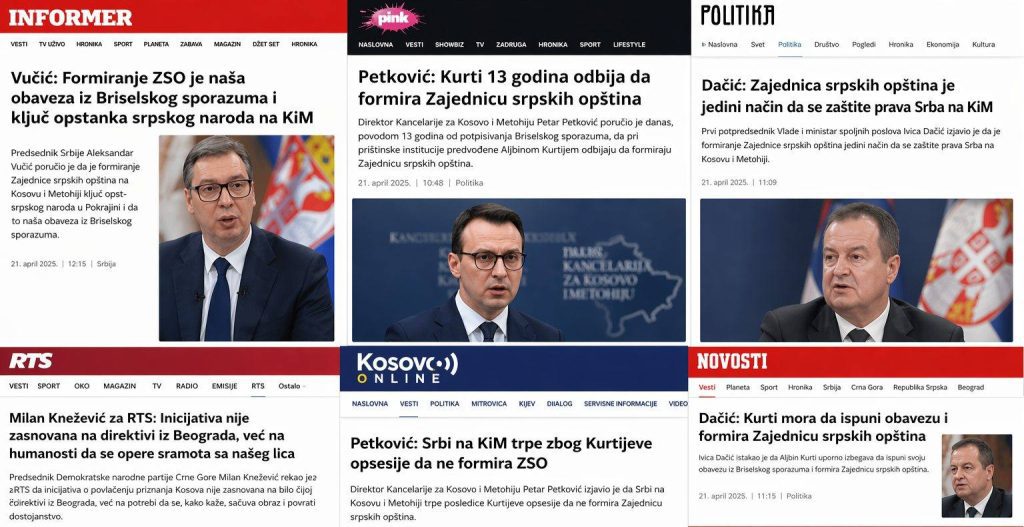
On the anniversary of the Brussels Agreement, no new political approach has come from Belgrade, but a continuation of the familiar narrative about the Association of Serb-majority Municipalities.
Coordinated statements by top Serbian officials, including Aleksandar Vučić, Ivica Dačić and Petar Petković, present the Association as a crucial issue for the “survival of Serbs” and as a “key obligation”, describing it as the “only solution”.
However, this approach is being seen as an attempt to present the Association not as part of a technical dialogue process, but as a political instrument of pressure on Kosovo. Through a unified rhetoric, the issue is placed in an existential framework, limiting the space for debate and alternative interpretations.
These statements lack a fundamental clarification: whether the Association should function in accordance with the Constitution of Kosovo or above it. This remains the main point of division between the parties.
The Prime Minister of Kosovo, Albin Kurti, has repeatedly emphasized that any solution must be in accordance with the constitutional order and the functionality of the state.
"Agreements cannot be interpreted selectively. Kosovo is ready for dialogue, but not for models that violate the constitutional order and the functionality of the state," Kurti declared.
This reflects the clash of two approaches: one that treats the Association as a pre-determined obligation and the other that seeks its harmonization with the Kosovo legal system.
Meanwhile, the manner of communication by officials in Belgrade – through synchronized statements and media support – is seen as an attempt to create a sense of urgency and increase international pressure on Pristina.
In practice, the situation remains more complex. The Brussels Agreement itself does not envisage a model that would be outside of Kosovo's constitutional system and does not provide a framework for political autonomy on ethnic grounds.
In this context, the issue of the Association is not reduced to a simple "yes" or "no" answer, but is directly related to the manner and form of its implementation.
Analysts estimate that the main problem lies not only in the formation of the Association, but in its use as a continuous political instrument by Belgrade in relation to Kosovo.
The GeoPost
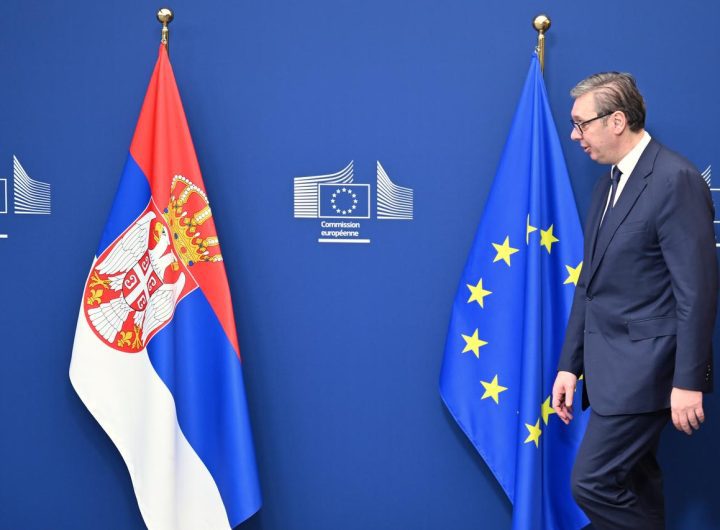 EU budget blow to Serbia
 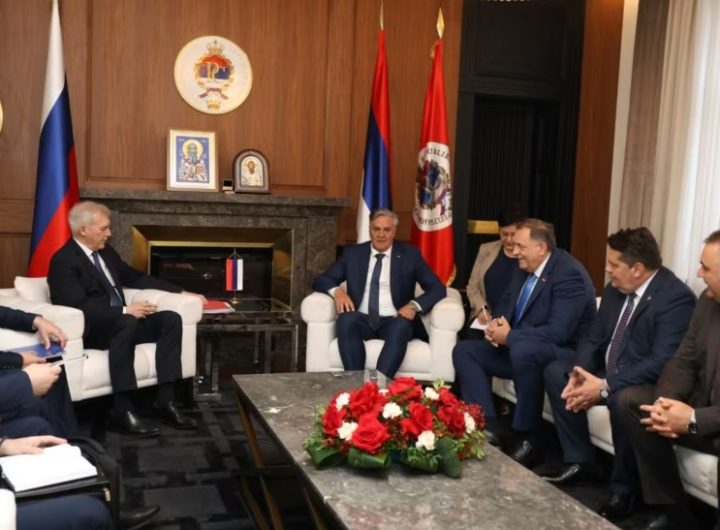 Senior Russian official in Banja Luka, Dodik speaks out against sanctions against Russia
 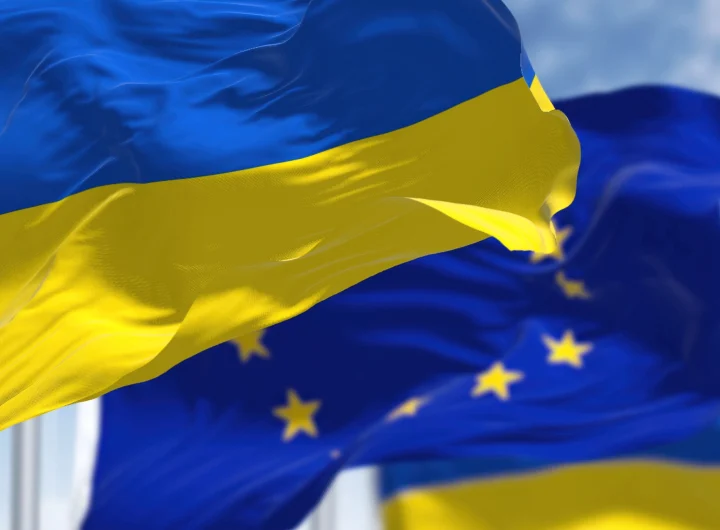 Ukraine has a chance to "join" the EU in 2027
  FT: Russian economy faces financial disaster, Moscow is manipulating economic statistics
  Bulgarian Elections: Is Another Leader Getting Closer to Moscow in the Balkans?
  Trump: Accept the deal or the United States will destroy every power plant and every bridge in Iran