

The Democratic Party's victory in the US midterm elections is expected to shift the balance of power in Congress, giving the party more oversight powers and influence over the legislative process. This could also have an impact on US policies towards Russia, Ukraine and Iran.
The Democrats' triumph in the elections held on November 3 is expected to enable them to take control of both chambers of Congress, the Senate and the House of Representatives, from President Donald Trump's Republicans, according to projections by several major American media outlets.
The outcome of the November 3 election represents a significant shift in the balance of power in Congress, giving Democrats more influence over decisions on federal spending, oversight of the administration, and confirmation of presidential appointments.
Trump said he is willing to accept the election results and cooperate with Democrats, according to The New York Times.
"We're going to work with the Democrats and, you know, we're looking forward to working with them. We're going to get it done somehow," Trump was quoted as saying.
Trump continues to have broad powers in the fields of diplomacy and military operations, while Republican opposition and his veto power could prevent Democrats from translating victories in Congress into concrete legal changes.
The elections were held at a time when the United States and Israel are still at war with Iran, and Russia is continuing its full-scale invasion of Ukraine, while Washington's approach to Moscow remains a source of disagreement between the two major American parties.
The first challenge for Congress, in terms of foreign policy, may be war with Iran.
Democrats campaigned on a pledge to end the conflict, which has contributed to rising energy prices and economic uncertainty. Control of both houses of Congress will increase their ability to oversee the administration, oppose military spending and seek limits on military operations.
Dania Arayssi, program director and senior analyst at the New Lines Institute for Strategy and Policy, who regularly briefs decision-makers in Congress and the executive branch, told Radio Free Europe that the election results could push Trump toward withdrawing from the war through diplomatic channels.
"The election results, especially the victory of Democrats in the House of Representatives and the Senate, will definitely push the Trump administration to seek a strategy to end the war, especially through diplomatic means and negotiations," she said.
Arayssi said Democrats could block additional funding for the conflict and launch investigations into the administration's decisions once the new Congress begins work in January.
She argued that Tehran could also seek more favorable terms in the talks, calculating that Trump's political ability to continue the military campaign has weakened.
"This also means that the Iranians will not be under pressure to offer further compromises," she said.
However, many analysts warn that, despite the Democrats' landslide victory, its impact is by no means predetermined.
Trump remains commander-in-chief of the armed forces and continues to have broad authority over military operations and diplomacy. Most Republicans have defended the campaign against Iran as necessary to counter Iran's nuclear and regional threats, and are expected to resist Democratic efforts to limit its funding.
However, the economic fallout from the conflict has become a political burden for the administration. Rising gasoline and oil prices, partly linked to disruptions in the area around the Strait of Hormuz, helped Democrats put affordability at the center of their campaign.
The new Congress could also increase oversight of the Pentagon and Defense Secretary Pete Hegseth, while funding negotiations could bring further clashes with the White House.
Meanwhile, for Kiev, which for more than four years has relied on American assistance to repel Russian invading forces, the results bring both uncertainty and hope.
Some of the most prominent supporters of Ukraine in Congress are leaving office. Among them is Republican Congressman Don Bacon, a vocal critic of Russia who has often opposed his party's and the White House's positions on support for Kiev.
"I'm an old-school Ronald Reagan Republican and I see the Russian invasion of Ukraine as the most important crisis facing the free world," Bacon told Radio Free Europe on November 3.
"I hope that in the 120th Congress more representatives will be elected who will strongly support our friend and ally," he added.
However, among the departing Republican lawmakers are former Senate Majority Leader Mitch McConnell, Senators Thom Tillis, Bill Cassidy and John Cornyn, and Congressman Michael McCaul. Their departures mean the loss of some influential voices who have supported a tougher approach towards Moscow.
Despite this, Ukrainian-American organizations say they believe support for Kiev will continue to be bipartisan.
"Although we are losing some extraordinary supporters of Ukraine in this election cycle, we are aware of those who will remain and we have reason to believe that Ukraine will continue to have significant bipartisan support," Michael Sawkiw, president of the Ukrainian American Congressional Committee, told Radio Free Europe.
Sawkiw cited as priorities Congressional oversight of the administration's recent decision to temporarily suspend some sanctions on Russia and its diesel fuel deal, increasing security assistance to Ukraine, and extending temporary protected status for Ukrainian refugees.
"The United States must continue to be a global leader for those oppressed or facing foreign aggression. We are committed to working with re-elected officials, as well as those who have just been elected, to advance the issues that matter to us," he said.
Two senior Senate Republican foreign policy advisers also told RFE/RL that the election could increase pressure on Congress to impose sanctions on Russia. They cited a recently pushed sanctions bill involving Senator Lindsey Graham, whose sister lost the election after being appointed to the post in July following the sudden death of her brother.
Therefore, Democratic control of Congress could make it more difficult for Trump to forge better relations with Moscow, especially if his administration seeks more sanctions relief.
However, lawmakers face limitations. Trump's veto power and Republican opposition could hamper efforts to impose new restrictions or force the administration to increase military aid to Ukraine.
Democratic control of the Senate will also give the party more influence over the legislative calendar, committee investigations, and confirmation of appointments in the administration and the judiciary.
Democratic Senator Chuck Schumer is expected to return to the Senate majority leader position in 2027.
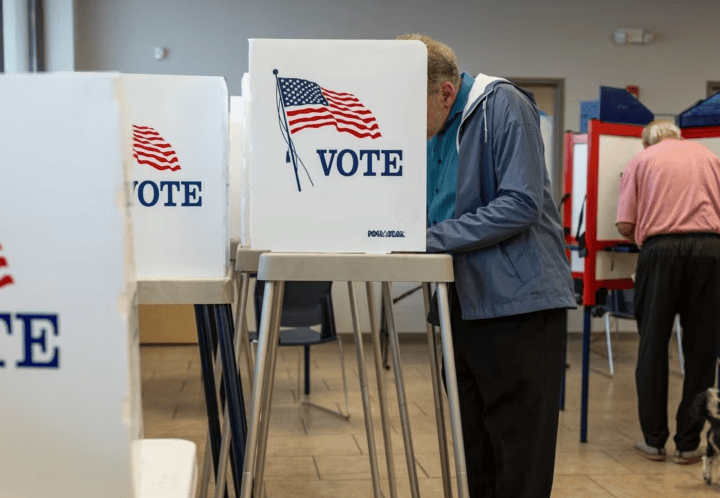 Americans vote in midterm elections
 From “deep disappointment” to “constructive partnership”: How the Serbian List changed its language towards the EU
 British Air Force uses drones for first time to monitor Russian naval activity near British coast
 US reacts as China and Russia deepen cooperation in the Arctic
 A Serbia without Vučić, but with the same policy towards Kosovo?
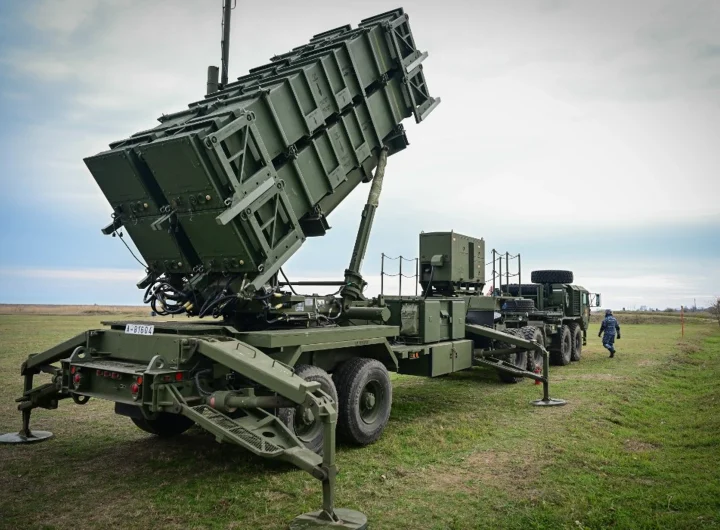 US sells 500 Patriot missiles to Ukraine, but deliveries not expected to begin until after 2030