
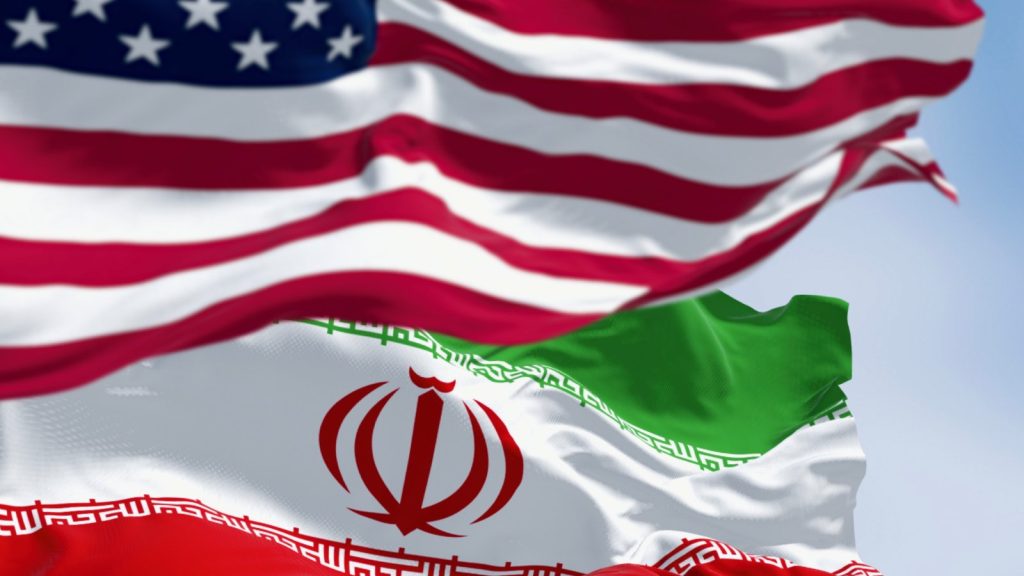
US Treasury Secretary Scott Bessent will hold a press conference on Monday after vowing to implement "never-before-seen" measures against Iran.
And US President Donald Trump has threatened an "economic D-Day" against Iran.
The US has imposed sanctions on Iran since 1979, after the US embassy in Tehran was seized following the Iranian Revolution, according to the US State Department.
A Congressional Research Service (CRS) report on US sanctions on Iran says they were used to “deter, constrain, and encourage change in the Iranian regime’s hostile behavior.”
"US sanctions on Iran are perhaps the broadest and most comprehensive set of sanctions the United States maintains against any country," the report says.
The financial sanctions are broad, banning almost all U.S. trade with Iran, freezing Iranian government assets in the country, and prohibiting foreign aid and arms sales, the report describes.
In 2013, the Treasury Department's Office of Foreign Assets Control said the US could sell food, medicine, and medical equipment to Iran.
According to the CRS report, the US is also allowed to provide Iranians with telecommunications equipment to help them circumvent the Iranian regime's efforts to cut off internet access.
 Serbia and Russia increase propaganda for Kosovo, experts: The goal is control over the Serbian community
  Even when they leave Russia, Putin makes it difficult for Russians to renounce citizenship
  The US introduces the AIM-424 Malice, a missile with a range of over 463 km
  Trump says Iran not ready to make 'right deal'
  German authorities: Weapons hidden near Berlin were intended for attacks
  Macron: We will send interceptor missiles to Ukraine