
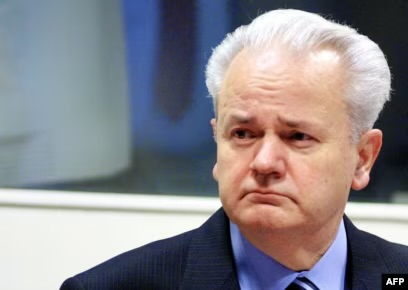
Slobodan Milosevic, who for ten years authoritarianally ruled Serbia and the then Yugoslavia – consisting of Serbia with Kosovo and Montenegro – was extradited to The Hague 25 years ago.
The extradition took place on Vidovdan Day – a Serbian national holiday associated with the Battle of Kosovo against the Ottoman Empire in 1389 and an event with special symbolism for Serbian nationalists.
Although a quarter of a century has passed since that time, in Serbia, even to this day, voices continue to be strong that minimize or deny Milosevic's responsibilities for the wars in the former Yugoslavia, which took over 100 lives, as well as for the international isolation of Yugoslavia, which plunged the country into deep poverty and criminality.
Where are Milosevic's heirs today, and where are the victims of the regime?
Today, the most prominent figure in the media from the Milošević family is his 27-year-old nephew, Marko Milošević.
His father, the son of Slobodan Milosevic, also named Marko, left Serbia immediately after the fall of the regime in October 2000 and moved to Moscow, where he still lives today.
His first ex-wife returned to Serbia with their newborn son and settled in the Milosevic family home in Pozarevac – about 80 kilometers east of Belgrade.
After completing his studies at the Faculty of Law, Marko Milošević entered politics.
Today, he is the youngest deputy of the Socialist Party of Serbia (SPS) in the Serbian Parliament.
Slobodan Milosevic led this party until his death in 2006, and the party never distanced itself from him.
Speaking to Radio Free Europe's Balkan Service, his nephew says he respects different opinions about the 90s, but insists that Milosevic's extradition constituted a violation of Serbia's constitutional order.
"I, as a lawyer, cannot see it any other way," he says.
Marko Milosevic is currently one of the most exposed socialist figures in the media.
He often appears in media outlets linked to the government of Serbian President Aleksandar Vučić, who continues to be haunted by the shadow of the period when, as Minister of Information in one of Milošević's governments, he implemented the infamous media law.
On the other hand, victims of the Milosevic regime from other ethnic communities have almost no space in either the media or politics.
For Murat Tahiroviq, president of the Association of Genocide Victims, this is proof that Serbia does not want to distance itself from Milosevic's policies.
"The crimes committed are denied, while all those who have been held accountable for these crimes, after returning to Serbia, are present in the public space," he says.
Where are the members of the Milosevic family today?
Slobodan Milosevic's wife, Mirjana Markovic, left Serbia in 2003 and settled in Russia, where she was granted political asylum.
In 2005, the international police agency, Interpol, issued an international arrest warrant for him after he failed to appear for trial in Serbia on charges of abuse of office.
She was suspected of participating in the illegal allocation of a state-owned apartment to her nephew's guardian.
He was tried in absentia, but in March 2019, the Court of Appeals in Belgrade overturned the decision that sentenced him to one year in prison.
Marković was also investigated on suspicion of having helped her son, Marko Milošević, in cigarette smuggling.
Her name was also mentioned in the preliminary investigations into the murder of Serbian journalist Slavko Quruvija.
She died on April 14, 2019 in Russia, and her ashes were buried next to Slobodan Milošević, in the courtyard of their house in Pozarevac.
Like his mother, Marko Milosevic also received asylum in Russia.
During the 90s, he was linked to organized crime, while in the early 2000s, an investigation was opened against him for cigarette smuggling.
He was also tried for the beating of two activists of the opposition movement "Otpor" in 2000 in Pozarevac. The proceedings lasted until 2013, when the case became statute-barred.
For the first time in many years, Marko Milošević appeared in public in mid-2023, at the unveiling of a monument dedicated to his father in Moscow.
The ceremony was organized by the Night Wolves biker group, which is under sanctions by the West for its ties to the Russian president and for supporting the Russian invasion of Ukraine.
His daughter from his second marriage, Marija, lives in Moscow.
She first appeared in Serbian media in March 2026, on the anniversary of her grandfather's death.
In an interview with the private Serbian television station Informer, she stated that her grandfather "was killed at the Hague Tribunal."
Marko Milošević's son from his first marriage, who bears the same name, is a deputy for the Socialist Party of Serbia in the Serbian Parliament.
He says he did not enter politics to rehabilitate his grandfather or to continue his politics, but "to reform education."
Slobodan Milosevic's daughter, Marija, lived in Montenegro for many years.
Serbian tabloids reported in March 2026 that she had returned to Serbia, on the 25th anniversary of her father's death, and that she had settled back into the family home in Pozarevac.
REL was unable to confirm this information.
Marija Milošević also faced criminal proceedings after, on the day of her father's arrest in 2001, at the "Mir" villa in Dedinje, she fired a gun at the investigating judge and the people accompanying him.
After questioning, she fled to Montenegro. The case was time-barred in 2021.
What was Milosevic accused of?
Slobodan Milosevic was arrested in April 2001, six months after the October 5 Revolution in Serbia, which led to his ouster from power.
Mass protests erupted after he manipulated the results of the presidential elections of September 24, 2000, in which his opponent was Vojislav Kostunica.
The new Serbian government initially arrested him on suspicion of abuse of office. However, he was never tried in Serbia on these charges.
"The institutions of that time had neither the technical capacity nor the political will to deal with his political and criminal legacy," says Pavle Grbovic, an opposition MP from the Movement of Free Citizens (PSG) and one of the rare politicians in Serbia who speaks openly about Milosevic's role in the wars of the 90s.
Two months after his arrest, Milošević was extradited to the International Criminal Tribunal for the former Yugoslavia in The Hague, where he was charged with war crimes and crimes against humanity during the conflicts in Croatia, Bosnia and Herzegovina, and Kosovo.
The prosecution presented 66 counts of the indictment, accusing him of involvement in dozens of crimes committed against thousands of victims in these three countries, over nearly a decade.
More than 300 witnesses testified at the trial about crimes committed by forces under his control.
However, he did not wait for the verdict. He died in the custody of the Tribunal in Scheveningen, in March 2006.
Slavica Djukic-Dejanovic, who joined the Socialist Party of Serbia 36 years ago, remained in high political positions even after the fall of Milosevic.
The Socialists, in fact, have been part of every Serbian government since 2008.
In a statement to Radio Free Europe, she admits that "some elements of foreign policy could have been resolved differently," but emphasizes as achievements of Milosevic's government UN Security Council Resolution 1244, adopted after the end of NATO bombing in 1999, as well as the 1995 Dayton Agreement, which ended the war in Bosnia and Herzegovina.
"From this distance in time, I think few politicians would have led the country better than him," she says.
"People interpret the past from the perspective of the present. The return of figures from that period to the public space also normalizes their 90s politics," says Eric Gordy, professor of Political Sociology at the University of London.
One thing, according to him, remains unchanged.
"It is clear that the people who were in power in Serbia during the '90s are still in power today," says Gordy, alluding to the political elite led by President Aleksandar Vučić.
These are former members of the Serbian Radical Party, an ultranationalist force of the 90s, which transformed into the Serbian Progressive Party (SNS) in 2008, with a formal pro-European orientation.
Four years later, it took power and, in a continuing coalition with the Socialists, governs Serbia to this day.
Although they declaratively support membership in the European Union, critics say that Serbian authorities have returned to nationalist narratives.
They do not recognize the genocide in Srebrenica and deny state responsibility for the crimes committed in Kosovo.
Meanwhile, Vojislav Seselj, the former leader of the Serbian Radical Party, after returning from The Hague, where he spent 12 years in detention and trial, continues to publicly defend Milosevic's policies and relativize the crimes committed during the wars of the '90s.
Protecting war criminals
And, it's not just Vojislav Seselj.
When the 20th anniversary of Slobodan Milosevic's death was marked in March, several guests spoke positively about his legacy on national television in Serbia - among them the convicted war crimes convict, Veselin Slivacanin.
Voices with opposing positions, meanwhile, rarely reach the mainstream media in Serbia, which is led by Vučić.
The leader of the opposition Democratic Party, Srdjan Milivojevic, was an activist of the student movement "Otpor", which fought against the Milosevic regime.
Even today, he considers it "the greatest political and national damage in the history of Serbia."
"At a time when the world was making great strides towards progress, he stopped Serbia through sanctions imposed on it because of his policies," says Milivojevic.
Due to its active involvement in the wars in Croatia and Bosnia and Herzegovina, the United Nations imposed a series of sanctions on the Federal Republic of Yugoslavia.
The country faced deep economic decline, rising prices, and devaluation of the local currency, experiencing one of the largest hyperinflationary periods in world history.
The 90s were also marked by attacks on political opponents.
Members of the Special Operations Unit of the State Security Service were convicted for the failed assassination attempt on opposition leader Vuk Drašković and the kidnapping and murder of former Serbian President Ivan Stambolić.
In the verdicts, Slobodan Milosevic was identified as the order-giver, but he was never tried for these cases.
"If that's the case, why didn't they convict him? I believe no one would miss such an opportunity," says his nephew, Marko Milosevic.
However, the trial for the murder of Stambollić began while Milošević was in The Hague, and the final verdict was announced in 2007, a year after his death.
Asked whether the Socialist Party of Serbia has distanced itself sufficiently from Milosevic's politics, Slavica Djukic-Dejanovic says that whoever committed crimes must be held accountable, but adds that "there were crimes on all sides."
"The fact is that many of our generals and presidents were sent to the Hague Tribunal to condemn the Serbian people and Serbia," she says, reiterating a position shared not only by the ruling parties, but also by part of the opposition.
In Serbia, those convicted of war crimes continue to be treated with honor.
An example is Nebojša Pavković, a former general of the Yugoslav Army, who died in October 2025.
He was buried in the Alley of Meritorious Citizens in Belgrade with state and military honors.
The ceremony was attended by ministers of the Serbian Government, representatives of the president, military leaders, other convicts from The Hague, and veterans of disbanded war units.
Another case is that of Vladimir Lazarević.
After serving his sentence, he returned to Serbia in 2015 on a government plane and was welcomed by several ministers.
He was then appointed a lecturer at the Military Academy and declared an honorary citizen of a municipality in southern Serbia.
But it's not just about those convicted by the Hague Tribunal.
According to Murat Tahiroviq, similar treatment is also enjoyed by persons convicted by local courts.
He mentions the case of Novak Djukic, a former general of the Army of Republika Srpska, sentenced in 2014 by the Court of Bosnia and Herzegovina to 20 years in prison for the murder of more than 70 civilians in the Tuzla Gate massacre.
Before the verdict was announced, Djukic fled to Belgrade, where he continues to live freely.
Also free is the former commander of the Serbian Gendarmerie, Goran Radosavljevic Guri, whom the United States links to the murder of the Bytyqi brothers after the war in Kosovo in 1999.
Today, he is a member of the ruling Serbian Progressive Party.
"This is proof that the political establishment of the '90s continues to have the main say in Serbia," says Tahirović.
Serbian opposition MP Pavle Grbovic believes that the Serbian Progressive Party's way of governing represents continuity with the Milosevic regime.
"The difference is that, back then, the enemy was mainly sought among other peoples outside Serbia, while today it is sought within the country, among those who are not loyal to the Serbian Progressive Party," he says.
Serbia remains a deeply polarized society.
For more than a year, this country has been engulfed by protests against corruption, the concentration of power in the hands of a single party, and the misuse of the media.
These concerns have also been reflected in international reports, including the latest Council of Europe report – the first on Serbia in 14 years.
Milosevic's grandson on his grandfather's legacy
For Marko Milosevic, what matters most today is that his grandfather, according to him, "re-centered the Serbian issue."
He connects this with the Eighth Meeting of the Central Committee of the League of Communists of Serbia, which is considered the beginning of Slobodan Milošević's political rise.
“He became popular and loved by Serbs in Yugoslavia because he was their voice at a time when they were not properly represented,” says Marko Milosevic.
He rejects claims that his grandfather had conquest ambitions during the wars in Croatia and Bosnia and Herzegovina, or that he aimed to create a "greater Serbia."
"Milosevic, from the beginning, fought to preserve the federation. When this became impossible, due to the tendencies of Croatia, Slovenia and later Bosnia and Herzegovina, he tried to unite the Serbian people," he says.
Professor of Political Sociology at the University of London, Eric Gordy, estimates that, after 2000, there was no clear delegitimization of Milosevic's politics in Serbia.
According to him, some political forces that ousted him from power also bear responsibility for this.
Gordy recalls that in 2008, when the Democratic Party – led until 2003 by Zoran Djindjic, who was assassinated by members of the paramilitary structures that remained in the state apparatus even after the fall of Milosevic – was in power, it signed the Declaration of Political Reconciliation with the Socialist Party of Serbia (SPS).
Democrats justified this step as necessary for the country's future stability.
"At that moment, the crimes attributed to the Socialist Party were more or less amnestied. I think that was the key moment and it happened before the Serbian Progressive Party came to power," Gordy concludes.
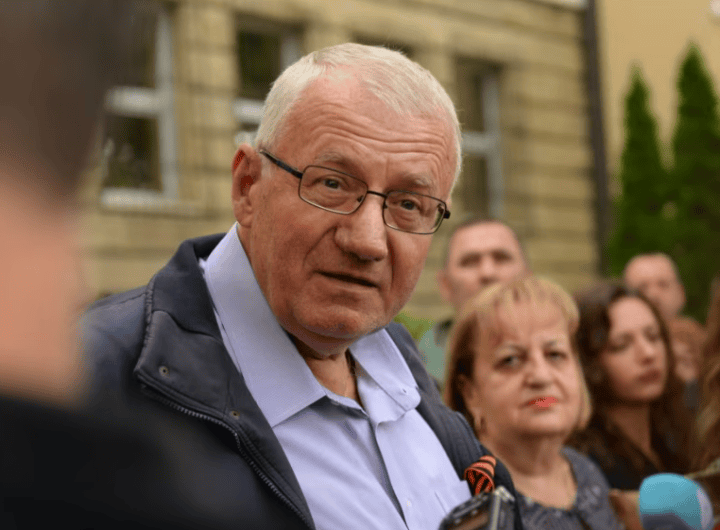 The Hague demands answers, Belgrade remains silent on the case of Seselj and his four associates
 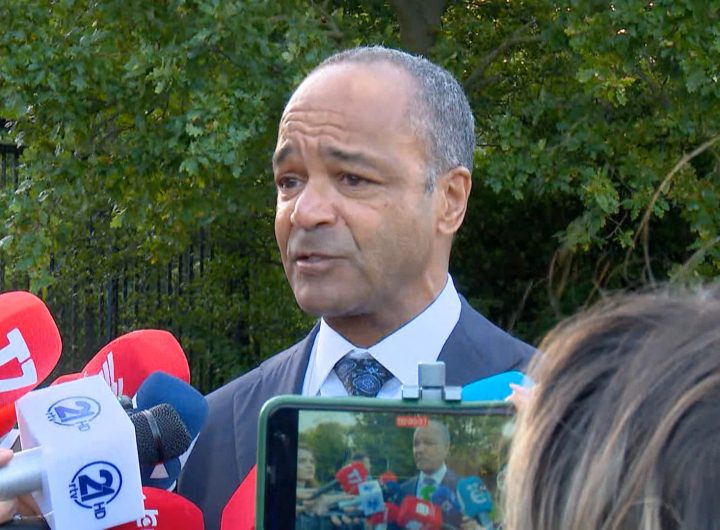 Hashim Thaçi's lawyer: The three Special Judges smeared the KLA and NATO
  Pettifer: Kosovo should review its relationship with EULEX and international missions after the Hague verdict
 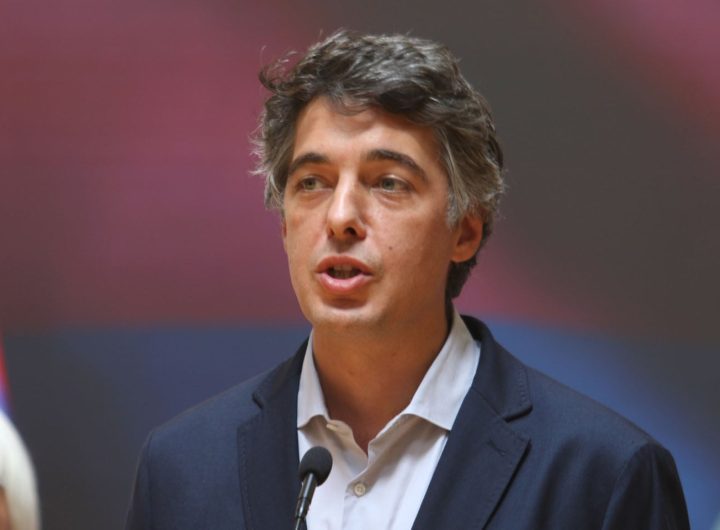 Miketic: Preparations are being made to steal elections in Serbia through voters registered in Kosovo
  "Kosovo as an electoral card": How RTS is building Vučić's narrative before the elections
  European intelligence warns of a Russian "test" of NATO