

He had planned that the visit to Skopje would be a major victory for the diplomacy of the Russian Federation and Moscow’s return to the stage of international relations. Previously, he had managed to prevent Estonia, a member country of NATO and the EU, from taking over the chairmanship of the OSCE and instead pushed through Malta, a European country that is not part of NATO. As a result, the Baltic states, Ukraine and Poland did not attend the meeting in Skopje. However, the joy over the victory was short-lived. Lavrov met with almost unanimous rejection from all the countries of the European Union (EU) and NATO.
He even failed to appear in time to attend the joint dinner of the ministers on Wednesday, which was also attended by US Secretary of State Antony Blinken and EU Commissioner for Foreign Affairs and Security Policy Josep Borrell. With this, Lavrov missed the opportunity for a meeting with Blinken and Borell, who left Skopje after the dinner. Lavrov’s plane did not arrive on time because Bulgaria did not open its airspace, as the Russian delegation also included government spokeswoman Mariya Zakharova. Days earlier, Sofia had given permission to Lavrov and his team from the Foreign Ministry, but not to the spokesperson of the Russian government, Mariya Zakharova, who is part of the 85-strong delegation. As a result, Lavrov’s plane traveled 4,000 kilometers, flew through Turkey and Greece and finally arrived in Skopje five hours late. At the airport, he was received only by the Russian ambassador in Skopje, while Blinken had flown to Israel and Borell had returned to Brussels.
The next day, Lavrov experienced another unpleasant surprise. He entered the hall where the 30th OSCE Ministerial Meeting was taking place without greeting any of the participants. He went to his seat alone, without shaking hands with any of the heads of diplomacy with whom he had mostly normal relations before the Russian aggression in Ukraine. The only one who greeted him was the foreign minister of San Marino, who was sitting next to Lavrov.
His speech was also boycotted. When it was his turn to speak, most of the foreign ministers of the 57 OSCE member states left the meeting. Lavrov was visibly nervous and sharply criticized the West. He said that the West was undermining the work of the OSCE, so there was currently “no room for optimism”. According to him, the OSCE has become an organization that serves the interests of NATO and the EU and is questioning its revival. As of 2021, Russia is blocking the organization’s budget, the monitoring mission of the conflict in Ukraine and many other decisions that are made by consensus. However, in his long speech, Lavrov sees the problem in the West. According to him, current developments call into question the OSCE’s ability to function as a forum for objective solutions to global problems. He accused NATO and the EU states of destroying the military-political dimension of the OSCE. In this context, Lavrov mentioned NATO’s intervention in 1999, which he described as “a brutal aggression against Yugoslavia, a member of the OSCE”, the independence of Kosovo, which in his opinion “is a territory separated from Serbia” and “the violation of UN Security Council Resolution 1244”. The boycott of Lavrov’s speech also triggered the reaction of Zakharova, who said on the social network Telegram that “under US pressure, the logic of the OSCE is being replaced by the aggressive ideology of NATO”.
However, ministers from Western countries accused Russia of wanting to paralyze and destroy the OSCE. The US Assistant Secretary of State for Europe and Eurasia, James O’Brien, sent a message to Russia not to block the OSCE if it wanted to continue to be part of it.
“I’m honored to be here, but this is a privilege and a choice.” Now the choice is up to the countries that are trying to block the work of this organization to see if they are ready to stand by the civilized community on the basis of the Helsinki Final Act or if they want to continue the obstacles. In any case, the OSCE will function. But it is up to them to decide whether they want to be with us in this organization,” said O’Brien.
The head of German diplomacy, Analena Berbock, also made a direct statement. She said that she would “not allow Russia’s game to destroy organizations that rely on peaceful coexistence and cooperation.” “Like no other organization, the OSCE stands for the security of more than 1.3 billion people and thus for living together in peace and security as well as for good economic development.” The fact that Russia had not succeeded in destroying the OSCE “is an important contribution to our peace order”, emphasized Berbock. She recalled that at last year’s meeting in Poland, where Russia was not invited due to the attack on Ukraine, 55 member states had decided to maintain the European security order by all means, despite Russia’s attempt to block the organization’s budget and its effectiveness. “This time Russia is also represented in this room, but not its minister, who has come only to speak and not to listen to others.” “I say to you: stop this war, which is also directed against the OSCE,” said Berbock.
The OSCE was founded in 1975 during the Cold War as a platform for dialog between Western countries and Eastern Bloc states. It is the largest international security organization in the world and is headquartered in Vienna, Austria. It consists of 57 member states, including Russia, the USA, Canada and almost all European countries. Its purpose is to prevent wars and conflicts and to serve as a cooperation platform for stability, peace and democracy for more than 1 billion people. The OSCE has a 323-member parliamentary body, the OSCE Parliamentary Assembly, whose main task is to “mediate inter-parliamentary dialog to advance the OSCE’s goals of comprehensive security”. Each member state has equal rights and decisions are made by consensus. North Macedonia held the chairmanship of the OSCE last year, while Malta is expected to take over next year. The 50th anniversary of the founding of the OSCE is to be celebrated in Helsinki in 2025, but many international relations experts say that this year could also mark the end of the organization.
Writes: Xhelal Neziri, associate of The Geopost from Skopje
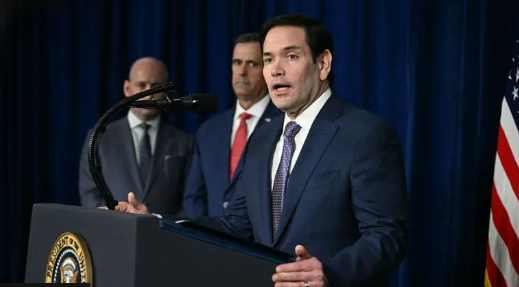 “Don’t play games,” Rubio says after Maduro’s arrest: Message should reach the whole world
 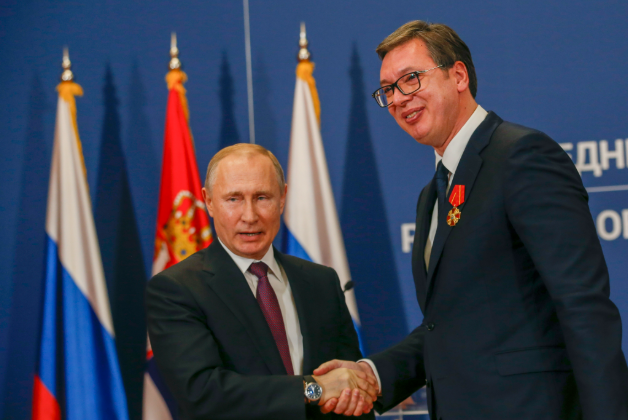 An alliance that comes at a high cost: The political and economic price of Serbia’s closeness to Russia
 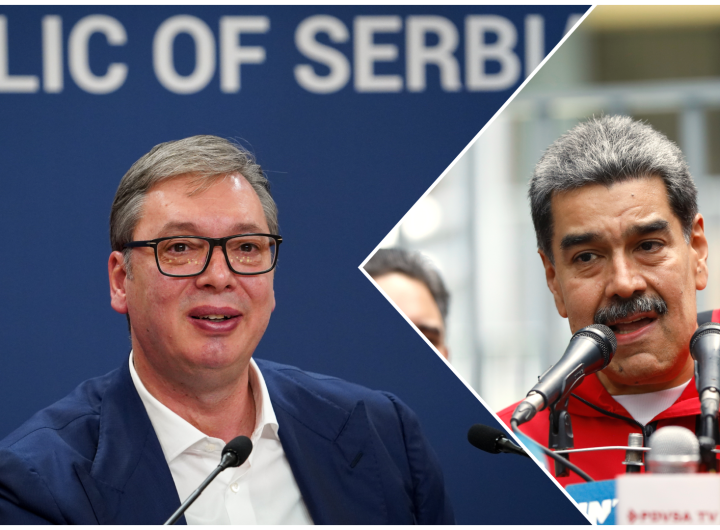 Maduro’s arrest and his close ties with Serbia and Vučić
 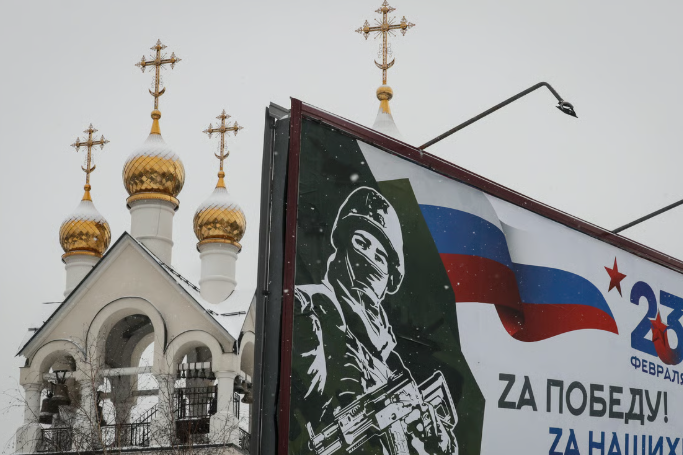 Ukrainian Intelligence: Russia planning fake attack on place of worship with ‘significant’ casualties
 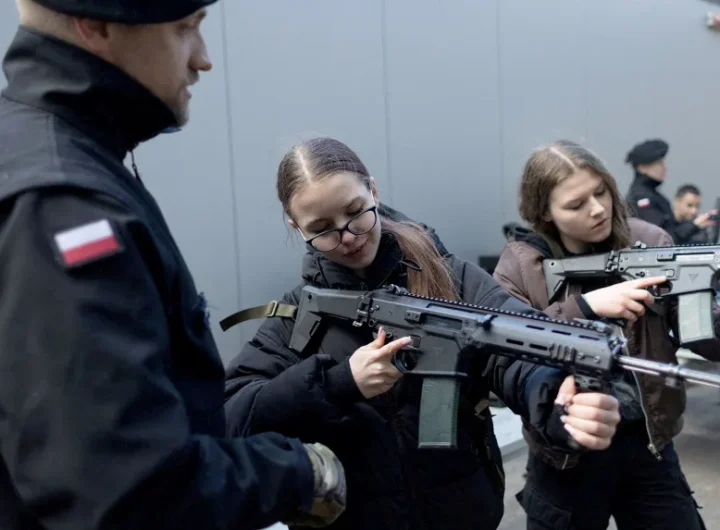 The risk of escalation in the conflict with Russia: Is Europe ready?
 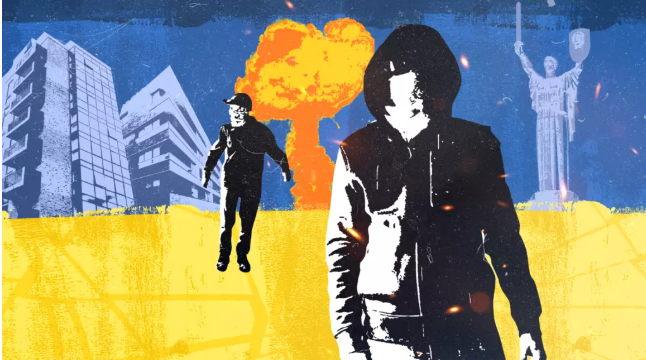 Russian spy network recruits ukrainian teenagers for sabotage across Europe