
Ukrainian President Volodymyr Zelensky on Thursday urged countries that support Kiev in its defense against a Russian invasion to tighten sanctions against Moscow, saying the Kremlin was not worried about heavy losses but could be forced to end the war if economic pressure was strong enough.
Zelensky spoke via video link on the first day of an international security conference held in Prague from June 12 to 14, hours after Russian forces again launched a fierce offensive on Kharkiv, Ukraine's second-largest city near the Russian border.
His comments at the GLOBSEC forum came as Ukraine and Russia continue to exchange prisoners of war. At the GLOBSEC forum, Zelensky also called on countries to fund increased drone production and take other measures to stop the Russian offensive, and said Ukraine is the “first line of defense” against Russian President Vladimir Putin and his forces. “If that line falls, Putin is gone,” he said.
Mr. Zelensky's speech followed an opening speech by Czech President Petr Pavel, who stressed "the importance of supporting Ukraine and relying on our strength as Europeans" at a time when "the new American administration has shaken transatlantic relations and forced Europe to confront strategic issues that can no longer be postponed."
"Ukraine continues to fight courageously for the freedom, independence and security of all of Europe," said Mr. Pavel.
Zelensky claims that the Russian military has suffered more than a million casualties – killed or wounded – since Putin's invasion on February 24, 2022.
A daily social media post by the Ukrainian military on June 12 claimed that Russian combat losses had reached 1,000,340. In early April, NATO estimated the figure at more than 900,000, including about 250,000 killed.
Putin's government is "not worried" about such losses, Zelenskiy said.
"They are concerned about sanctions," including oil price caps, he said, arguing that such measures, if strong enough, could "cut off their funding for the war and force them to seek peace."
Earlier this week, the European Commission presented EU Member States with new sanctions against Russia, including a reduction in the maximum price for Russian crude oil – from the current $60 to $45 per barrel – a measure aimed at curbing Russian oil revenues.
US President Donald Trump, who has been trying to end the war between Russia and Ukraine since taking office in January, has expressed frustration with Russia's defiance and its continued attacks, many of which have caused civilian deaths and injuries. However, he has so far refrained from imposing new sanctions.
On June 5, Trump compared Russia and Ukraine to "two little children arguing violently" and said he could impose severe sanctions on "both countries" if he finds they are not ready for a peace deal.
“So far there are no signs that Russia intends to end its aggression,” Czech President Petr Pavel said in his speech at the GLOBSEC forum. “But we are witnessing a worrying indecision when it comes to a clear distinction between aggressor and victim.”
"It is time to draw the necessary conclusions from the fact that the role of the United States in European security has changed and to strengthen Europe's ability to respond accordingly," he added.
Paul stressed that "we must maintain an intensive dialogue" with the US, but "we must increase efforts to build credible European defense capabilities, strengthen our defense industry, and take political responsibility for our collective security."
Zelensky began his speech by referring to “Operation Spider Web,” the unprecedented Ukrainian attack on June 1, in which drones were smuggled into Russia in trucks and used at close range to attack military airfields, destroying or damaging a number of Russian strategic bombers.
Given the growing role of drones in warfare, Zelenskiy said that Ukraine is "ready to increase drone production," but lacks the money to do so.
“We have the capacity. What we lack are the means,” he said. “We all need to be faster in developing drones than our enemies. One rule is clear – no country can afford to fall behind in technological development.”
With Moscow rejecting calls from Kiev and the West for a ceasefire and the fate of direct peace talks remaining uncertain after two rounds without progress, Zelensky said, “You can’t convince Russia for peace.”
Russia attacks Kharkiv again
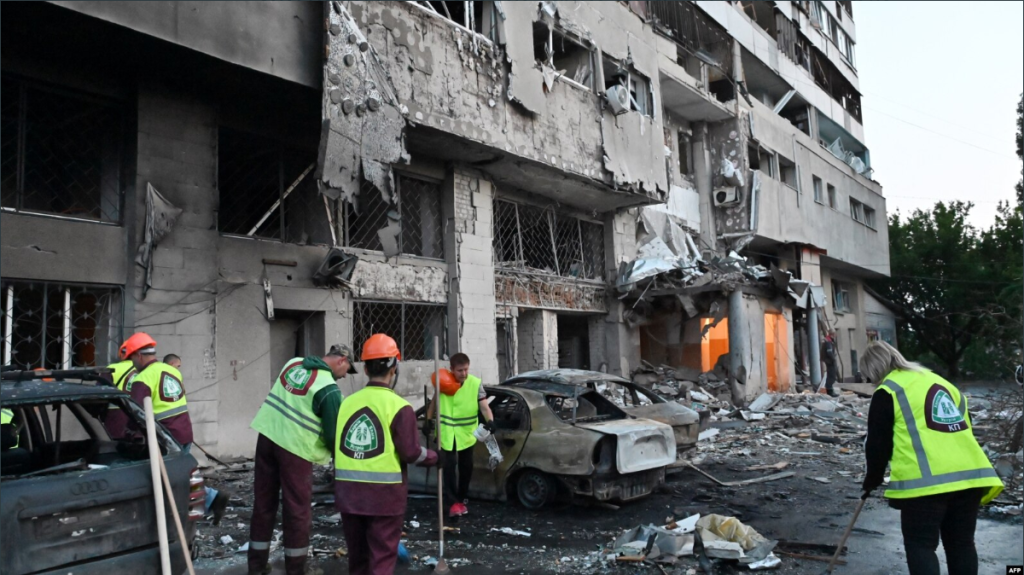
Russia carried out a new wave of drone attacks overnight in several neighborhoods of Kharkiv, damaging apartment blocks and a schoolyard where the drone crashed and breaking windows, Mayor Ihor Terekhov said.
At least 15 people, including children, were injured and five others were hospitalized, according to police.
The Ukrainian military said it had carried out an attack on an electronics factory near Moscow. The General Staff of the Armed Forces of Ukraine said in a post on Telegram that explosions were reported at the Rezonit factory, which it said produces electronics widely used in the production of weapons and high-tech equipment.
The allegations could not immediately be independently verified.
While Russia is carrying out large-scale attacks on Kharkiv, Kiev and other cities, with no sign of willingness to make concessions in any peace agreement, German Defense Minister Boris Pistorius was in Kiev on June 12 to express support and discuss additional military assistance.
"The purpose of this visit is above all to show that Germany, the new federal government, continues to stand by Ukraine in the current situation, which has not become easier," Pistorius told reporters upon arrival. He added that they would discuss additional weapons support from Germany and other EU countries.
 Bosnia and Herzegovina bans entry to Milan Radoić: National security threat declared due to terrorist attack in Banjska
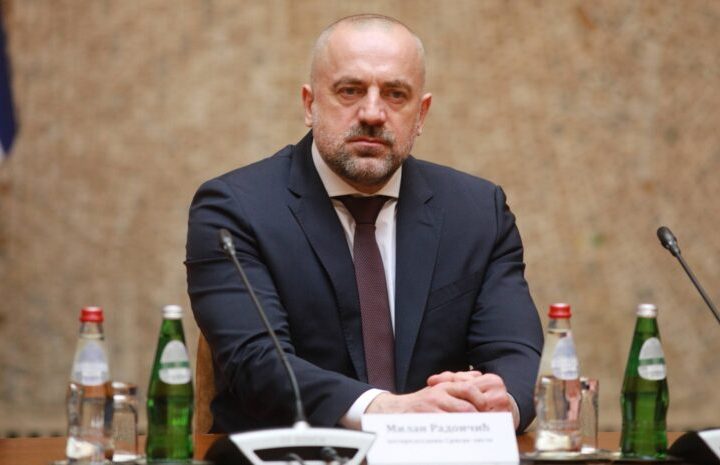 Belgrade court issues arrest warrant for Milan Radoicic
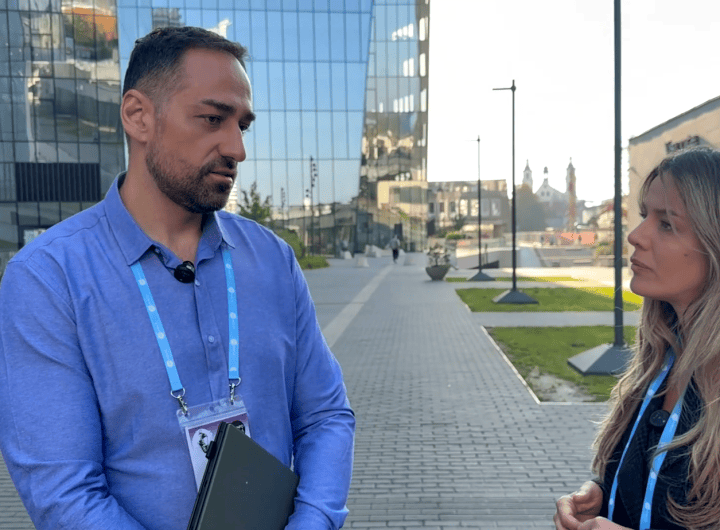 Selimi: The influence of Russian media in the Balkans is greater than ever
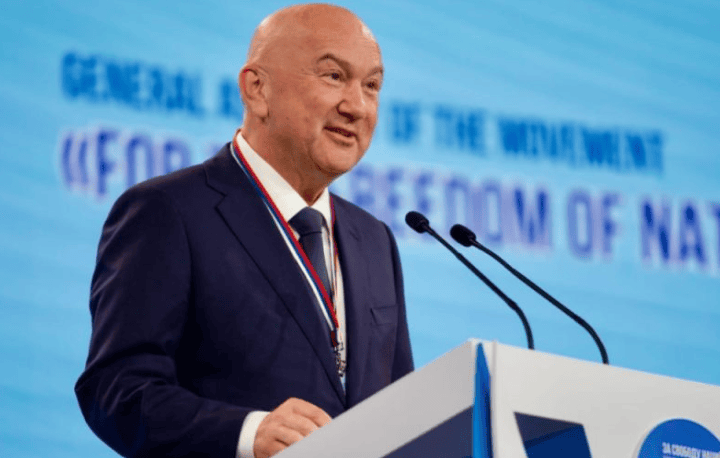 Serbian Minister in Moscow: We are not giving up on Kosovo, partnership with Russia and China remains strategic
 REM fines Informer and B92 televisions: Shows and advertisements banned, six people arrested for threats against journalist
 Serbian lawyer: BIA files could shock Serbia, from Ivanovic's murder to the service's ties to power