

When Elena Koposova signed an open letter against Russia's full-scale invasion of Ukraine, she didn't expect a backlash in her newly adopted country, Serbia. After all, Serbia is formally seeking to join the European Union by adopting all the democratic values that go along with membership, she thought, adding that she now sees that she was wrong.
Two years after signing the letter, the 54-year-old Russian is appealing a deportation order after being declared a threat to Serbia's national security and having her residence permit revoked. The literary translator said the only reason she could think of was the anti-war petition she had signed, The Geopost reports.
“I’m not an activist, but I signed a letter against the war when the Russian aggression in Ukraine first started,” she said in an interview. “Even though I wasn’t an activist, I couldn’t stay silent about it. So, I just put my name on the open letter saying that the war is a crime and we should all come together to stop it.”
Koposova is not alone. Serbia has opened its borders in recent years to tens of thousands of Russians fleeing President Vladimir Putin's government and the war in Ukraine. Russian pro-democracy activists in the Balkan country now say at least a dozen of them have recently faced entry bans or had their residence permits revoked on the grounds that they pose a threat to Serbia's security.
At least eight others are afraid to speak publicly about their legal problems with Serbian authorities, fearing that doing so could only jeopardize their chance to remain in the country with their families, Russian anti-war activists say.
“It was very unexpected, very shocking,” Koposova said of the moment she received the deportation order, which did not explain the reason for the decision, only stating that she poses a “threat to national security” and that she must leave Serbia within 30 days.
She and her husband have built a modern house on a piece of land in a remote village outside Belgrade, where they live with two children, aged 6 and 14, who attend local schools and preschool classes.
Rights activists say the problems with the stance point to a close relationship between Serbia's increasingly autocratic President Aleksandar Vucic and Putin, despite Serbia's formal EU bid. Vucic has refused to join Western sanctions against the traditional Slavic ally, while allowing Moscow-backed propaganda outlets like RT and Sputnik to spread their narrative across the Balkans.
“The authorities in Belgrade and the authorities in Moscow are politically very close,” said Predrag Petrović, research coordinator at the Belgrade Center for Security Policy, an independent institute that has demanded an explanation from the Interior Ministry for the measures against Russians.
“People who are critical of Putin’s regime pose a huge threat to the regime in Moscow,” Petrović said. “That’s why these people are targeted by the Serbian authorities.”
Serbian officials have so far not commented on the reported cases involving Russian nationals, and Serbia's Interior Ministry did not respond to an email from The Associated Press requesting an interview or comment on the matter.
Since the war in Ukraine began two years ago, many Russians have flocked to Serbia because they don't need visas to enter the friendly Balkan country, a potential stepping stone for future migration to the West. Many were dodging the draft, while others, like the Koposova family, who left early, were simply fed up with Putin's government and looking for a better life somewhere outside of Russia.
Peter Nikitin, one of the founders of the pro-democracy Russian Democratic Society, spent two days alone at Belgrade airport last summer when his entry permit was revoked, even though he has a Serbian wife and has lived in Serbia for seven years. Nikitin was later allowed to enter Serbia, but a legal procedure regarding his residence documents is ongoing.
“I have no doubt that this is being done on direct orders from Russia, either through the embassy or directly from Moscow,” insisted Nikitin, whose group has also organized protests against the war in Ukraine and demonstrations demanding freedom for political prisoners, including Alexei Navalny, a Russian opposition leader and Putin critic who died on February 16.
Nikitin said other anti-war activists who faced scrutiny from Serbian authorities include the co-founder of the RDS group, Vladimir Volokhonsky, who now lives in Germany.
Also under sanctions were Yevgeny Irzhansky, who organized concerts by anti-Putin groups in Serbia and has since moved to Argentina with his wife, and Ilya Zernov, a young Russian who was banned from returning to Serbia after being attacked by a far-right Serbian nationalist when he tried to remove a mural calling for the death of Ukraine in central Belgrade.
Nikitin said the aim of these measures is to intimidate anti-war activists.
“The only explanation for this is that they want to scare everyone,” he said. “Because if you can’t sign a letter against the war, then you can’t do anything. And it has a chilling effect.”
“The point is that anti-war Russians are not protesting here against anyone in Serbia,” Nikitin said. “We are only concerned about our country and our neighboring country, which is suffering from our country right now.”
Serbia's close ties with Russia date back centuries, and the two countries also share a common Slavic origin and Orthodox Christian religion. Russia has supported Serbia's effort to maintain its claim to Kosovo, a former province that declared independence in 2008 with Western support./The Geopost/
 Bosnia and Herzegovina bans entry to Milan Radoić: National security threat declared due to terrorist attack in Banjska
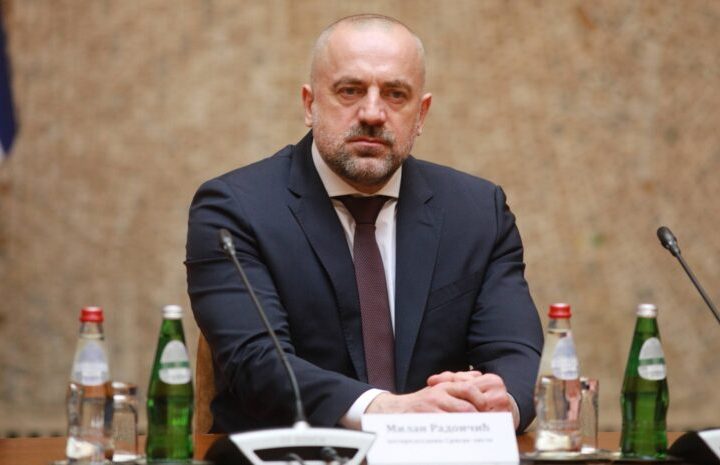 Belgrade court issues arrest warrant for Milan Radoicic
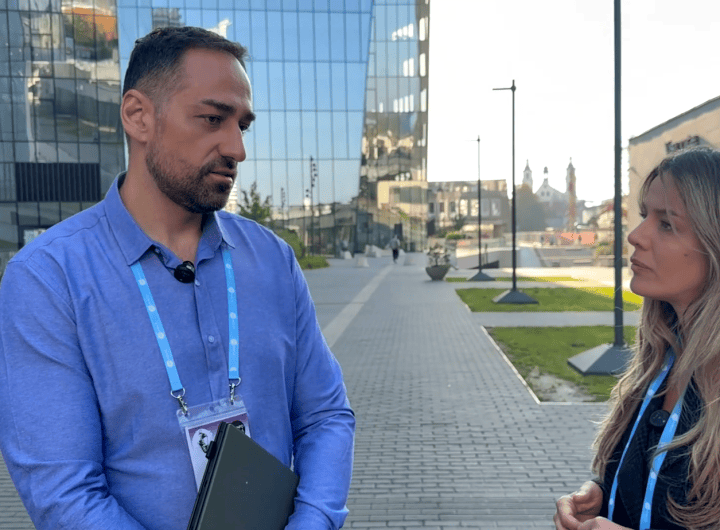 Selimi: The influence of Russian media in the Balkans is greater than ever
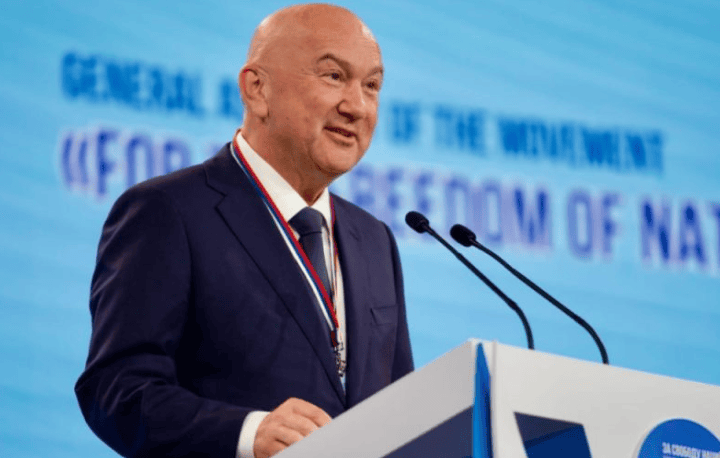 Serbian Minister in Moscow: We are not giving up on Kosovo, partnership with Russia and China remains strategic
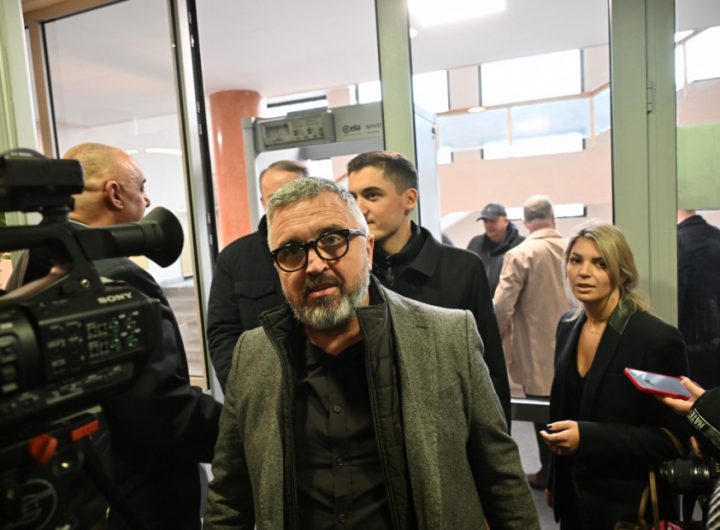 REM fines Informer and B92 televisions: Shows and advertisements banned, six people arrested for threats against journalist
 Serbian lawyer: BIA files could shock Serbia, from Ivanovic's murder to the service's ties to power