

Russia's economy rebounded strongly in 2022 after a slump, annual data showed on Wednesday. However, the growth is heavily dependent on state-funded arms and ammunition production and masks problems that are preventing Russians from improving their living standards.
President Vladimir Putin, who is seeking re-election in March, has said the economy is developing and there is a large enough margin of safety to allow Russia to successfully disengage from the West despite sanctions imposed over the war in Ukraine.
But Russia-based economists say the economy is now showing serious signs of overheating as Moscow continues what it calls a "special military operation" in Ukraine and that despite the current optimism, stagnation or recession is now at risk.
The Rosstat statistics agency's estimate of GDP growth on Wednesday showed a rebound of 3.6% after a revised 1.2% decline in 2022, but economists Reuters spoke to said the headline figure offered little insight into the living standards of most Russians.
“When a defense company builds a missile or a grenade, it explodes somewhere and GDP increases,” said economist Sergei Chestanov. “But the civilian economy benefits very little from this process.
“The Soviet Union produced a lot of tanks and missiles, but people didn’t feel it.”
The Russian Center for Macroeconomic Analysis and Short-Term Forecasts (CAMAC) attributes about 60-65% of the industrial production growth in the last two years to the conflict in Ukraine.
Other economists believe that Russia is stimulating the economy with one-time, unproductive investments that provide limited future benefits.
“Production in the military-industrial complex, to put it bluntly, drains money from the economy,” said economist Alexandra Suslina. “Conventional tanks and bombs are something that you use once and don’t return anything to the economy.
"It is impossible to build a high-tech car from the remains of a tank that can further contribute to growth."
“NOT ALL GROWTH IS GOOD”
The International Monetary Fund expects Russia's economy to grow faster than all G7 economies this year, but less than emerging European economies. Military spending has supported the economic growth of countries at war throughout history.
The IMF, whose forecast of 2.6% is higher than the Russian Economy Ministry's forecast of 2.3%, said the country's tight labor market had supported wage growth. Real wages have now started to fall, according to CAMAC.
“Inflation is too high and companies' financial positions are no longer secure enough to raise wages quickly, even in the face of a severe labor shortage,” CAMAC economists write.
With real disposable income, the situation is even worse, they said, with pensions and benefits not fully indexed to inflation, which stood at 7.4% in 2023 after a reading of 11.9% in 2022.
Unemployment is at a record low of 2.9% and hundreds of thousands of people have left Russia or joined the military in the past two years.
According to Rosstat, Russia's labor productivity index, one of Putin's key national development goals, fell 3.6% in annual terms in 2022, the sharpest annual decline since the aftermath of the 2009 global financial crisis.
Labor Minister Anton Kotyakov has said that Russia needs to increase labor productivity to become more technologically self-sufficient.
Labor productivity data for 2023 will not be released until the end of 2024, but authorities' warnings about labor shortages suggest there was no recovery last year.
Wage growth is also concentrated in regions and sectors that benefit from the sharp increase in defense and security spending this year to nearly 40% of total household spending.
“Not all growth is good if the benefits from this growth mainly benefit a very limited circle of economic actors,” said Yevgeny Nadorshin, chief economist at PF Capital.
“The majority of the population is not experiencing income growth – or at best, experiencing single-digit nominal growth.”
RISK OF OVERHEATING?
Further evidence of the tight labor market in Russia is the record high capacity utilization, which reached 81% in the last quarter of 2023, up from 80.7% in the previous quarter.
At the same time, stubbornly high inflation suggests the economy is growing faster than potential, forcing the central bank to keep interest rates high.
"If we try to go faster than the car is designed for and give it as much gas as possible, then sooner or later the engine will overheat and we won't get far," Central Bank Governor Elvira Nabiullina said in December.
"We can go fast, but not for long."
According to CAMAC experts, while it is still too early to talk about a recession, there are signs that the economy is faltering in sectors such as car manufacturing and construction.
The IMF expects Russian growth to fall to 1.1% next year, well below that of advanced and developed economies.
“I do not consider the current economic growth to be sustainable or qualitative,” Nadorshin said. “I see it as a harbinger of an approaching economic crisis, perhaps the first since 2004, which may not even need an external shock./Reuters/
 Bosnia and Herzegovina bans entry to Milan Radoić: National security threat declared due to terrorist attack in Banjska
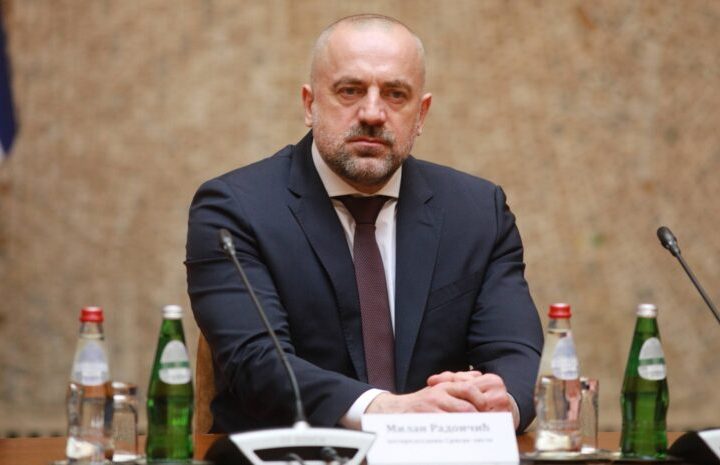 Belgrade court issues arrest warrant for Milan Radoicic
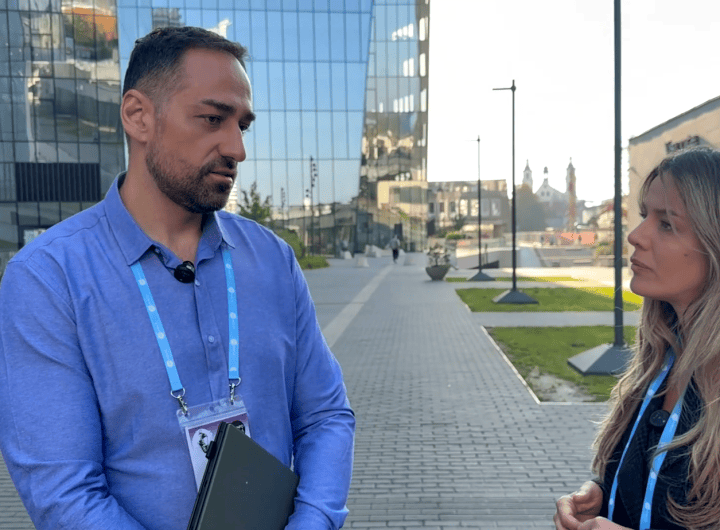 Selimi: The influence of Russian media in the Balkans is greater than ever
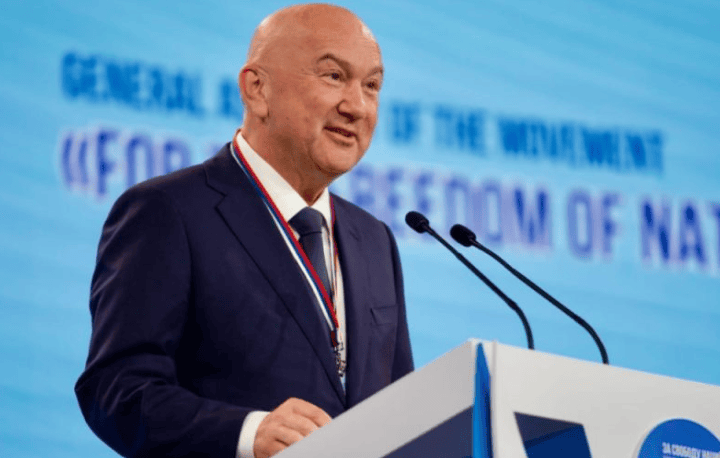 Serbian Minister in Moscow: We are not giving up on Kosovo, partnership with Russia and China remains strategic
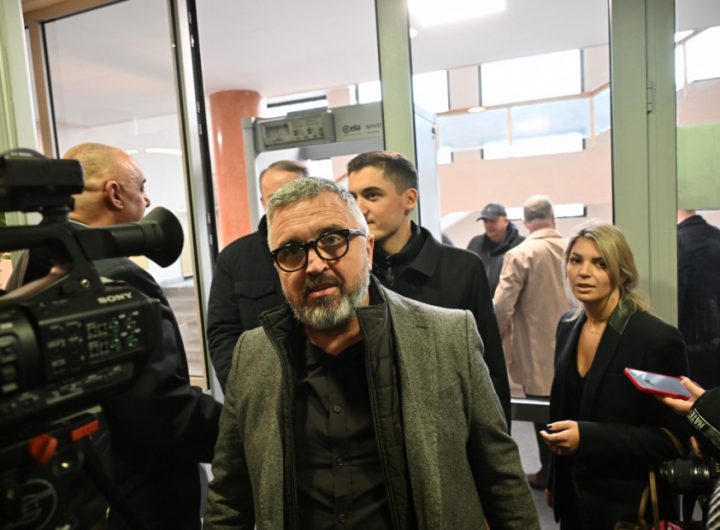 REM fines Informer and B92 televisions: Shows and advertisements banned, six people arrested for threats against journalist
 Serbian lawyer: BIA files could shock Serbia, from Ivanovic's murder to the service's ties to power