

The sad truth is that the lack of serious mass opposition to Putin within Russia – let alone his war in Ukraine – speaks volumes.
Russian opposition leader Alexei Navalny was sacrificed.
He returned to President Vladimir Putin's Russia, knowing full well that it could prove fatal. But that's what true leaders do. They lead by example, even if it means they're willing to sacrifice themselves — if that's what it takes to get people to act.
“I am not afraid, and you should not be afraid,” read a handwritten note that Navalny taped behind the glass of the dock during one of his many court appearances.
Not that that was ever the point of his return: Navalny and his supporters hoped that he would eventually emerge from Putin’s gulags and force Russia to break free from its dark past of repression. Imprisonment was something he had to endure and risk in his long, defiant, and uncompromising campaign to stir the conscience of the Russian people and convince them to overthrow Putin and dismantle the system he and his KGB cronies created.
But Navalny’s murder at the age of 47 now raises two important questions: Will Russians respond and pick up the gauntlet he threw down? And will Western powers heed the call made by his daughter Darya in a poignant speech to the European Parliament in 2021 and drop their excuses for restraint and inaction?
Accepting the prestigious Sakharov Prize on behalf of her father, the then 20-year-old Stanford University student said: “I don’t understand why those who have been awarded the Sakharov Prize behave like this: ‘I don’t understand why those who advocate pragmatic relations with dictators can’t just open the history books. That would be a very pragmatic act, and once you’ve done it, it’s very easy to understand the inescapable political law: appeasing dictators and tyrants never works.’”
Of course, time will tell how the Russian people will react and whether the resolve of the Western powers will be strengthened. But if past is prologue, the signs are not good.
There have been only isolated protests across Russia in recent days: in Moscow, mourners laid bouquets of flowers at the Wailing Wall — a monument to victims of Stalin-era persecution. Makeshift monuments to Navalny have also been erected in other cities. According to the human rights organization OVD-Info, more than 400 people have been arrested as of Sunday.
But in a country of 143 million people, this is not a political awakening or a protest.
Russian opposition leaders will no doubt attribute this to fear – fear of the wrath of the Kremlin, which has launched a brutal crackdown on dissent and dissidents, imposing heavy prison sentences for those careless enough to criticize or voice dissent. By shutting down independent news outlets, censoring and blocking social media platforms, and using repression and intimidation, the Kremlin has done everything it can to suppress critical voices and prevent the organization of protests.
Of course, all of these are possible factors. The same goes for the exodus of perhaps as many as 700,000 Russians fleeing Putin, his war and conscription, weakening the opposition – even as the economy was weakened by their absence.
But considering all this, the sad and disturbing truth is that even without the intimidation and the dramatic increase in the number of political prisoners, the lack of serious mass opposition to Putin within Russia – let alone his war against Ukraine – speaks volumes.
It is a testament to the enduring support Putin enjoys among the majority of Russians, who seem to share his chauvinistic attitude toward Ukraine, the Baltics, and Central Asia. They cling to his historical narrative that Ukraine is an irrevocable part of the “Russian world.” And they are also irredentist people who complain about injustices—just think of the polls after the annexation of Crimea in 2014.
Of course, this narrative was shaped, implemented, and curated for the Soviet tsars and commissars over the centuries, and has been reinforced by Putin and his regime over the past two decades. But that is neither an excuse nor a justification. And undoubtedly, when Putin’s system falls, many will claim that they never collaborated with or approved of the Russian leader, and that they even offered small, everyday resistance where and when they could.
However, there is little evidence that they are not on the same wavelength as Vladimir the Poisonous Pants – as Navalny famously called him.
According to Navalny’s former chief of staff, his boss rejected the term “dissident” because it is generally associated with a small group of dissidents from the 1960s and 1970s. “There was a dramatic difference between them and our movement, because we don’t want to be a minority and we are not,” he is quoted as saying in David Herzenhorn’s Navalny biography “The Dissident.”
But even if the opposition doesn't want to be in the minority, in reality it is.
In a February 2021 poll by Moscow's Levada Center, only 19 percent of Russians agreed that Navalny exposed the corruption and moral bankruptcy of Putin and his followers, and 56 percent disapproved.
The poll led Andrei Kolesnikov of the Carnegie Russia Center to comment: “The near-fatal poisoning of Alexei Navalny, his return to Russia, and his subsequent imprisonment have only deepened the Russian public’s distrust and rejection of him.” His explanation for this was that Navalny was “pushing conformists out of their comfort zone.”
Perhaps so, but it seems that the protests since 2011 have failed to mobilize Russia’s broad middle and lower classes, many of whom depend on government jobs – something that has remained a problem for the leader of the Russian opposition. And even if Russians have been persuaded, coerced, and pushed into mass conformity, it is perhaps because they want to allow it.
They want to trust Putin – whether out of fear, laziness, or obedience.
What about Western powers? Will Navalny’s death lead to greater determination and action? There has been much outrage since Friday, with many Western politicians and officials declaring in unison that Putin was to blame. The British Foreign Office summoned the Russian envoy to London, and European Council President Charles Michel wrote online: “The EU holds the Russian regime solely responsible for this tragic death.
But as early as 2021, US President Joe Biden had warned of “devastating” consequences for Russia if Navalny died in prison. And it remains unclear what else the West has in its toolbox that it is actually prepared to use. Fear of military escalation by Russia, including a nuclear attack, has held Western powers back over the past two years. And while some caution is understandable, it seems they have too often acted in this way when perhaps they should have been more fearless.
Now US aid to Ukraine is stalled in Congress, and NATO allies in Europe are racking their brains over how to close the funding gap – especially as Navalny's death threatens the proposed $61 billion US aid package for Kiev, seemingly unchanged.
However, there are fears that Navalny's death will not be the last. Navalny bargained for his life, hoping that his willingness to die would change things – that Russians would come to their senses and do the right thing. And he was not the only one to make such a costly gamble.
So now we must think about journalist, historian and opposition activist Vladimir Kara-Murza, who is still in prison and struggling with deteriorating health. Another brave dissident imprisoned in Putin's gulags, another leader who has returned to Russia to say enough is enough.
 Bosnia and Herzegovina bans entry to Milan Radoić: National security threat declared due to terrorist attack in Banjska
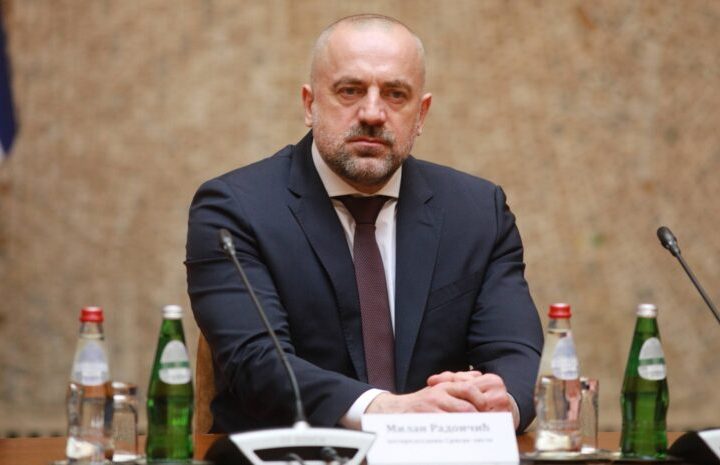 Belgrade court issues arrest warrant for Milan Radoicic
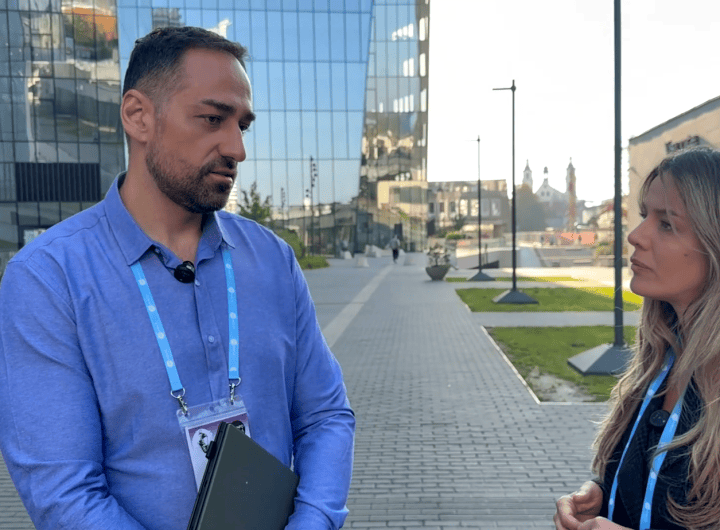 Selimi: The influence of Russian media in the Balkans is greater than ever
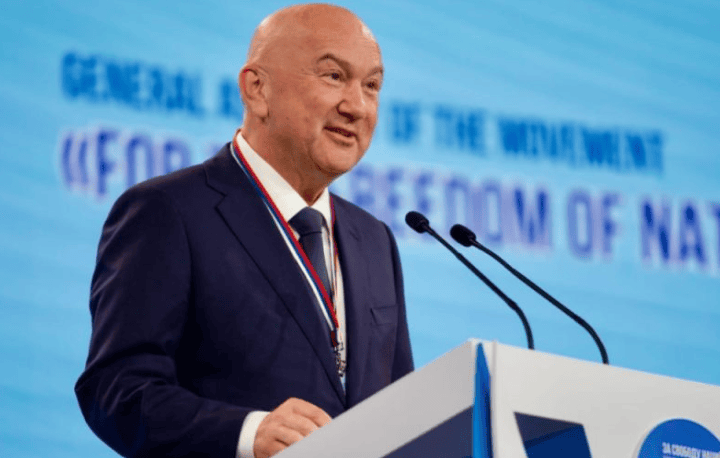 Serbian Minister in Moscow: We are not giving up on Kosovo, partnership with Russia and China remains strategic
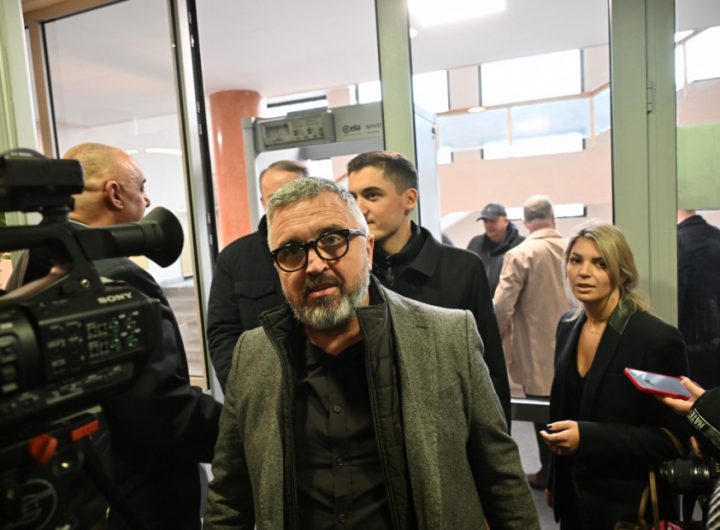 REM fines Informer and B92 televisions: Shows and advertisements banned, six people arrested for threats against journalist
 Serbian lawyer: BIA files could shock Serbia, from Ivanovic's murder to the service's ties to power