

The United States and Europe have pushed for a new pipeline that would bring gas to Bosnia and cut off supplies from Russia. But the project has been stalled by ethnic strife.
The United States, already struggling to contain intractable crises in the Middle East and Ukraine, is also facing a stalemate in the Balkans over a gas pipeline to Bosnia – an issue that jeopardizes major geopolitical interests.
The project, backed by the United States and the European Union but blocked by the ethnic strife that has long plagued Bosnia, aims to end Moscow's stranglehold on gas supplies in a fragile country straddling East and West that is torn apart by infiltration.
The proposed pipeline, which would transport natural gas from neighboring Croatia, a member of NATO and the European Union, would be just 100 miles long and cost about $110 million — a paltry sum compared to the $15 billion it cost to build the Nord Stream pipeline between Russia and Germany.
But that would significantly reduce Moscow's influence in a highly volatile region. Russia frequently used its control over energy supplies as a weapon against Ukraine in the years before its full-scale invasion in February 2022, and has since used it to undermine European unity by offering sweet energy deals to countries like Hungary and Serbia.
Russia has no territorial claims to Bosnia or other Balkan states, and its main goal is to prevent them from integrating with the West.
The stalled pipeline “is much more important than Bosnia and Herzegovina or future infrastructure in a small Balkan country,” said Vesna Pusic, a former Croatian foreign minister who helped lead her country into the European Union in 2013.
“It’s about closing the roads for Russia’s destabilizing influence in Europe,” Ms. Pusic said in an interview. “The big road is, of course, Ukraine, and this is just a small road. But if it’s not closed, it will grow” and spread instability beyond the Balkans, she added.
Unlike other European countries that diversified their energy supplies after the Russian invasion of Ukraine, Bosnia remains entirely dependent on Moscow for its natural gas.
Without alternative supplies from the West, James C. O'Brien, the US assistant secretary of state for European and Eurasian affairs, said in a telephone interview, "Bosnia risks falling behind and becoming uniquely exposed to pressure from Moscow."
O'Brien visited the Bosnian capital Sarajevo this month as part of U.S. efforts to launch the pipeline from Croatia, to distract politicians from their internal squabbles and overt Russian influence. "This is a vulnerability that needs to be addressed," O'Brien said.
Bosnia's main energy sources are hydroelectric power and domestic coal. Although natural gas from Russia makes up less than 5 percent of the country's total energy mix, it helps run a large aluminum factory and serves as fuel for the thermal power plants that keep Sarajevo warm in winter.
The Republic of Bosnia and Herzegovina is a fragile mix of territories inhabited by Muslim Bosniaks, Orthodox Christian Serbs and Catholic Croats, few of whom are religious believers. Since 1995, when the Dayton Peace Agreement ended years of bloodshed in the former Yugoslavia, the country has lurched from crisis to crisis.
Although the peace agreement ended wars that killed an estimated 100,000 people in the early 1990s, it left Bosnia with a complicated and extremely dysfunctional political system. The country is divided into two largely self-governing “entities” – a Muslim Croat federation and a Serb-dominated territory called Republika Srpska.
At the top of this shaky and divided structure is a weak central government with three presidents, one for each ethnic group, who are supposed to share power, but whose political leaders are fueling division in the country.
Republika Srpska, led by a militant Serb nationalist, Milorad Dodik, has repeatedly threatened to secede, which would trigger a new round of bloodshed. Dodik, who travels regularly to Russia, most recently for talks with President Vladimir V. Putin on Wednesday, is pushing ahead with his pipeline project that would increase gas supplies from Russia. His government has its own gas company, Gas-Res, controlled by ethnic Serbs, and a Russian-owned oil refinery, dependent on Russian crude.
Bosnian Croat leader Dragan Covic supports the proposed western gas pipeline but wants it to be controlled by a company run by ethnic Croats rather than the existing Bosnian pipeline operator BH Gas, which is based in Sarajevo and run by Bosniaks. The company Mr. Covic wants to create would be based in the Bosniak city of Mostar, which is ethnically mixed but has long been a bastion of Croat chauvinism.
The disagreements prompted Secretary of State Antony J. Blinken to make an unusually sharp intervention last month. In letters to the foreign ministers of Bosnia and Croatia, Blinken denounced Mr. Covic for obstructing “a crucial project.” His demands for a new ethnic Croat company are “duplicitous, economically unsustainable, and jeopardize the entire project.”
“Such blatant corruption and self-deception could jeopardize Bosnia’s hopes of one-day membership in the European Union,” Mr. Blinken added.
O'Brien, the deputy secretary of state, declined to say whether the Croatian and Bosnian foreign ministers had responded to Blinken's broadside, citing diplomatic confidentiality. Both ministers declined to be interviewed.
Mr. Covic, who also declined an interview, said he only wanted to protect legitimate Croatian interests and not block Bosnia's path to the European Union.
Nihada Glamoc, the director of BH Gas, acknowledged that most of her company's managers and employees are Bosniaks, but said there was no need for a new pipeline operator led by Croatia.
"It's all just politics," she said, stressing that her only interest is to ensure a "diverse and sustainable energy supply."
Muris Cicic, an economist and president of the Bosnian Academy of Sciences and Arts in Sarajevo, called the squabbles over the US-backed pipeline and Dodik's efforts to build an alternative to bring more Russian gas to the country "a model for Bosnia's dysfunction."
“Everything in this country is based on ethnic differentiation, even gas,” he said, adding: “Our politicians have divided everything that can be divided and put every part under their command. This is beyond any economic logic.”
According to Cicic, the squabbles not only hindered collective action in the interests of the entire country, but also created fertile ground for Russia to advance its interests.
“Bosnia is the dividing point between East and West – the point where Russia can easily provoke instability through people like Dodik,” Cicic said.
He added that Mr. Dodik is perhaps the most outspoken in expressing a desire to revise Bosnia's borders and keep the country out of the European Union, but he is not alone in representing narrow ethnic and often corrupt interests, risking fueling tensions and even violent conflict.
“Unfortunately we have a lot of Dodiks here,” he said.
The European Union has accepted Bosnia as a “candidate country” in 2022 to curb Russian influence in the Balkans after its invasion of Ukraine. But formal negotiations have yet to begin and the European Union’s executive committee gave a bleak assessment of Bosnia’s prospects in November, saying the country had made “no progress” in fighting corruption and had stalled on the “socio-economic reforms” demanded by Brussels.
The idea of building a pipeline to bring gas from neighboring Croatia has been around for nearly 15 years, ever since Russia cut off gas supplies to the Balkans via Ukraine in 2009, leaving Sarajevo shivering in sub-zero temperatures for days.
“We were very shocked by the closure in 2009 and realized that we had no energy security,” recalls Almir Becarevic, who ran BH Gas at the time.
For years, Gazprom, the Russian energy giant, seemed to be “just a normal company that sells gas,” but “it became increasingly clear that Gazprom was playing political games.” Gas, he added, “became a big geopolitical thing.”
Becarevic and others began pushing for a pipeline from Croatia to end the Russian monopoly, but made little progress, even after the opening in 2021 of a facility on an island off the Croatian coast that will handle shipments of liquefied natural gas.
“For years it was just blah, blah, blah,” Becarevic said. “But the war in Ukraine changed everything. The situation has now changed 100 percent.”/nytimes.com/
 Bosnia and Herzegovina bans entry to Milan Radoić: National security threat declared due to terrorist attack in Banjska
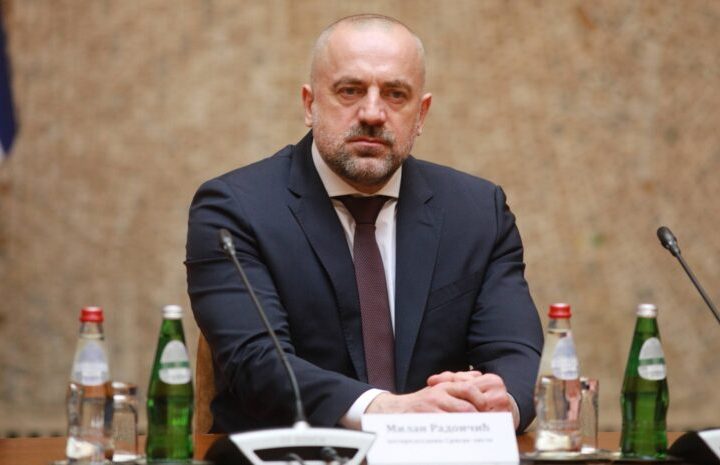 Belgrade court issues arrest warrant for Milan Radoicic
 Selimi: The influence of Russian media in the Balkans is greater than ever
 Serbian Minister in Moscow: We are not giving up on Kosovo, partnership with Russia and China remains strategic
 REM fines Informer and B92 televisions: Shows and advertisements banned, six people arrested for threats against journalist
 Serbian lawyer: BIA files could shock Serbia, from Ivanovic's murder to the service's ties to power