

University Professor of Diplomacy, Ibrahim Gashi, in an interview for The Geopost commented on the statements of Serbian Interior Minister Aleksandar Vulin about the Recak massacre, calling them "political madness", not only of an official but in general of a criminal state which, according to him, is unable to free itself from the ultra-nationalist spirit of the Milosevic period.
Regarding international reactions to these statements, Gashi believes that they are expected, but should be more frequent.
Meanwhile, Gashi sees the publication of books and various propaganda materials made in Serbia, with the aim of distorting the recent history of the war in Kosovo, but also of current events, as dangerous, because "it leaves a mark on the new generations and therefore must be fought vigorously by Kosovo institutions, encouraging and investing financially in supporting projects and scientists from various fields who would establish the truths of the war and post-war period, as documented by the then ambassador William Walker of the Recak massacre."
Meanwhile, regarding Russian influence in Kosovo and the region, Professor Gashi claims that it also comes through spies who disguise themselves as various international organizations, and therefore caution should be exercised with these individuals, who in some cases have even been expelled from the relevant organizations after their destabilizing intent for the country or region was discovered.
Read the full interview below:
The Geopost: How do you assess the statement of Serbian Interior Minister Aleksandar Vulin about the Recak massacre?
Gashi: In fact, a statement in the spirit of Serbian ultranationalist statements that denies everything that is Albanian, and it is not that we are not used to hearing such statements, but it is the culmination of denying a massacre that is universally known and well argued and coming out without a trace of shame and saying that it is a fabrication of Albanians, but in collaboration with the international factor, to justify the NATO bombings, this is, if we can call it that, a kind of political madness of a high-ranking official, which also expresses the political madness of a criminal state that is unable to free itself from the ultranationalist, chauvinist and criminal spirit of the Milosevic period.
The Geopost: How do you evaluate the international comments regarding this statement?
Gashi: The interventions were expected, they were normal, for example, the intervention of the State Department that the Racak massacre is well-argued and also the intervention of the EU that the atrocities that occurred in Racak are known, in my opinion, they are an appropriate reaction, which should perhaps be repeated more often because the Serbs have reacted even after this statement made by these two important centers of world politics, which were themselves involved during the war in Kosovo, they themselves identified and declared the Racak massacre, I am talking about Ambassador William Walker. The reaction should have been more insistent because Vulin has again responded to the reactions that have come from both Washington and Brussels, saying that they are horrified by the courage of the Serbs to tell the truth, which is again an extremely dangerous statement, first and foremost for relations and peaceful coexistence in the region, it is warmongering and provocative for all the families of the victims of the massacres that occurred in Kosovo during '98 and '99 by Serbian authorities.
The Geopost: How do you evaluate the publication of the propaganda book for children in Serbia titled “Kosharja, a new battle for Kosovo”. What do you think was the purpose of this publication?
Gashi: For us historians, these "stories" commissioned and written by politics, by people close to Serbian politics, in the spirit of the daily policies of the Serbian state towards Kosovo, are not unknown. The book, which I have seen written about on portals, is an act that has nothing to do with rationality, because offering children such a blatant falsification of history about a battle where the forces of the Serbian Army were defeated due to strong resistance from the forces of the Kosovo Liberation Army, but also due to the air intervention by NATO forces, and trying to create a legendary battle from it, even called the new battle of Kosovo or the second battle for Kosovo, is an attempt to falsify the history of the last war, like many other attempts that we are seeing that have gone to very high levels, trying to suppress the truth, which the whole world has known about the Serbian crimes committed in Kosovo during the war, and to conditionally create "a new truth, that the Serbs fought a holy war, a war to protect their homeland", in fact the Serbs fought a scorched earth war, as we know very well today. both journalism and global science, especially that of Western Europe and the United States of America that have been protagonists in this war who know that the Serbs have waged a scorched earth war, of mass expulsion and massacre of Albanians only because of their ethnicity, claiming to empty Kosovo and colonize it with Serbs. So, we are dealing with a typical war of conquest, expansionism which is tried to be presented in children's books at a very young age as "a holy war", "war for the land of the ancestors" etc. which does not pass without leaving a trace in the education of new generations. So we have a tendency to create a distorted education about the wars of conquest and loss that Serbia had at the end of the last century in the areas of former Yugoslavia, starting from Bosnia and Herzegovina, Kosovo and Croatia. Now, to justify those losses, they have to present as heroes those who conquered a country but failed. So, it is a tendency, sometimes even strange how far the imagination of Serbian policymakers and academics, who are in the service of daily Serbian politics, goes.
The Geopost: Recently, there has been a tendency by Serbia and Russia, through various factors, to present a false narrative about the Kosovo war. What is your opinion on this?
Gashi: In fact, the Serbian narrative is no different from the Russian one, it has even taken it as a model, it is an attempt to strengthen the Serbian narrative through the Russian one, knowing that Russia is a greater power, has an extension of its influence in a large area of the countries of the former Soviet Union, even today's Russia has a lot of influence in that part of Europe and Central Asia and the attempt is to spread a "truth", a Serbian version regarding the war in Kosovo, a narrative that Serbian journalism and politics are creating about the war in Kosovo to spread in that part of the world. This is not accidental, it is very deliberate and may have consequences. Because, there is a large community of states in which Russia has influence. So, Serbia is working with all its mechanisms to place its own narrative in the international public regarding the Kosovo war, regarding Kosovo, regarding the truth about Kosovo, in order to cover up the truth with this farce, whether about the past or the present of Kosovo.
The Geopost: What steps do you think Kosovo institutions should take to counter this propaganda and this trend?
Gashi: A pertinent question. I think that Kosovo institutions, political institutions, should not interfere in the work of academic institutions, but should encourage academic institutions to deal with the affirmation and publication of the truth not only about the last war, but also about the current situation that the state of Kosovo is going through. So, academic institutions have an obligation, based on numerous sources, to write a proper history, especially about the developments of the end of the last century and the beginning of this century, where there are attempts by Serbia to distort it. In this case, institutions should encourage various academies and institutes, engage political scientists, historians, and scientists to contribute to shedding light on an indisputable truth, and have their publications made for international audiences, in different languages, to prove that Serbia's efforts to hold Kosovo are efforts by an occupier to hold an occupied land that has no connection to its national past, but that certain elements have been created in the past, which Serbs try to present as identity institutions, such as the Serbian Orthodox Church and the churches and monasteries throughout Kosovo, which the state has given exceptional treatment to, which they try to present as their holy land. There is much to be done in this regard.
The Geopost: How do you comment on Russian influence through international organizations operating in Pristina? How harmful is this for Kosovo but also for the West?
Gashi: In these regional multilateral and international organizations, the Russians have become part of them not to help maintain the functioning and stability of coexistence in the countries of the former Yugoslavia, but have become more involved in destabilizing the efforts made by the international community, and this has been proven several times, that Russian officials, dressed in the guise of the UN international mission in Kosovo, have done a dangerous job of espionage for the political circles of Russia. And this was proven a few months ago when NATO was forced to expel some of the Russian Federation's observers in Brussels near NATO headquarters, because they were discovered to be carrying strategic and secret information of the Alliance. Even in the Council of Europe, Russian officials have been the people who have pushed Dick Marty's project to the maximum to move forward, not to mention that they have financed it by trying to smear the Kosovo Liberation Army War, which also influenced the creation of the Specialized Chambers, despite the fact that the report was denied and is not part of the indictments for the KLA leaders there, but was initiated by protagonists and members of the Council of Europe who represented Russia and the states that support it. So, wherever we have seen them in multilateral international forums, we have seen touches of destructiveness and undermining of important processes.
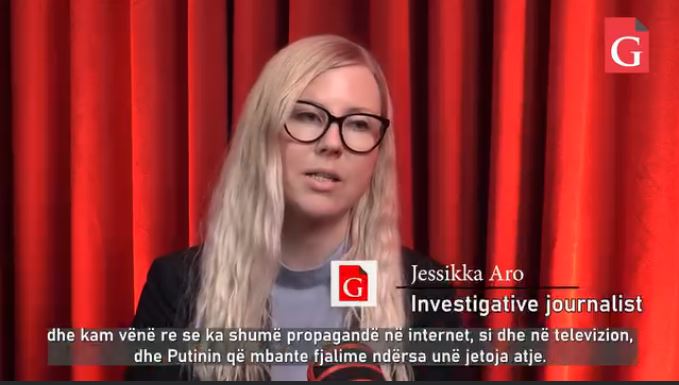 Aro: The loss of the pro-Russian candidate in Hungary does not mean the failure of the Kremlin's propaganda
 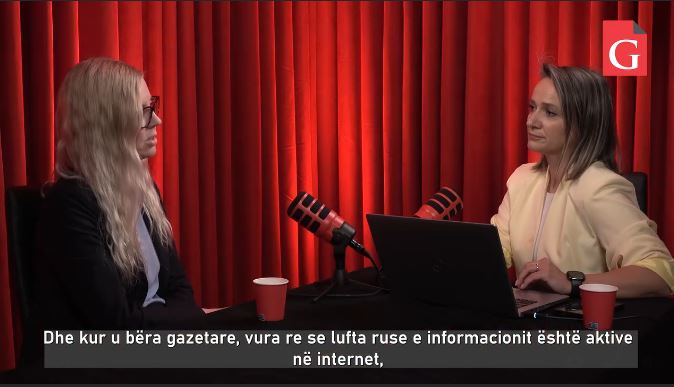 From propaganda to manipulation: The story of the Finnish journalist who exposed Russian “troll factories” and their global influence
  Media education the key against fake news – Swiss experience compared to Kosovo, Prita Bytyqi speaks
  How international conflicts are being exploited to spread fake news in Kosovo, says researcher Rizanaj
  University professor speaks about the danger of disinformation in the age of AI and Russian-Serbian propaganda
  Besa Luci on The Geotalks: How manipulation through emotions, propaganda, AI and influence happens in Kosovo