
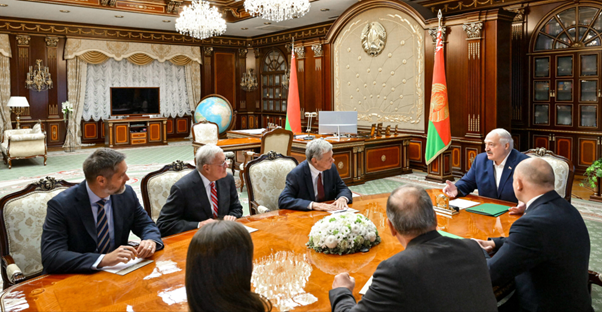
For Warsaw, the room for maneuver is narrowing to three courses of action. First, a selective opening for contact with Minsk, using the mediation offered by US presidential envoys, while maintaining strict conditions: exemptions, humanitarian access, and a reduction in border pressure.
Second, a redefinition of relations with Sviatlana Tsikhanouskaya's camp: a clearer specification of political and operational expectations towards migrant structures that have their own agenda.
Third, diversifying channels of contact with other Belarusian circles, including the diaspora in EU member states, which would reduce the risk of monopolizing representation.
Inaction becomes costly when Washington is considering the possibility of a partial “rehabilitation” of Minsk. The April release of Andrzej Poczobut strengthens the hypothesis that a thaw in the dialogue is being tested, although its sustainability and scope remain uncertain.
Belarus' relations with the West are cyclical in nature: repression and rigged elections lead to sanctions and freezing of contacts, while targeted gestures – prisoner releases and controlled liberalization – lead to partial normalization, Defence24 reports.
Washington has followed suit. After sanctions imposed after the 2006 and 2010 elections, partial normalization occurred in 2014-2015, when Minsk signaled greater autonomy from Moscow. During Donald Trump’s first term, détente accelerated; its symbol was the visit of Secretary of State Mike Pompeo in 2020.
This process failed after the brutal suppression of protests following the 2020 elections. However, the US reaction was more restrained than the EU's stance, revealing a shift in perceptions of the importance of the Belarusian factor.
The Joe Biden administration pursued a tougher course: support for the opposition and broad sanctions. Subsequent incidents – the hijacking of a plane and the arrest of Raman Pratasevich, the instrumentalization of migration against NATO’s eastern flank states, and then complicity in the aggression against Ukraine – consolidated the transatlantic consensus on isolation and support for the United Transitional Cabinet led by Tsikhanouskaya.
Washington abandons policy of isolating Minsk
Lukashenko's decisions after 2020 and the resulting political, economic, informational, and logistical isolation from the West maximized Belarus' dependence on Russia. The Kremlin supported the regime during the post-election crisis, receiving in return deeper penetration into state institutions and expanded control over key sectors of the economy.
The deployment of Russian armed forces on Belarusian territory has encouraged Moscow to treat the country as a “unified military space” – a rear base for operations against Ukraine and hybrid operations against NATO’s eastern flank states. As a result, Minsk’s sovereignty has been significantly limited; the true scope of Lukashenko’s autonomy remains unclear, undermining the possibility of pursuing a foreign policy independent of the Kremlin.
In this context, the new administration of Donald Trump is moving away from the previous policy of isolation and is testing a scenario of partial resumption with Minsk. The first signals appeared in January, when the US State Department quietly removed from its website a statement refusing to recognize the results of the 2020 presidential election.
Lukashenko, seeing the possibility of transactional dialogue with Washington, released American citizen Anastassia Nuhfer at the end of the month.
The tactic, developed over more than three decades of Lukashenko's rule, of using political prisoners as an "asset" in diplomatic negotiations, initiated a series of contacts with Washington that in practice led to a partial break in Minsk's isolation.
In February, Belarus was visited by Deputy Assistant Secretary of State for Eastern Europe Christopher W. Smith, and in June Lukashenko hosted U.S. Special Envoy for Ukraine Keith Kellogg. A significant change occurred in August, when Donald Trump held the first telephone conversation between a sitting U.S. president and Lukashenko, shortly before his meeting with Vladimir Putin in Alaska.
In a later post on Truth Social, he described Lukashenko as the “highly respected president of Belarus,” thanked him for releasing the prisoners, and declared his willingness for a personal meeting.
In September, there was another wave of releases — 52 people regained their freedom. John Coale, the envoy to Belarus, assessed relations as “good” and announced the possibility of reopening the US embassy in Minsk. The United States also accepted an invitation to send observers to the Zapad 2025 exercises.
Similar contact was held in December. In exchange for the partial lifting of sanctions, including those affecting the potash sector, 123 more people were released. Among them were Nobel Peace Prize laureate Ales Bialiatski, the leader of the 2020 protests, Maryia Kalesnikava, and former presidential candidate Viktar Babaryka.
In March 2026, another meeting between Lukashenko and the US envoy took place, after which the largest amnesty of political prisoners to date was announced. A total of 250 people were released — 235 remained in the country, while 15 were deported to Lithuania.
This group included, among others, Belsat journalist Katsiaryna Andreyeva and activists from the Viasna Human Rights Center: Marfa Rabkova and Valiantsin Stefanovich. In exchange, the United States lifted sanctions on selected financial institutions — Belinvestbank, the Development Bank of the Republic of Belarus, and the Ministry of Finance — and completely lifted them on two key entities in the potash sector: the Belarusian Potash Company and Belaruskali.
Various hypotheses can be formulated regarding Washington's objectives, but their common denominator is a shift from a normative approach to short-term calculation. The resumption of dialogue with Minsk fits into a broader trend of softening the line towards Russia and an attempt to influence the divergent positions of the warring parties in Ukraine.
In this interpretation, Belarus can be treated as a tool of indirect influence. At the same time, Trump is using this avenue to demonstrate action towards Europe, challenging the paradigm of isolating authoritarian regimes and strengthening the logic of bilateral agreements at the expense of multilateralism.
De facto, this means recognizing the permanence of Lukashenko’s rule – after first neutralizing the opposition as a real political actor – and accepting the limited effectiveness of sanctions. As a result, controlled de-escalation seems to be a potentially more useful instrument than continued pressure.
The second dimension of this policy is geostrategic and economic. Washington may seek to gradually “detached” Belarus from Russia and China by creating an alternative field of maneuver, especially in the raw materials sectors. Sanctions after 2020 deepened Minsk’s dependence on Moscow and Beijing, especially in potash exports and logistics.
Their partial removal opens up space for the return of Western actors – including the Americans – and for the diversification of trade routes for raw materials considered strategic in the United States. In this context, speculation is emerging about possible capital inflows into the Belarusian potash sector and the reconstruction of trade channels, which would limit the dominance of Russia and China.
Such a strategy combines an economic component with political objectives: selective normalization would aim to transform Belarus from a Russian asset into a space of competing influences.
European strategy undermined
The US-Belarus rapprochement forces a reaction from the European Union, especially from the states that directly border the regime: Poland, Lithuania and Latvia. Despite the change of course by Washington, the EU member states are continuing their policy of isolating the authorities in Minsk and remain the main base of support for the Belarusian democratic opposition, concentrated mainly in Poland and Lithuania around the circle of Sviatlana Tsikhanouskaya.
Brussels continues its sanctions policy, including tightening it; in February of this year, it decided to extend the existing restrictions for another year.
In this context, US actions undermine the West's efforts to date by strengthening Lukashenko's international legitimacy and giving the regime breathing room after years of operating under political and economic pressure.
The divergences have become particularly visible in the aviation sector. Following the release of some political prisoners, Washington partially eased restrictions on the national carrier Belavia, restoring access to spare parts and selected technical services.
At the same time, EU sanctions still completely exclude such cooperation, forcing European companies to reject it. This case shows the growing asymmetry between the American approach – based on pragmatism and selective transactions – and the European one, rooted in normative logic and consistent application of standards. For Brussels, this entails the risk of eroding Western cohesion and reducing the effectiveness of the sanctions regime.
It should also be noted that this shift comes after a marked decline in the effectiveness of the existing isolation strategy. Lukashenko’s regime remains internally stable and more closely aligned with Moscow than before 2020. As a result, EU policy today is characterized by limited coordination with the United States and little ability to generate tangible political results.
The essence of the “Belarusian dilemma” depends on the hierarchy of priorities. The first option assumes keeping Belarus at a relative distance from Russia, allowing Lukashenko to continue balancing – at the cost of tolerating human rights violations. The second envisages continued isolation and sanctions of the regime, risking further deepening its dependence on the Kremlin.
So far, the European Union has leaned towards the second approach, prioritizing democratic standards and human rights over short-term geopolitical calculations.
After Lukashenko’s meeting in March with US envoy Coale, some sanctions affecting the Belarusian potash sector were lifted. As a result, the United States called on Lithuania to sever relations with Minsk. In the American view, fertilizer exports should be rerouted through Lithuanian territory, which would open up access for Belarusian products to European and then American markets.
For the Donald Trump administration, this has a political and economic dimension: the destabilization of the fertilizer market, linked, among other things, to the war with Iran, led to a significant increase in prices, directly affecting the Republican electoral base. In this agreement, the Lithuanian port of Klaipėda plays a key role; before 2020, it was the main transit hub for Belarusian goods, with significant capital involvement from entities from Minsk.
The Lithuanian side responded to the American signal with a cautious opening. Prime Minister Inga Ruganienė did not rule out the possibility of talks with Lukashenko, but conditioned them on three demands: an end to the use of balloons for smuggling into Lithuanian territory, the free return of detained trucks without additional charges, and an end to the migration pressure orchestrated by Belarusian and Russian services.
At the current stage, all these conditions can be considered fulfilled to a significant extent. This opens up space for a gradual normalization of contacts, while also signaling that in the coming months the Belarusian leadership will gain importance in regional politics – not only for Lithuania, but more broadly across the entire eastern flank.
Opportunities, risks and uncertainties of reopening
The Lukashenko regime is undergoing progressive integration with Russia, while the American “reopening” is already underway. At the same time, Minsk has long signaled a willingness for dialogue with European Union states, as confirmed by further releases of prisoners – including EU citizens and an employee of an EU institution.
Lukashenko sees a window of opportunity in Trump's policy, assuming its possible temporary nature and the risk that a future US administration could overturn it. This forces action within a short time horizon and explains the pace of current gestures.
There are arguments for a limited opening, as well as indications that a “window of opportunity” is emerging. For EU member states – especially those neighboring Belarus – this means the need to conduct a selective cost-benefit assessment in the context of limited transatlantic coordination.
In the most likely scenario of partial normalization — which includes limited unblocking of diplomatic channels and selective easing of sanctions — Lukashenko would gain more freedom of maneuver vis-à-vis Moscow.
This would translate into a partial reduction of economic dependence on Russia, especially in logistics and exports. As a result, Minsk could turn, to a limited extent, to a multi-vector policy, increasing its influence in relations with the Kremlin.
At the same time, the experience of recent months shows significant risks in such an approach. One example is the easing of restrictions by the US on the Belarusian aviation sector as part of a broader political agreement.
The restoration of limited access to Western components – subject to a ban on operations to selected destinations, including Russia and Iran – has limited credibility in law enforcement. In practice, the high degree of integration of the logistical systems and operational space of Russia and Belarus makes it difficult to control flows.
This means that the benefits gained from Minsk could indirectly strengthen Russian capabilities, undermining the strategic logic for partial normalization.
In the long term, any EU dialogue with Minsk will be contingent on the objectives of reducing tensions. The priority remains the sustainable elimination of migratory pressure at EU borders and an end to incidents involving violations of member states' airspace.
At the same time, it would be essential to limit Belarus’ role as a rear industrial base for the Russian war effort—particularly with regard to ammunition production. Achieving these objectives could produce tangible operational effects, including indirectly easing the burden on Ukrainian forces by reducing support for Russia from Belarusian territory, as well as freeing up some military units for more urgent operational directions.
The underlying threat remains the high – almost certain – risk that any “reopening process” will in fact be designed and controlled by the Kremlin. In such a scenario, it would bring mostly illusory benefits, strengthening both the propaganda apparatus and the economic capabilities of Minsk and Moscow alike.
Belarus could serve as an additional channel for Russia to evade Western sanctions. Concessions to the regime, made cyclically after periods of tactical lulls in its destabilizing activity, would reinforce the West’s image as reactive and lacking a long-term strategy toward Belarus—especially in terms of the desired end state of the relationship and the means necessary to achieve it.
The opposition's alternatives?
Since the presidential election of August 9, 2020, Europe – especially Poland and Lithuania – has consistently supported the Belarusian opposition in exile. The main political center formed around Sviatlana Tsikhanouskaya, Lukashenko’s challenger in the second round of the election. After the fraudulent elections and the outbreak of protests, she was forced to flee the country and found refuge in Lithuania, and in 2026 she moved to Warsaw.
This environment aims to change the regime and hold free elections, democratize Belarus, and hold the criminal machinery of power accountable. In recent years, Tsikhanouskaya has built an international network of contacts; opposition representatives maintain regular contacts with decision-makers and participate in political forums in the West.
At the same time, three fundamental limitations should be noted. First, the activity of the emigrant opposition remains structurally dependent on the support of the Western state. Second, this environment has not received formal recognition as a legal representative of the Belarusian state.
Third, his agency is limited – both because of the failure of several initiatives (including the “Free Belarusian Passport” project and accusations of “grant-eating”) and because he has little influence on the current political and social dynamics within the country.
In December 2025, as a result of US diplomatic efforts, one of the largest amnesties of political prisoners took place. Among those released were, among others, Maryia Kalesnikava and Viktar Babaryka, who were granted asylum in Berlin. Like Tsikhanouskaya, Kalesnikava continues opposition activity in exile, but emphasizes a slightly different diagnosis. She emphasizes that maintaining the complete isolation of Belarus strategically strengthens Russia.
The limitation of contacts with the West encourages a reorientation of society – more and more Belarusians choose education and life paths in Russia, which in the long run deepens their sensitivity to Russian narratives. In the conditions of advanced integration with the Russian Federation, continued isolation may paradoxically accelerate the absorption of the state by Moscow.
It is important that the main centers of the opposition are not in conflict. In February 2026, Tsikhanouskaya and her associates met with Kalesnikava and Babaryka, confirming the convergence of their goals: the release of political prisoners, an end to repression, support for civil society, and an effort towards systemic change.
Kalesnikava's statements regarding the need to resume dialogue with Lukashenko should not be interpreted as an attempt to legitimize the regime, but as an instrument for limiting Russian influence – seen as a direct threat to regional security, including that of Poland.
Is Lithuania closing down while Poland wants to open up?
Lithuania is tightening measures against Belarus after a series of airspace violations. Between October 21 and 26, 2025, the airports in Vilnius and Kaunas were temporarily closed four times after balloons used by Belarus for smuggling were discovered. The most serious incident occurred on the night of October 25 and 26, when about 25 objects forced a complete suspension of air traffic, the cancellation of 30 flights and disruption of flights for almost 6,000 passengers.
The government in Vilnius treated this as a hybrid move and immediately announced the indefinite closure of the border crossings in Medininkai and Šalčininkai, allowing only diplomatic traffic and the return of EU citizens. The other two crossings – Lavoriškės and Raigardas – have remained closed since 2023, meaning that the border with Belarus is effectively completely closed.
In response, Minsk imposed a ban on Lithuanian transporters transiting through Belarusian territory and seized Lithuanian trucks. Vilnius says Belarus is holding about 280 vehicles. The release of these trucks and their return to Lithuanian territory is one of Lithuania's conditions for starting talks with Lukashenko.
The issue was raised at the EU level. In a statement by the European Union, Member States condemned Belarus’s continued and provocative actions. However, due to opposition from Hungary, the final version of the statement removed the wording indicating the regime’s shared responsibility – both direct and as a result of deliberate inaction.
This shows that even in the face of quite obvious violations on the eastern flank, Brussels still lacks a unified approach and a single state can block a statement.
Lithuania closed all remaining border crossings with Belarus “for an indefinite period.” Since then, only the border crossings in Medininkai and Šalčininkai have reopened. At the same time, Poland opened two border crossings in November – in Bobrowniki and Kuźnica.
View of Warsaw and the eastern wing
The debate over reopening should be particularly loud in Poland today. In response to the Zapad 2025 exercises, Warsaw temporarily closed land border crossings with Belarus, causing significant disruptions to Eurasian supply chains.
On September 23, 2025, in accordance with a decision taken even before the incident involving the intrusion of Russian drones into Polish airspace, the crossings were reopened. This action confirms that the closure was an ad hoc security measure and not a permanent blockade.
It is worth noting that Belarusian services warned Poland about the approach of the drones, which enabled a faster and more coordinated response. This gesture can be interpreted as a signal of Minsk's interest in de-escalation and maintaining functional communication channels.
However, an alternative interpretation cannot be ruled out – namely, a reconnaissance operation designed to provoke Warsaw to activate air defense systems near the border and to discover radar parameters and response procedures. In the context of a hybrid confrontation, even seemingly cooperative actions may contain an intelligence component.
Washington’s current policy toward Minsk is clearly transactional. If the political calculations in the White House change – for example, if Donald Trump concludes that rapprochement with Lukashenko does not support the broader goal of dialogue with Moscow – the current thaw in relations could quickly freeze.
The lack of a clearly defined long-term strategy by the US increases uncertainty and undermines the sustainability of the process, which justifies a high level of caution on the part of regional states.
Following the 2020 post-election crisis, Poland, along with the Baltic states, gained considerable influence in shaping EU policy towards Belarus.
Any initiative for a limited thaw in relations must come from this group and receive its approval, since these are the states that bear the greatest security costs. In these conditions, Warsaw faces a strategic choice: to maintain a hard line of isolation or to cautiously try a path of partial de-escalation. At stake are the stability of the region and the prospects for preserving Belarus' remaining sovereignty.
Following the diplomatic success of securing the release of Andrzej Poczobut after more than 1,800 days in detention, one of the main political obstacles to opening dialogue has been removed.
In the short term, a limited revival of contacts is possible, focused on practical issues – transit, border stabilization, and de-escalation – while maintaining a high level of mistrust stemming from experience with hybrid actions and Minsk’s close cooperation with Russia.
However, Poczobut's release does not change the structural conditions: Belarus remains deeply dependent on Moscow, which limits the prospect of full normalization. For Minsk, this is part of a game aimed at easing sanctions and increasing autonomy; for Poland, it is a moment of choice between continuing isolation and testing limited dialogue.
Any opening will be controlled and transactional – it will not bring about progress, but it will make it possible to manage tensions and try to curb destabilizing actions.
The process of negotiations between Warsaw and Minsk will be complex, but under current conditions it is increasingly possible. The risks are known, the potential benefits limited. However, without a coherent long-term strategy, Poland remains exposed to a repeated cycle of short-term mergers and subsequent disillusionment with Lukashenko's policies.
The GeoPost
 Special Prosecution Office moves towards indictment for the massacre of the Jashari family in Prekaz
  "Mafia State": Why Today's Serbia Resembles Palermo of the 70s
  Iran to establish direct 'hotline' with US over Strait of Hormuz
  Russian stocks fall to lowest level since March 2023
 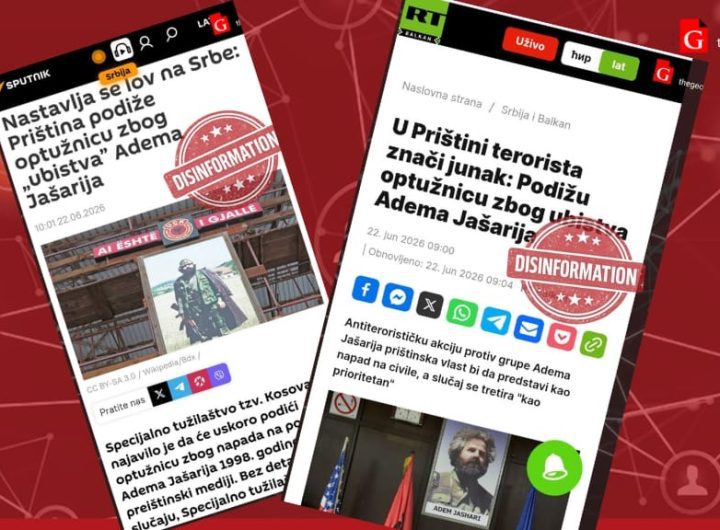 Russian media manipulates Prekaz, through disinformation they attempt to distort the facts about the crimes against the Jashari family
  Russia as Vucic's shield: How the FSB report was used to deny the use of the "sonic cannon" in the protest