
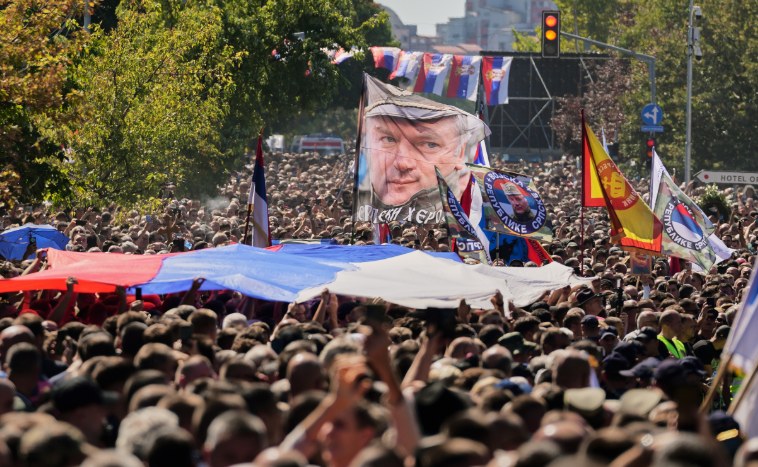
Ratko Mladic's funeral in Belgrade was not simply a funeral ceremony for a former military commander. The way it was organized, the state and military honors, the participation of high-ranking officials, and the direct involvement of the highest hierarchy of the Serbian Orthodox Church turned it into a public manifestation of the politics of memory that Serbia continues to build around the wars of the 90s.
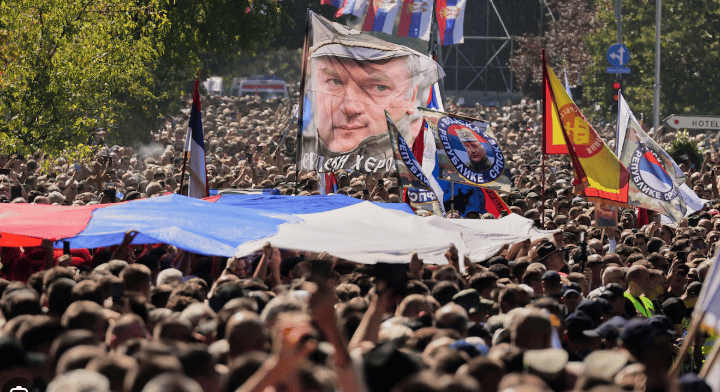
Mladic, who was ultimately sentenced to life imprisonment for the Srebrenica genocide, crimes against humanity and other war crimes, was buried in Belgrade with state and military honors. Thousands of people attended the ceremony, including Serbian officials, representatives of the Republika Srpska leadership and the Russian ambassador.
This moved the ceremony beyond the family dimension. The coffin draped in the Serbian flag, members of the military, public tributes and extensive media coverage created the image of a state ceremony for a figure who in Serbian nationalist discourse continues to be treated not as a war criminal convicted by international justice, but as a commander, a national symbol and, for some in the public, a hero. RFE/RL reported that during the ceremony the crowd chanted his name and welcomed the coffin with applause.
Even before the funeral, messages in Belgrade’s public spaces – “Thank you, General,” “Heroes never die,” and “Welcome home, General” – demonstrated that the return of Mladić’s body was being treated as a symbolic return of a national figure, not simply a private burial. Deutsche Welle has documented how the state-run media turned the funeral into a grand public spectacle.
The choice of Belgrade had both a practical and political dimension. A mass funeral in Republika Srpska would take place within the territory of Bosnia and Herzegovina, the state in which Mladić committed the crimes for which he was convicted, and would have had much greater potential for interethnic tensions, protests, and institutional clashes. In Belgrade, the Serbian authorities had full control over the order, security, protocol, and public dimension of the ceremony.
In Republika Srpska, however, his glorification was evident immediately after his death. Commemorations were held in churches and public spaces, while a Republika Srpska government minister called on veterans and citizens to light candles “for the soul of General Ratko Mladić.”
An even more significant dimension of the funeral was the role of the Serbian Orthodox Church. The funeral service was personally led by Patriarch Porfirije, who declared that Mladić's name would remain deeply in the memory and prayers of the majority of the Serbian and Orthodox people.
This wording is significant. The Church has not canonized Mladic and there is no official procedure to declare him a saint. But the involvement at the highest ecclesiastical level and the language used in his ceremony contribute to another process: the symbolic sacralization of his figure.
In this way, the boundary between religious memory, national identity, and the political rehabilitation of figures convicted of war crimes becomes increasingly blurred.
Mladic's figure is not only preserved through murals, slogans, or the rhetoric of nationalist circles. It gains additional legitimacy when state, military, and religious honors are combined in the same ceremony.
This is precisely where the political weight of the funeral in Belgrade lies: the state was not just dealing with the death of a former general, but was producing a message about how it wanted to remember him.
Instead of institutional distancing from a man convicted of genocide and crimes against humanity, the ceremony offered images of reverence, solemnity, and symbolic rehabilitation.
In this sense, the funeral can also be seen as a continuation of a broader policy of relativizing the past – a process where the decisions of international courts exist legally, but in the public narrative are gradually replaced by another version of history, in which those convicted of war crimes are presented as defenders of the nation, victims of international justice or figures of national sacrifice.
And it is precisely this transformation – from a convicted genocide convict to a figure honored by the state, the army, part of politics, and the church hierarchy – that is perhaps the most powerful and disturbing message that Ratko Mladic's funeral in Belgrade produced.
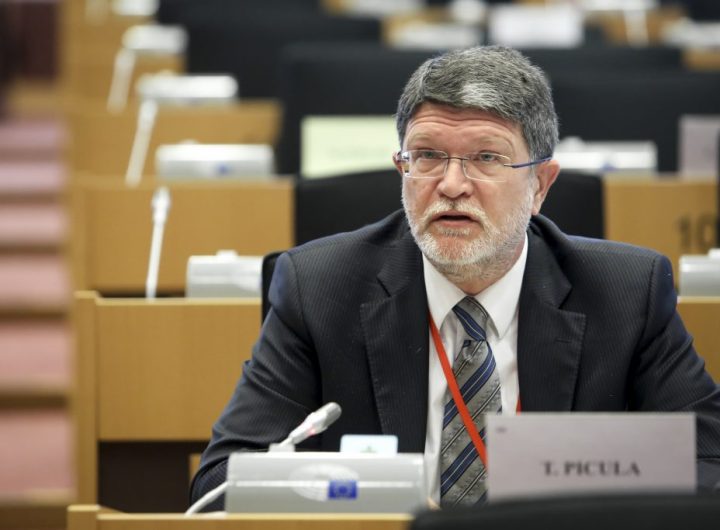 "The time has come for tougher measures": Picula calls for an end to EU tolerance towards Serbia and Vučić
 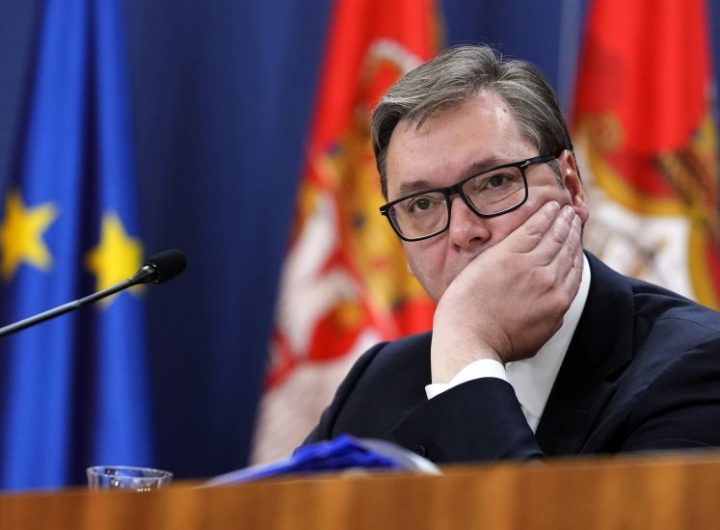 Serbia glorified Mladic, Vucic is victimized after EU reaction
 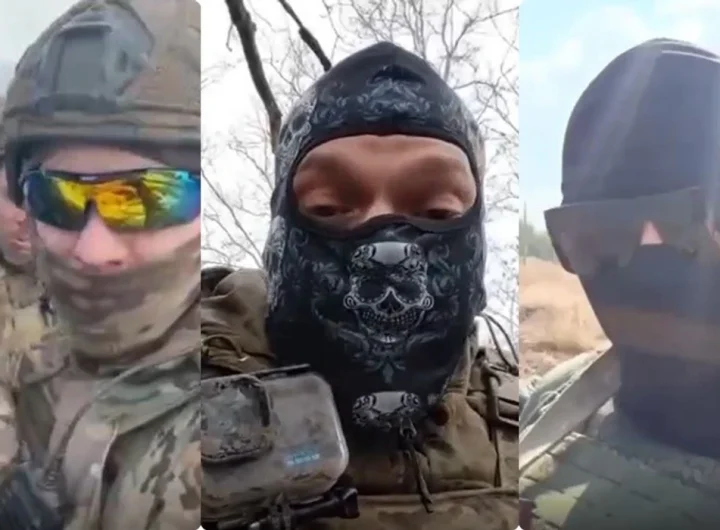 Serbs from the front in Ukraine with threatening messages for Kosovo (Video)
  Alarm from former US ambassador: The West must urgently change its strategy towards Serbia
  "Time for Serbia to face the consequences": Brussels changes tone after Mladic's funeral
  Bosnia expels two Serbian diplomats over Mladic glorification