
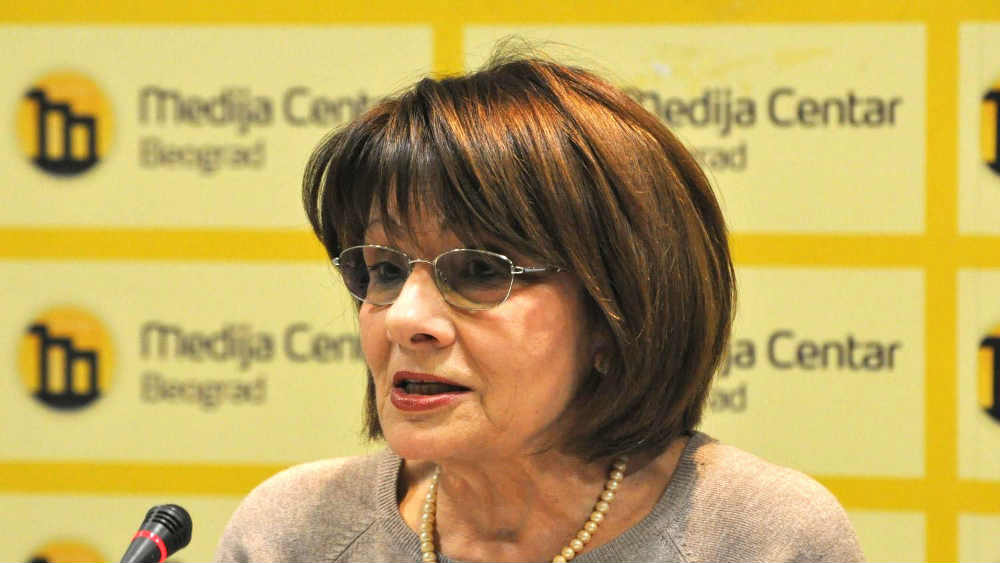
Former president of the European Movement in Serbia and expert on European affairs and regional relations, Jelica Minic, told RTK that the government in Belgrade has not built stable relations with most neighboring countries and continues to pursue a policy of balancing.
She warns that the Kosovo-Serbia dialogue is practically frozen, while the consequences of Belgrade and Pristina's policies are suffered most by Serbs in Kosovo.
Speaking about the increasingly frequent criticism that Serbia, through its actions, is contributing to the destabilization of the Western Balkans, Minic assessed that Belgrade is negatively affecting relations with its neighbors and has not yet clearly defined its foreign policy direction.
"When it comes to the Western Balkans, as a clear region that is dealt with both in the European Union and in NATO, Serbia objectively has a destabilizing role," said Minic.
According to her, reliance on distant global partners cannot provide a country with lasting stability, as it is built first and foremost through good relations with direct neighbors.
"The fact that a country is a client of a distant partner, across the ocean, American or Asian, does not provide it with lasting stability."
Representatives of the international community are increasingly warning that the Western Balkans have not yet been sustainably stabilized and that the policies of the government in Belgrade are contributing to regional tensions. Recently, the European Parliament rapporteur for Serbia, Tonino Picula, stated that the regime of President Aleksandar Vučić is the main source of instability in Serbia and the region.
Minic says that Belgrade's policy is reflected particularly in relations with Bosnia and Herzegovina and Montenegro, but also in the deterioration of relations with Croatia.
According to her assessment, Serbia and Croatia contribute to political tensions in Bosnia and Herzegovina, while Belgrade at the same time tries to influence political developments in Montenegro, which is advancing in the European integration process.
She believes that relations between Serbia and Croatia are worse than they were ten or fifteen years ago. Instead of cooperation and resolving open issues, they are burdened with mutual accusations and constant return to past conflicts.
Minic warns that such a policy not only endangers regional stability, but also makes the position of Serbian communities in neighboring countries more difficult.
"Serbia often forgets that it first and foremost started the wars in the former Yugoslavia and constantly presents itself as a victim," said Minic.
As she added, the position of the Serbian minority in each neighboring country also depends on the quality of Serbia's bilateral relations with that country. The constant opening of unresolved issues, therefore, becomes an additional burden for members of the Serbian community.
"All of this may not currently cause major problems, but it is accumulating in a kind of archive that will one day come back to us like a boomerang. This is the archive that the current regime is creating," Minic warned.
Minic recalled that Montenegro, Albania and North Macedonia are members of NATO and have harmonized their foreign and security policy with that of the European Union. According to her, belonging to common security structures facilitates their path towards EU membership.
She particularly highlights Montenegro's progress, but also the opportunity for Albania to accelerate European integration. Due to their strategic position on the Adriatic Sea, the progress of these countries has wider regional significance, she emphasizes.
"Serbia is not pursuing what is most important for its citizens, which is a stable, peaceful and prosperous life."
Serbia, however, continues to balance between the West, Russia and China. Relations with Moscow have been further strained by the war in Ukraine, the issue of Serbia's oil industry and the European Union's demands that Belgrade more clearly align its foreign policy with that of the EU.
Minic says that Serbia, apart from close relations with Hungary under Viktor Orban's government, has not paid sufficient attention to improving cooperation with traditionally important neighbors, such as Romania and Bulgaria.
As one of the most serious sources of regional instability, she singles out the unresolved relations between Kosovo and Serbia. Despite the mediation of the European Union and the engagement of its special envoy, Peter Sorensen, the talks between Belgrade and Pristina, in her assessment, are practically frozen.
"The dialogue is not taking place and the implementation of the agreements reached is also lacking. I think that the main political figures are currently primarily responsible for this," said Miniq.
The normalization process has been further complicated by the attack in Banjska, for which, almost three years later, there is still no judicial epilogue.
"Those who led and organized the attack, as well as the direct executors, have been identified, but everything has remained in place. The consequences of such a policy are paid for by the Serbian population in Kosovo," Miniq assessed.
She emphasizes that the ongoing insecurity, arrests and occasional violent incidents further worsen the security and political situation in Kosovo. According to her, Belgrade should work seriously and patiently to improve the position of the Serbian community, without violent steps, but with more openness towards the majority Albanian community.
The normalization of relations, she adds, should be presented as a process that can bring benefits to both Serbs and Albanians in Kosovo.
Minic also points out the difference between Belgrade's policy towards Kosovo and its relations with Albania. While conflicting rhetoric towards Pristina continues, relations between the governments of Serbia and Albania have been significantly more stable.
"In Serbia you will almost never hear criticism of Albania. This is practically a forbidden topic; about Albania either they are silent, or not a single bad word is said. This was also seen through the 'Open Balkans' initiative, while it was functioning," said Minic.
According to her assessment, the “Open Balkans” initiative contributed to improving communication between the two countries, but failed to become a sustainable framework for regional cooperation. After the change in international circumstances, it lost its political significance and practically died out.
While the dialogue with Kosovo and European integration have stalled, the government in Belgrade is trying to open a new space for cooperation with Washington. The start of the strategic dialogue between Serbia and the United States of America has been presented as an important step in improving bilateral relations.
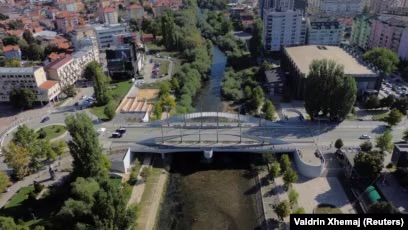 NATO: Any decision to reopen the Ibar bridge to vehicles must address the needs of all communities
  Russian plane lands in Nis via Bulgaria - Moscow continues its influence in the Balkans through Serbia
 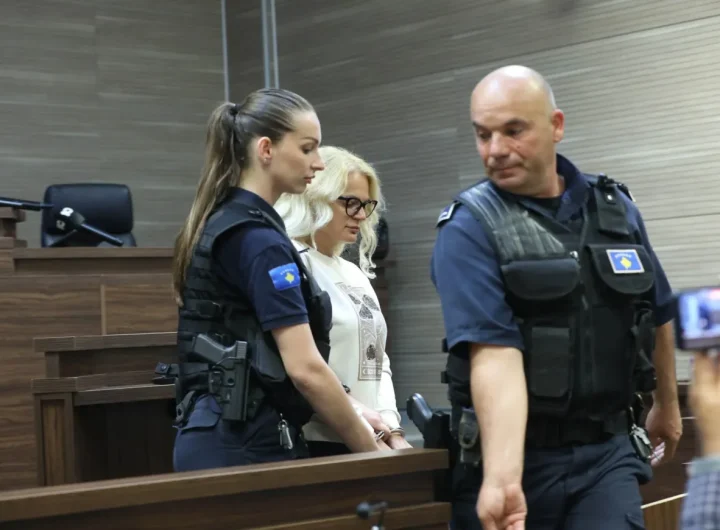 What does the Prosecution's file contain about BIA spy Jelena Djukanovic, sentenced to six years in prison?
 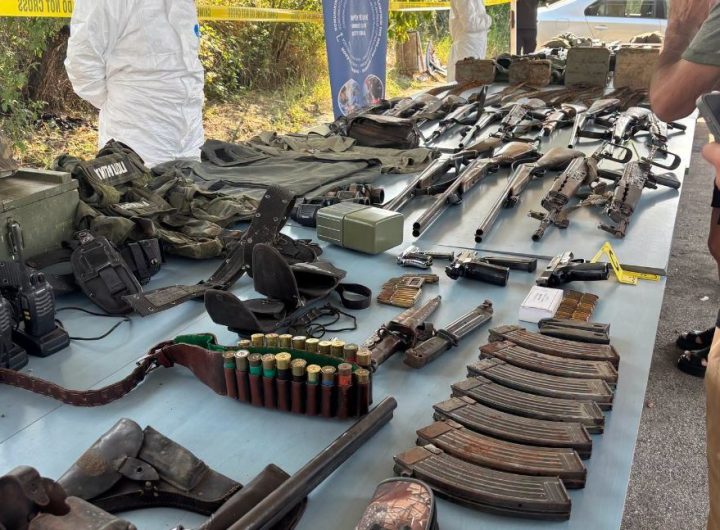 Weapons arsenal found around mass grave sites in Zubin-Potok in northern Kosovo
 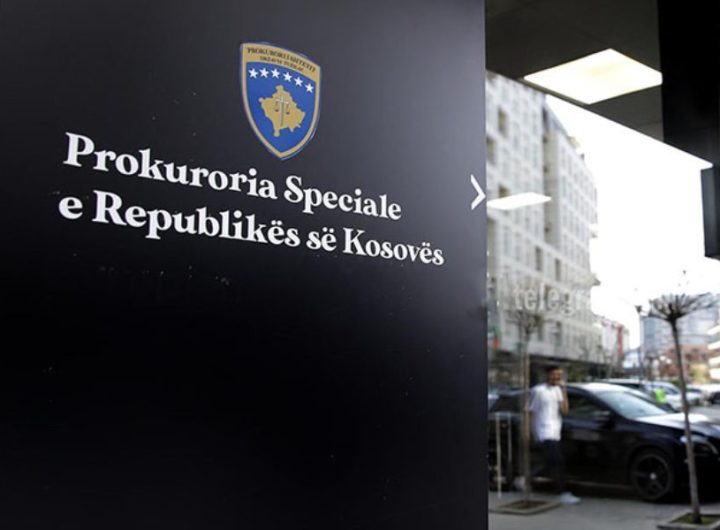 Special Prosecution: Seven BIA-related espionage cases, four convictions
  YouTube blocks Serbian director Emir Kusturica's channel, published content in collaboration with Sputnik