
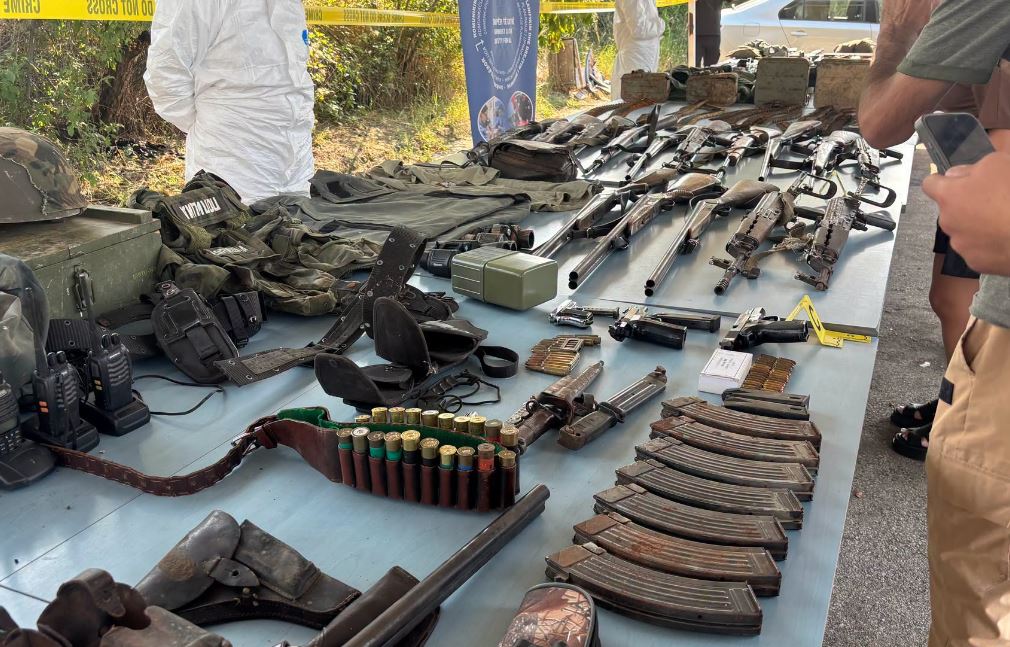
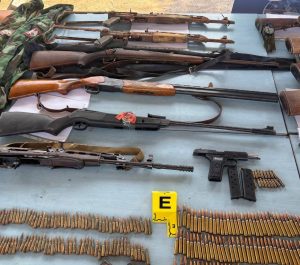
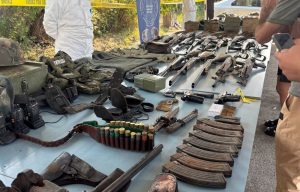
Kosovo's acting Minister of Internal Affairs, Xhelal Sveçla, said that an arsenal of weapons, ammunition, and military uniforms were found in the villages surrounding Kalludra in Zubin Potok, "where three mass graves have been discovered in recent weeks" and where authorities have confirmed that they have identified the skeletal remains of at least 23 people.
Authorities suspect that these weapons may have been used to kill 23 people whose remains were found in Zubin Potok. However, police said this suspicion needs to be verified.
"The discovery of these mass graves has once again highlighted the dimension of the crimes committed during the last war in Kosovo. The north of our country, despite being the scene of serious crimes against civilians, has also been exploited to hide bodies and crimes," Sveçla said at a press conference in Mitrovica.
He said that the weapons will now undergo analysis to determine whether they were used to kill the 23 people found in suspected mass graves in the north or in other cases.
"The weapons you see before you today were found in 12 different locations. Starting today, they will undergo detailed examination and analysis, with the aim of determining their origin, use and possible connections to the cases being investigated, including the examination of at least 23 people, as well as other criminal cases," said Sveçla.
According to him, the work of the institutions does not end here, but will continue with the clarification of the circumstances, the identification of those responsible and "above all, with our efforts to bring justice to everyone killed, massacred or forcibly disappeared during the last war in Kosovo."
Police said that during raids in 48 locations, they found various weapons, including long guns, ammunition, hunting rifles, short guns, explosive devices, military uniforms, etc.
The General Director of Police, Gazmend Hoxha, said that it is suspected that these weapons may have been used to kill members of the "group of intellectuals from Mitrovica".
Kosovo institutions suspect that the mortal remains found in Zubin Potok may belong to the group of 23 Albanians who disappeared in that part of Kosovo in 1999.
This group, known as the "group of intellectuals of Mitrovica", has been missing since April 19, 1999. Among them were doctors, professors, lawyers and other profiles.
"These are our suspicions that parts of these weapons that are on display may have been involved in the case of mass murder, in the case of the group of intellectuals, but these remain to be verified after examinations that will be carried out in Kosovo laboratories, but if necessary, they will also be sent abroad. There remains information that needs to be verified," said Hoxha.
Sveçla also provided details about the excavations carried out at three locations in Zubin Potok. According to him, the remains of 13 people were found at the first location, four at the second, and six at the third location.
A day earlier, the Special Prosecution Office announced that the mortal remains would undergo identification procedures.
Excavations in Zubin Potok began on July 28 and have taken place in Kalludër i Vogël, Jabukë and another location in this municipality, in northern Kosovo.
The excavations began after a two-year investigation into suspected war crimes.
Three suspects have been arrested in connection with suspicions of war crimes against the civilian population following the start of excavations in the north. All three are in custody.

 Djukanovic gave Serbian BIA a clear overview of the situation in the north
  Special Prosecution: Seven BIA-related espionage cases, four convictions
  YouTube blocks Serbian director Emir Kusturica's channel, published content in collaboration with Sputnik
  Ibri and Ujmani in focus, Kastrati: Kosovo should take signals from Belgrade seriously
 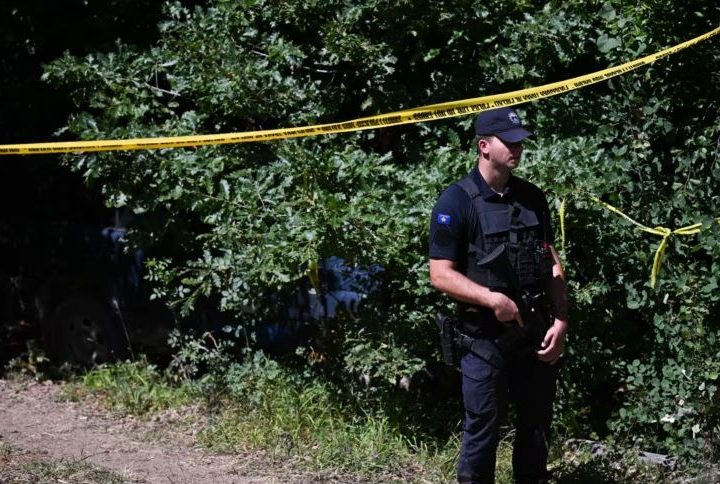 Bone remains of at least 23 people identified in Zubin Potok
 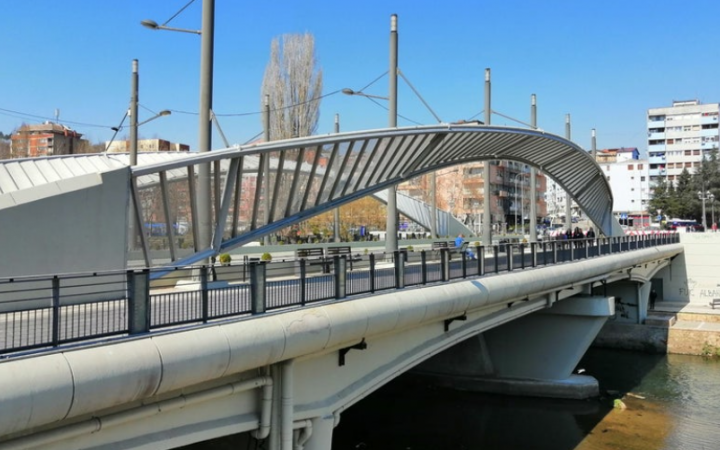 EUalive: Ibar Bridge, another political loss for Belgrade in the normalization process – EU supports reopening, Vučić opposes