
In an article on developments in Serbia, the well-known German newspaper "Frankfurter Allgemeine Zeitung" (FAZ) emphasizes that part of the student protest movement is characterized by a nationalist tone.
Most recently, this was made clear through the adoption of a student “memorandum” which, in ideologically charged language, reiterates Serbian nationalist narratives about Kosovo and, in essence, demands that the now-independent state be restored as a province under Belgrade’s sovereignty.
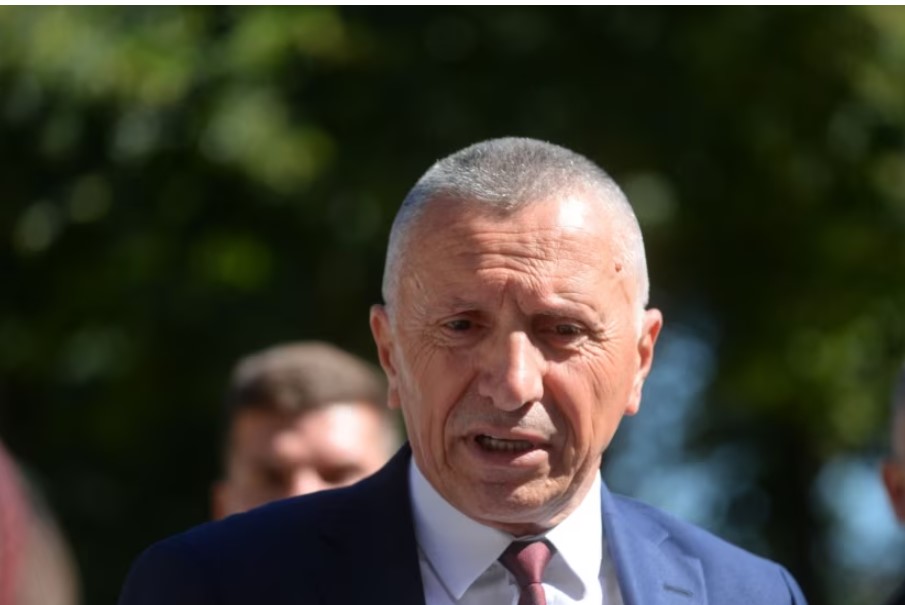
One politician who rejects this approach is Shaip Kamberi, the only Albanian MP in the Serbian parliament. Kamberi comes from the Presevo Valley, which borders Kosovo in southwestern Serbia. This region is home to an Albanian majority, while in the area around the city of Presevo, Albanians make up over 90 percent of the population. It is therefore not surprising that Kamberi sees events from an Albanian perspective.
Although he does not reject the student protest movement in principle, he reports "Frankfurter Allgemeine Zeitung", he clearly opposes the “memorandum on Kosovo” and similar nationalist phenomena: “The democratization of Serbia cannot be based on the reproduction of old nationalist models – not even when they come packaged in a new political form,” he says.
He emphasizes that he understands the pragmatic argument for the need to replace the "authoritarian regime of Aleksandar Vučić", but historical experience, according to him, has shown that compromises with nationalism produce new crises, injustice and instability in the long term.
By this he refers to developments in the 90s and early 2000s. In September 2000, the united Serbian opposition managed to defeat then-ruler Slobodan Milošević (whose propaganda minister was current President Aleksandar Vučić) in the elections. After Milošević did not accept the results, he was overthrown in a popular uprising in October of that year.
However, the price of the change of power was high. The pro-European opposition had made a pragmatic alliance with the Serbian nationalist Vojislav Koštunica, who in the following years, as Yugoslav president and later as Serbian prime minister, moved Serbia away from the EU and closer to Russia.
Kamberi does not want such developments to be repeated with the student movement. “A democratic Serbia must be based on civic values, on dealing with the past and on the equality of all peoples,” he says.
According to him, the student movement is not homogeneous and it would be wrong to label all students as nationalists. However, the problem arises when the dominant symbols, messages or documents give the impression of continuity with old national narratives that have led the region into conflicts.
In such a situation, it is not surprising that minorities in Serbia are concerned that essentially nothing is really changing.
Supporters of the students argue that insisting on Kosovo's return to Serbia only means respecting the Serbian Constitution. This is formally correct, the German newspaper underlines. As prime minister, Koštunica initiated a successful referendum in October 2006, after which Kosovo was included as an inseparable part of Serbia in the preamble to the Constitution.
The appeal to the Constitution in itself is not problematic, says Kamberi in the analysis published by FAZ. The problem arises when it is used without facing the reality on the ground and without understanding the historical context. Kosovo today functions as an independent state, recognized by most of the democratic world.
In the face of these facts, the insistence on legal-constitutional formulations, according to him, keeps Serbian society in a constant conflict with reality. The claim that there is an “open issue of Kosovo” speaks more about Serbia's internal political dilemma than about Kosovo itself.
Another argument of the supporters of the student movement is that in Serbia, without a strong dose of nationalism, elections cannot be won. According to them, the movement is adapting to this reality. Kamberi also opposes this position, saying that accepting nationalism as a political tool closes the space for true democratization.
"If the logic that nationalism is a necessary political tool is accepted, then the space for democratic change is closed. Political leadership must change social consciousness, not adapt to it opportunistically," he emphasizes.
According to Kamber, it is not enough to simply defeat Vučić. Serbia needs a break from the politics that have brought the country to its current state. Therefore, the protest movement is faced with a historic decision: does it just want a change of power or a real change for Serbia?
He believes that a clear break from the ideologies that have produced wars, ethnic conflicts, and systemic discrimination is needed, which also means confronting the past. But, according to him, he is not yet seeing this sufficiently among students.
In fact, as underlined Frankfurter Allgemeine Zeitung, many of the students who support the idea of Kosovo as part of Serbia have never been to Kosovo and have no direct knowledge of the reality there.
Even more limited is their knowledge of the crimes committed against Kosovo Albanians during the war, including the Meja and Korenica massacre in April 1999, where around 350 Albanian men were executed by Serbian forces.
Such a lack of knowledge or unwillingness to acknowledge the past, according to the article, contributes to the protests being followed with lukewarm interest in Albanian-inhabited areas of southwestern Serbia.
According to Kamberi, Albanians in the Presevo Valley have hardly seen their political and social concerns represented in the dominant messages of the protests. The reason, he says, is that issues of minority rights, discrimination and inequality are not sufficiently present on the agenda of the student movement.
Therefore, Serbian Albanians have not participated in these protests.
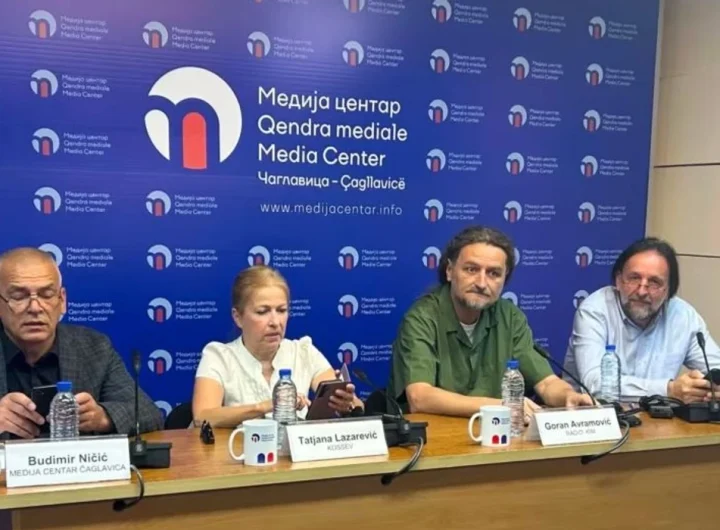 After the arrest of Serbian directors, journalists complain of pressure from the Serbian List
 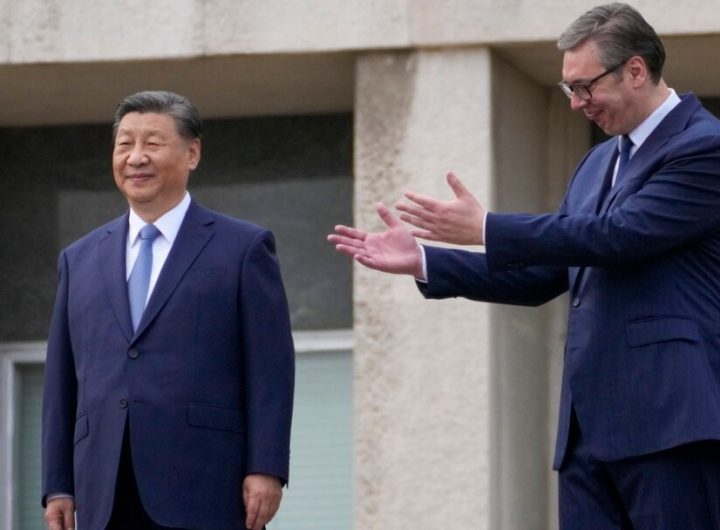 Vučić in Beijing: Complains about the EU, but ties Serbia ever more closely to China
  Murder of Aleksandar Nešović: Journalist reveals statement of former Belgrade police chief
 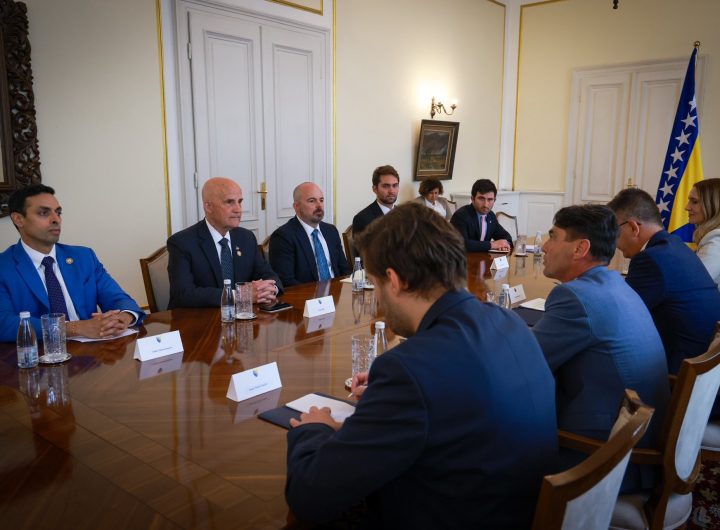 US Congressmen in the Balkans, visit to Kosovo as well
  Chinese Linglong tire factory in Serbia gets permit despite hazardous chemicals
 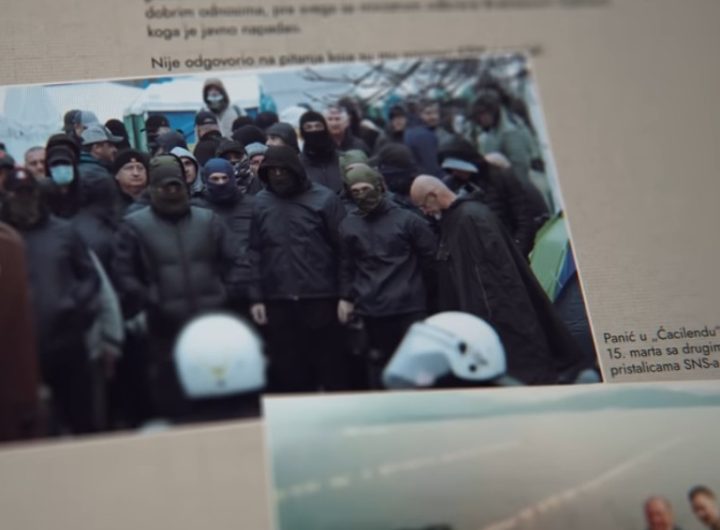 Serbia under the shadow of the mafia: The documentary that reveals the massacre of the Belivuk clan