

Kosovo Police have arrested a Kosovo citizen, Fehim Sali, on suspicion of committing the criminal offense of espionage. He had been a member of a council under the Presidency, but according to authorities, he was dismissed two years ago.
According to the announcement of the Kosovo Prosecutorial System, the arrest was carried out at the border crossing in Merdar, Podujeva, by order of the Special Prosecution of the Republic of Kosovo.
Radio Free Europe/Radio Liberty sources have confirmed the identity of the suspect, who comes from the Municipality of Dragash and is engaged in the Serbian education system within Kosovo.
According to official data, Sali was also a member of the Consultative Council for Communities (CCC), which operates under the authority of the President of Kosovo, from which, according to the Presidency, he was dismissed in 2024.
In a response to Radio Free Europe, Vlora Konushevci, Media Advisor to the Acting President, Albulena Haxhiu, said that Fehim Sali has been a member of the KKK as a representative of the Gorani community for two mandates, 2020-2022 and 2022-2024.
"Following the security information report and upon the proposal of the Council secretary, the same was dismissed on May 3, 2024, consequently since that time he has not been a member of the Consultative Council for Communities," Konushevci told REL, adding that they cannot provide further details on the report.
The police and the Special Prosecution Office have not provided details on what activities he is suspected of, nor whether the case is related to any foreign intelligence service.
The Special Prosecution Office said that, in cooperation with the Kosovo Police, it will continue with investigative actions to fully clarify the circumstances of the case.
In a later announcement, the Special Prosecution Office announced that the suspect has been detained for 48 hours.
Also, police investigators from the Directorate for the Investigation of Organized Crime and Serious Crimes have implemented the search warrant at the suspect's residence in Dragash.
During the raid, according to the announcement, 39.500 euros in cash, 500 Serbian dinars and four mobile phones were found and seized.
In Kosovo, espionage includes the secret activities of collecting, transmitting, or distributing sensitive information to another state, organization, or group.
According to the Criminal Code of Kosovo, espionage is considered a serious criminal offense and, if found guilty, can be punished with at least five years in prison.
This arrest comes at a time when Kosovo authorities have undertaken several investigative cases and arrests on suspicion of espionage in favor of Serbian intelligence.
In previous cases, people from various communities in Kosovo have been arrested on suspicion of collecting or passing information to Serbian intelligence services.
Security experts have assessed that espionage poses a serious threat to Kosovo's security. According to them, such activities can affect internal security, destabilize institutions, and damage Kosovo's international standing.
Authorities have not said whether the FS case is related to any of the previous espionage cases.
 Palmer warns of Russian influence in the Balkans: Delaying EU and NATO integration leaves the region vulnerable
  Margetić: Aleksandar Vučić killed civilians during the siege of Sarajevo
  The elections that scare Vučić: Promises to voters, destabilizing scenarios behind the ballot boxes
  From "Politika" to pro-Russian propaganda, Stojkovic: How Vučić took control of the media and oriented Serbia towards the Kremlin
 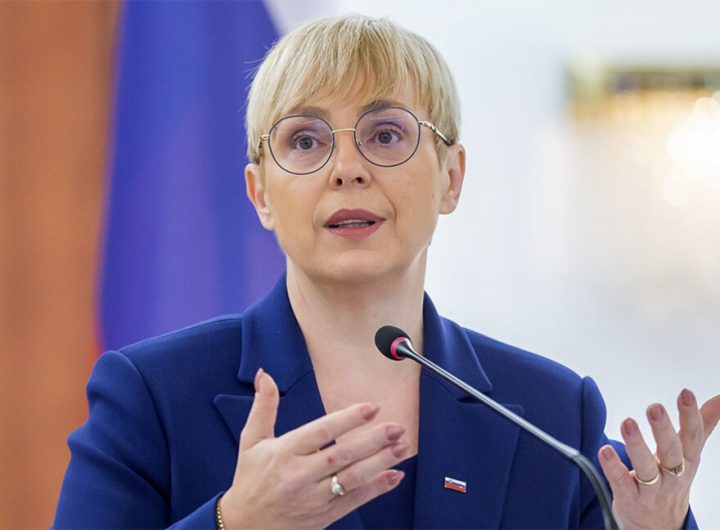 Slovenia on alert over Russian influence: President faces accusations of ties to Russia
 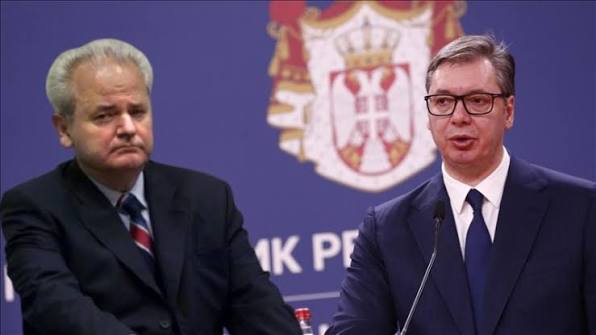 From Milosevic's propaganda to Vučić's politics: Is the same scenario returning?