
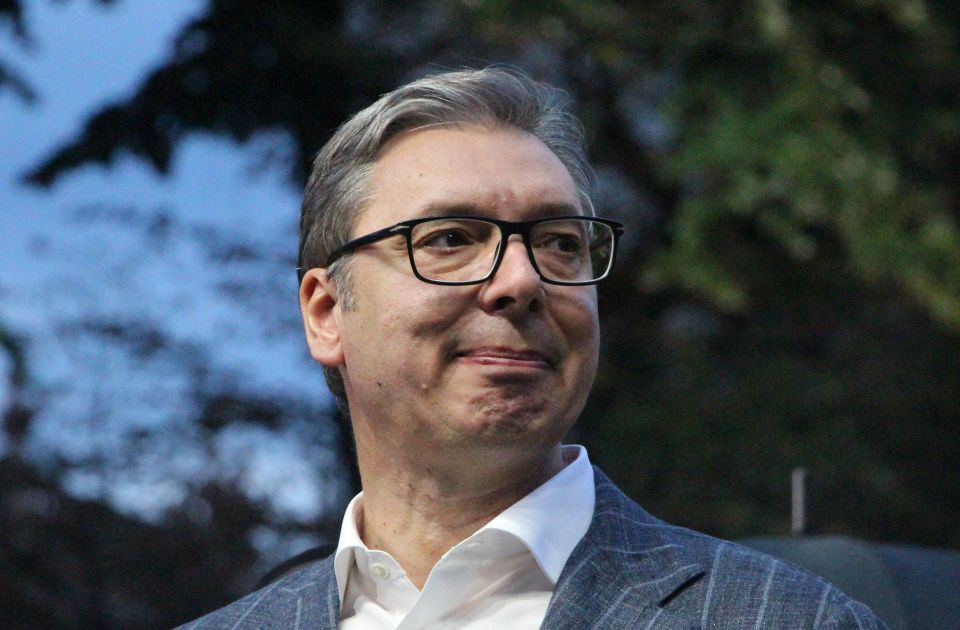
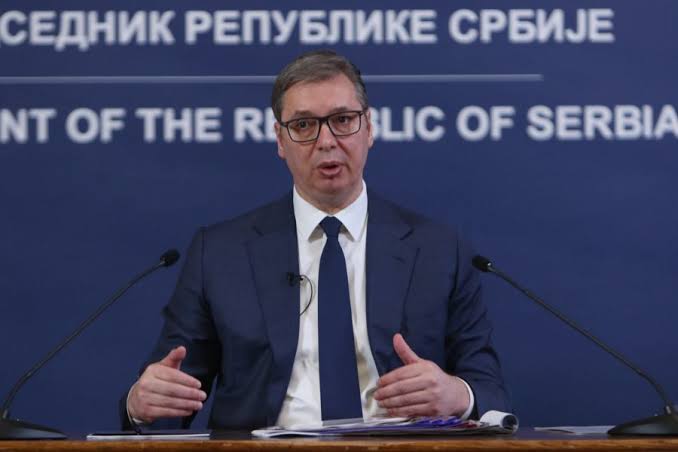
After 14 years of dominance in Serbian politics, Aleksandar Vučić has admitted defeat in the extraordinary parliamentary elections of October 25, heralding the end of a political era that was characterized by the concentration of power, accusations of weakening democracy, control of the media and close relations with Russia.
"Based on the sample, it is clear that we lost these elections," Vučić declared from the election headquarters of the Serbian Progressive Party (SNS), according to reports carried by Serbian media.
According to preliminary figures presented by him, the student list has secured around 130 parliamentary seats, while the SNS and its allies have secured around 105 seats. If these results are confirmed, the student movement will have a majority in the 250-seat parliament.
But who is Aleksandar Vučić, the politician who dominated Serbia's institutions for more than a decade and who became one of the most controversial political figures in the Balkans?
His political career began in the 90s, when he joined Vojislav Seselj's Serbian Radical Party, a political force known for its fierce nationalism and anti-Western rhetoric.
In 1998, during the regime of Slobodan Milošević, Vučić was appointed Minister of Information in Serbia. During his tenure, restrictive measures were adopted against independent media, which faced heavy fines and state pressure.
This period coincided with the escalation of the conflict in Kosovo and the suppression of media critical of the Milošević regime.
After the overthrow of Milošević in 2000, Vučić continued his political activity among the Serbian radicals until 2008, when he joined Tomislav Nikolić in founding the Serbian Progressive Party.
The SNS presented itself as a more pragmatic force oriented towards European integration, although Vučić maintained a nationalist approach towards Kosovo and close political ties with Moscow.
His return to power occurred in 2012, initially as Deputy Prime Minister and Minister of Defense. In 2014, he became Prime Minister, and in 2017, he assumed the post of President of Serbia.
During this period, Vučić built a political system in which power was increasingly concentrated around him and the Serbian Progressive Party.
International organizations for the protection of democracy and media freedom have continuously raised concerns about the weakening of independent institutions, pressure on journalists, and unequal conditions of political competition.
Kosovo remained one of the central issues of his policy.
During Vučić's government, relations between Kosovo and Serbia were characterized by constant crises, tensions in the north, and diplomatic clashes.
One of the most serious episodes occurred on September 24, 2023 in Banjska, Zvečan, when an armed Serbian group attacked the Kosovo Police, killing Sergeant Afrim Bunjaku.
Responsibility for organizing the attack was claimed by Milan Radoićić, former vice-president of the Serbian List, who had political connections to the power structures in Belgrade.
Kosovo authorities have repeatedly accused Serbia of supporting illegal and criminal structures in the north, while Belgrade has denied state involvement in the Banjska attack.
In foreign policy, Vučić tried to maintain a balance between the European Union, Russia, and China.
Although Serbia formally remained a candidate country for EU membership, its government maintained close relations with Russian President Vladimir Putin and did not join European sanctions against Russia after its invasion of Ukraine in 2022.
At the same time, Belgrade deepened economic and technological cooperation with China, transforming this relationship into an important pillar of Serbian foreign policy.
For his political opponents, Vučić became a symbol of an authoritarian system based on institutional control, media dominance, and nationalist rhetoric. His supporters, meanwhile, have presented him as a guarantor of Serbia's stability and economic development.
However, student protests and civic mobilization posed a significant political challenge, creating an alternative to the long-standing dominance of the SNS.
Vučić's admission of electoral defeat marks a historic turning point for Serbia and would open a new political period, with possible consequences for Belgrade's relations with Kosovo, the European Union and Russia.
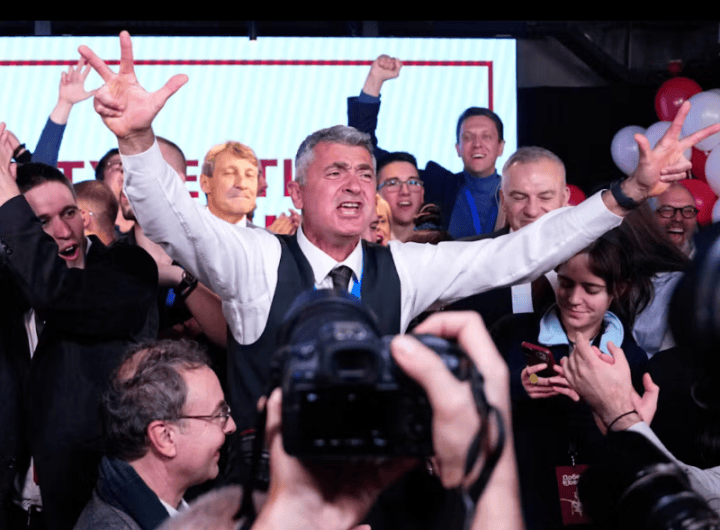 The Student List defeated Vučić, but will Serbia's policy towards Kosovo change?
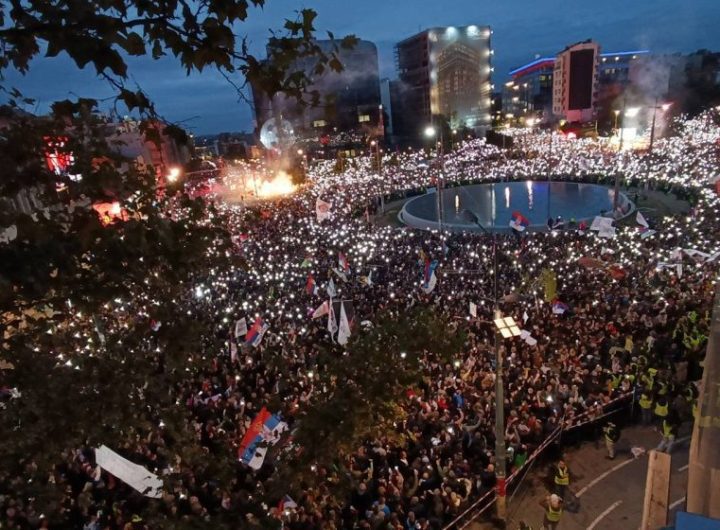 The square is filled with students and citizens: 'Students win', anti-government messages echo in Belgrade
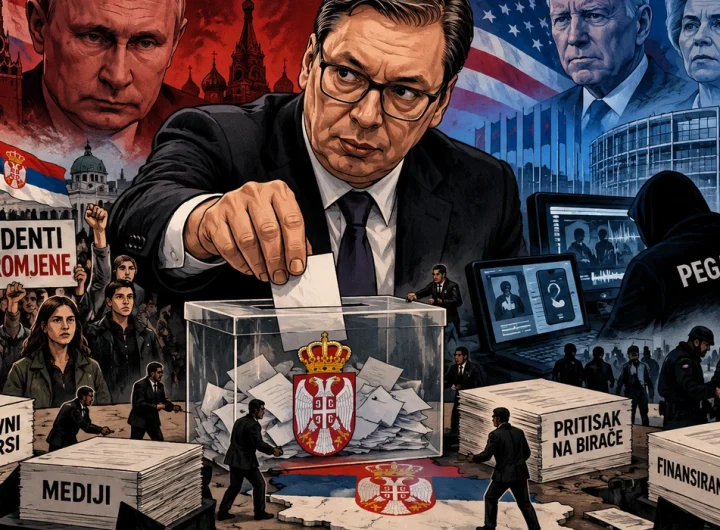 Elections under the Kremlin's shadow: Vučić faces students, Washington and Brussels
 Serbia in the Shadow of the Georgian Scenario: How Vučić Can Turn an Electoral Crisis into an Instrument to Strengthen Power
 When the cup is full: Vučić's submission to Mladić parked Serbia on the European path
 Putin's Nightmare: The Next Congress Reshuffle