
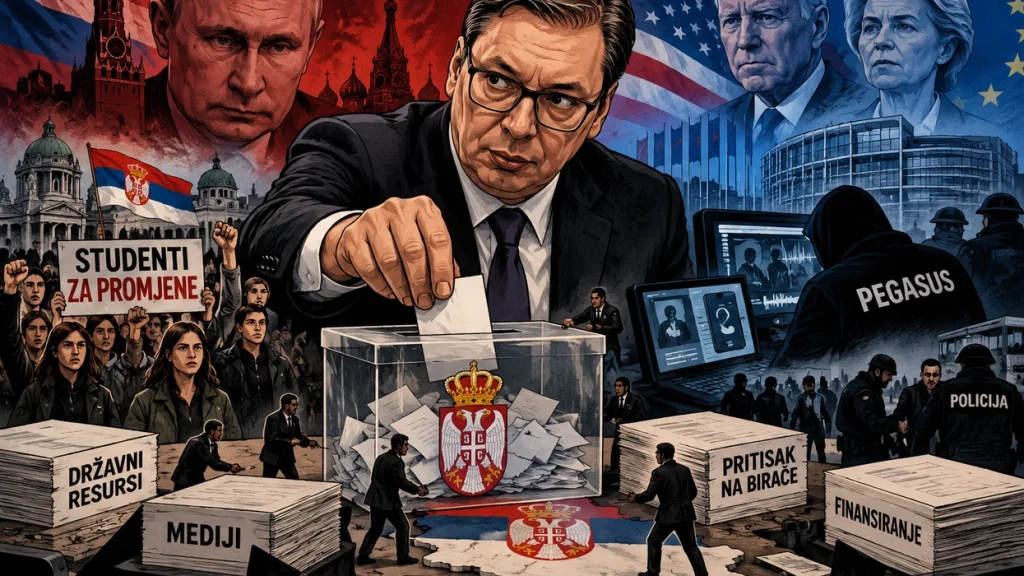
Aleksandar Vučić is entering the October 25 parliamentary elections facing a challenge that affects the very continuity of his power. After more than a decade of dominance in Serbian politics, the former president is seeking a return as prime minister, while accusations of abuse of institutions, wiretapping of the opposition, pressure on voters and control of the media space are casting serious doubts about the fairness of the race. Belgrade's relationship with Moscow also looms in the background, while Washington and Brussels are seeking guarantees that the elections will not turn into another demonstration of the ruling party's power.
In Aleksandar Vučić's Serbia, the line between state and ruling party has become increasingly blurred. Institutions that should guarantee a level playing field are accused of being used to favor the Serbian Progressive Party (SNS), while political opponents face pressure, media bias, and suspicions of illegal surveillance.
The October 25 elections are taking place in precisely this atmosphere. For Vučić, they are an opportunity to maintain political control by returning to the helm of government. For his opponents, they are an attempt to break a system of power that has dominated Serbia for more than a decade.
But the question that is increasingly being raised, even outside Serbia, is whether a government that controls such a large part of institutions and public space can guarantee a truly equal competition.
Reports by the independent Serbian organization CRTA provide a disturbing picture of the pre-election environment. According to its monitoring, over 1,200 activities of senior state officials were recorded during the four months, of which 18 percent contained elements of misuse of public resources.
Even more significant is the inequality in media space. According to CRTA, 96 percent of the time dedicated to political actors on the public broadcaster RTS was devoted to representatives of the government, while the opposition received only four percent.
These figures show a problem that goes beyond the election campaign. In a functioning democracy, the government and the opposition compete for the support of citizens. In a system where the ruling party dominates the media and is accused of exploiting state resources, the competition risks turning into a race with unequal rules.
Elections are not necessarily rigged just by interfering with the ballot box. They can be distorted much earlier, when one side has the state apparatus at its disposal, while the other fights to secure institutional space and protection.
This is precisely what reports from independent observers are calling into question in Serbia.
Another dimension of concern relates to reports of the use of spying technology against people critical of the government. Research by independent organizations has identified cases of infection of the phones of activists and opposition representatives with the Pegasus program.
These revelations raise serious questions: Who is monitoring political opponents? For what purpose is the information being collected? And how free can an election race be when participants have reason to suspect that their private communications have been compromised?
Responsibility for each case has not been definitively determined. However, reports of wiretapping, combined with accusations of voter suppression and intimidation of the opposition, are making the political climate even more difficult in the run-up to the vote.
Instead of the public debate focusing on economic programs, reforms, and Serbia's European future, some attention has shifted to the question of whether state mechanisms themselves are being used to protect the existing power.
Concerns about the elections have crossed Serbia's borders. US senators, both Republican and Democratic, issued a joint statement warning of worrying signs ahead of the parliamentary elections.
Jeanne Shaheen, Roger Wicker, Dick Durbin, Chuck Grassley, Chris Murphy, Joni Ernst and Thom Tillis urged Serbian authorities to ensure free, peaceful and fair elections.
They cited reports of illegal wiretapping of the opposition, attempts to discredit election observers, and voter intimidation.
The importance of the statement also lies in the fact that it brought together representatives of the two major American parties. This is not an isolated reaction of an American politician, but a joint warning of senators from both sides of the political spectrum.
For Vučić, who has cultivated relationships with various actors in Washington for years, the message is politically important: concerns about Serbian democracy cannot be easily reduced to disagreements with a single American administration or party.
The senators also recalled that serious violations had been identified in previous elections, while many of the problems had not been addressed. This shifts the debate from isolated incidents to a deeper problem: the repetition of electoral shortcomings under the same power structure.
To understand the international dimension of this confrontation, Russia cannot be overlooked.
For years, Vučić has built a foreign policy that aims to benefit from relations with the West, without giving up strategic ties with Moscow and Beijing.
Serbia continues to aim for membership in the European Union, but at the same time maintains close relations with Russia, including energy cooperation and diplomatic coordination on the Kosovo issue.
Belgrade has not joined Western sanctions against Russia over the war in Ukraine, maintaining a position that distinguishes it from many other candidate countries for EU membership.
For Moscow, the relationship with Serbia is of strategic importance. Belgrade represents an important political partner in the Balkans, a region where Russia is trying to maintain its influence and oppose the expansion of Euro-Atlantic structures.
For Vučić, the relationship with Moscow has served as a diplomatic instrument to maintain room for maneuver between international powers.
This balancing policy has an obvious contradiction: Serbia seeks economic benefits and the prospect of EU membership, while continuing to maintain strong political ties with a state that is in direct conflict with the West.
However, Vučić's relations with Russia do not prove that Moscow is interfering in the October 25 elections. Such a claim would require concrete evidence.
What can be concluded is that the crisis of confidence in Serbian democratic institutions is developing in a broader context of geopolitical rivalry, where Belgrade's orientation remains an issue of importance for Brussels, Washington, and Moscow.
The paradox of Vučić's politics is that he seeks democratic legitimacy from the West, while maintaining a strategic partnership with the Kremlin, whose political model relies on the concentration of power and limiting opposition competition.
This comparison does not prove that the political systems of Serbia and Russia are identical, but it helps to understand why reports of the weakening of Serbian democratic institutions are receiving increasing international attention.
The European Union has been facing a dilemma in its relationship with Serbia for years. On the one hand, Belgrade is considered an important partner for the stability of the Western Balkans and the dialogue with Kosovo. On the other hand, concerns about the rule of law, media freedom and the functioning of democratic institutions continue to weigh on the European integration process.
The October 25 elections are bringing out this contradiction even more clearly.
European and international observers have raised concerns about the political climate, pressure on the opposition, and shortcomings in election administration.
The OSCE has deployed a large observer mission, while representatives of the European Parliament and the Council of Europe are also participating in the process.
For Brussels, the issue is not simply whether Vucic will manage to form the next government. The question is how a country where independent organizations continue to document serious problems with political competition and the use of state institutions can progress towards the EU.
Political stability is important for the European Union, but it cannot be a substitute for democracy.
The most important internal challenge for Vučić comes from the student movement, which was strengthened after the Novi Sad tragedy.
Protests against corruption and lack of institutional accountability created a civic mobilization that gradually transformed into a political alternative.
The Student List, with 250 candidates, seeks to carry this energy from the streets to parliament.
Opposing it is the SNS, a party with a consolidated structure, long electoral experience, and considerable influence in public life.
This confrontation is not just a conflict between two political forces. It is also a test of the possibility of changing power through institutions in a system where the same political structure has dominated for years.
Precisely for this reason, any accusation of pressure on voters, use of institutions or restriction of the opposition takes on special weight. If the conditions of competition are not equal, then the problem is not only the final result, but the credibility of the process itself.
The elections in Serbia also matter for Kosovo. Belgrade's policy towards Pristina, the EU-mediated dialogue, and security issues in the north remain closely linked to domestic Serbian political developments.
Vučić has consistently used the Kosovo issue as one of the central themes of his political communication, while relations with Russia have been part of Belgrade's diplomatic efforts to oppose the international consolidation of Kosovo's statehood.
A potential crisis of electoral legitimacy in Serbia would also create additional uncertainty for regional relations.
However, even a possible change of power does not automatically guarantee a change in Serbian policy towards Kosovo. For this, the concrete programs and positions of the political forces that would assume the responsibility of governance would need to be evaluated.
Five days before the elections, Serbia is facing a question that is bigger than the political fate of Aleksandar Vučić.
Reports of misuse of state resources, media dominance, wiretapping of the opposition, and voter intimidation are not simply episodes of a tense campaign. Taken together, they raise concerns about the way political competition functions in the country.
The alarm of American senators and the increased attention of European institutions show that these concerns are not just a matter of internal Serbian debate.
For Vučić, the elections are an opportunity to retain power. For the opposition and the student movement, they are an opportunity to challenge him. For the West, they are a test of the democratic standards of a country that seeks European integration but continues to maintain strategic ties with Russia.
The biggest problem for Serbian democracy is not just whether Vučić will win or lose the elections. It is whether the institutions built during his years of political dominance can guarantee that he can compete on equal terms with his opponents.
Because democracy is not measured only by the right of the government to seek another mandate. It is also measured by the real possibility that citizens will deny it that mandate.
And this is precisely the test that awaits Serbia on October 25. /KB/
 Serbia in the Shadow of the Georgian Scenario: How Vučić Can Turn an Electoral Crisis into an Instrument to Strengthen Power
 Ten journalists leave TV station critical of Vučić, Amanpour: Very worrying for press freedom in Serbia
 “No one dares to say no”: Voters from Kosovo speak out about pre-election pressures in Serbia
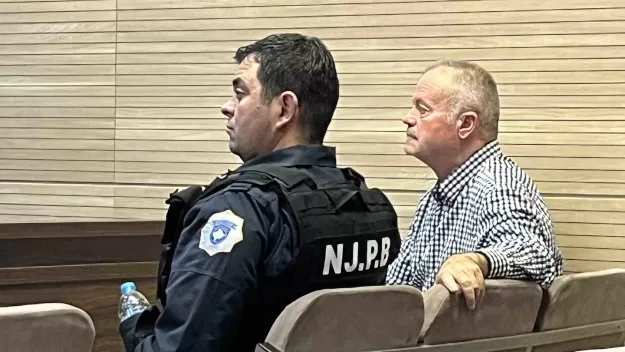 Milorad Djokovic sentenced to 10 years in prison for war crimes in Ozdrim and villages in the Peja region
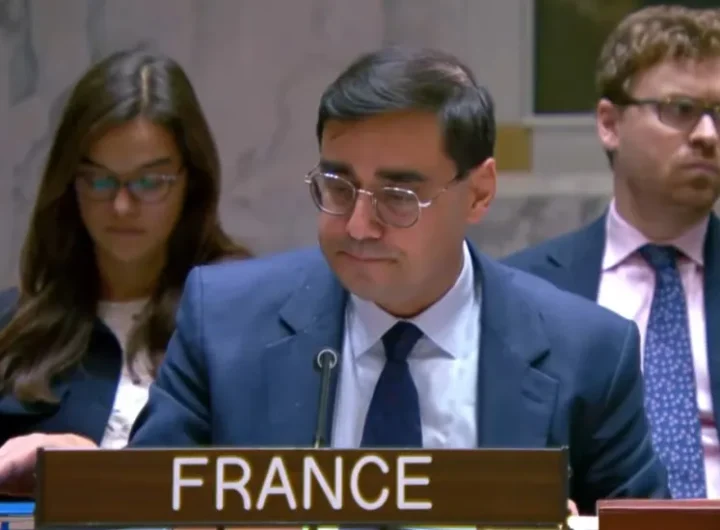 At the UN Security Council, France demands accountability from Serbia for the attack in Banjska
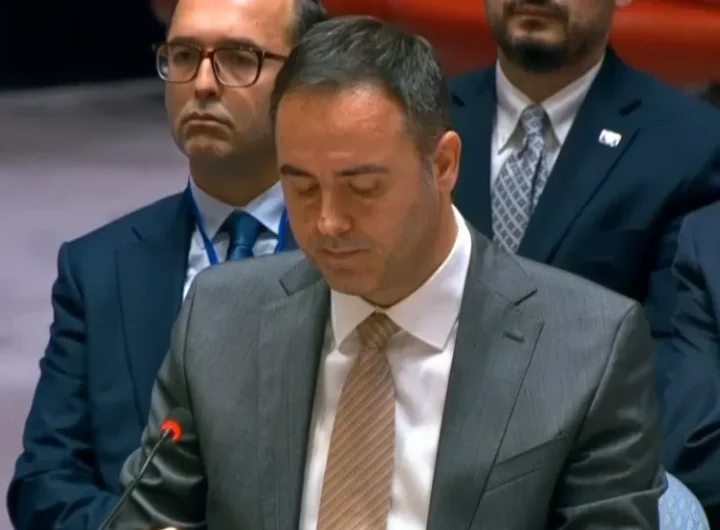 Konjufca responds to Djuric at the UN: How can we talk about European integration when you meet with Radoicic?