
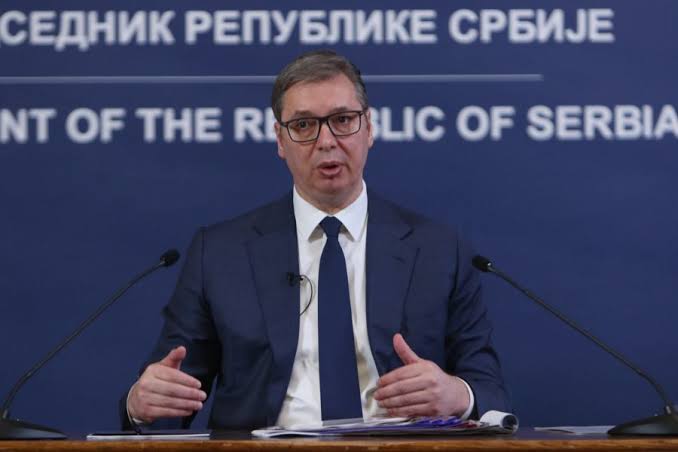
Serbia is heading into parliamentary elections on October 25 amid concerns about electoral manipulation, pressure on the opposition and the possibility that outgoing President Aleksandar Vucic could use a potential post-election crisis to further consolidate his power.
According to an analysis published in the Washington Examiner, the upcoming elections are not only a showdown between the ruling coalition, the student protest movement, and opposition parties, but also a test for Serbia's democratic future, after 14 years of political dominance by the Serbian Progressive Party (SNS).
Vucic, who resigned as president in September to run for prime minister, aims to return to the top of the executive branch, while critics warn that a disputed result could serve as a pretext to suppress protests and further restrict opposition activity.
The analysis draws parallels between developments in Serbia and those in Georgia, where the contested parliamentary elections of October 2024 were followed by mass protests, arrests, and harsh measures by the authorities against political opponents.
In Georgia, the ruling Georgian Dream party passed a law on foreign influence ahead of the election, which affected foreign-funded organizations and media. International observers documented pressure on public officials, misuse of state resources, and problems with the secrecy of the vote.
After the elections, over 1,200 complaints were filed regarding the process, and the OSCE Office for Democratic Institutions and Human Rights (ODIHR) found that many of them had not received effective legal remedies.
The ruling party retained control, while the opposition rejected the results and boycotted parliament. The protests that followed were met with police intervention and the arrest of more than 500 demonstrators.
Georgian authorities subsequently took other measures against the opposition and civil society organizations, including freezing bank accounts, restricting foreign funding, and attempting to ban several opposition parties.
According to the analysis, this development constitutes a warning for Serbia, where there is a risk that a similar electoral crisis will be used to strengthen the government's control over institutions.
In Serbia, resentment towards the government intensified after the collapse of the railway station shelter in Novi Sad in November 2024, a tragedy that killed 16 people and sparked a widespread student movement against corruption.
Students, who have been organizing mass protests for months, have now formed an electoral list, turning civic mobilization into a direct political challenge to Vučić and his party.
However, according to data from the Serbian organization Center for Research, Transparency and Accountability (CRTA), the conditions of the electoral competition remain uneven.
Monitoring published in September showed that the ruling majority had received 75 percent of political airtime on national television, while Vučić alone had received 60 percent of this space. On the public broadcaster RTS 1, representatives of the government had received 93 percent of political airtime.
The CRTA also reported irregularities in the certification of signatures, suspicions of pressure in favor of the governing list, and obstacles to the Student List.
Concerns about electoral integrity have also been raised by the ODIHR, which in its interim report of October 9th highlighted unresolved problems related to the voter registry, possible voter intimidation, the use of public resources, and media oversight.
According to the report, the commission responsible for auditing the voter register is expected to submit its first report on October 28, three days after the elections, which means that some of the concerns about the voter lists may remain unresolved even during the vote count.
Another element that raises concerns is the rhetoric of the Serbian authorities towards political opponents, who are often presented by pro-government media as part of a Western effort to organize a so-called "color revolution."
This narrative has also been reinforced by Moscow, while in 2025 Serbian Deputy Prime Minister Aleksandar Vulin, during contacts with Russian intelligence chief Sergei Naryshkin, accused Western services of trying to destabilize Serbia.
The analysis estimates that such rhetoric could serve Vučić to present potential protests against the election results not as a reaction of citizens to irregularities, but as an attempt to overthrow the government with foreign support.
A similar approach was used in Georgia, where the ruling party presented the 2024 elections as a choice between peace and war, while Russian intelligence services alleged an American conspiracy for regime change.
According to the author of the analysis, the risk for Serbia is not limited only to the possibility of arresting protesters after the elections, but also to using the unrest as a justification for adopting more restrictive laws against civil society organizations, election monitors, and independent media.
In this context, the fact that Serbia has previously considered a draft law on foreign agents, while investigations have documented the use of digital espionage programs against government critics, is also mentioned.
In light of these developments, the analysis calls on the European Union, the United States of America, and the United Kingdom not to limit themselves to monitoring the electoral process on October 25, but to also prepare for a possible political crisis after the announcement of the results.
In the event that credible evidence of systematic election manipulation or violent repression of protesters is documented, the author calls for the imposition of coordinated sanctions against responsible officials and the political non-recognition of a result secured through systematic manipulation as a legitimate democratic mandate.
In conclusion, the analysis warns that the experience of Georgia proves that a contested electoral process can serve as a starting point for the further weakening of democratic institutions and the concentration of power.
If Serbia follows a similar path, the October 25 elections could mark not only another mandate for Vučić and the Serbian Progressive Party, but also a new phase of consolidating political control over institutions, the media, and the opposition.
The GeoPost
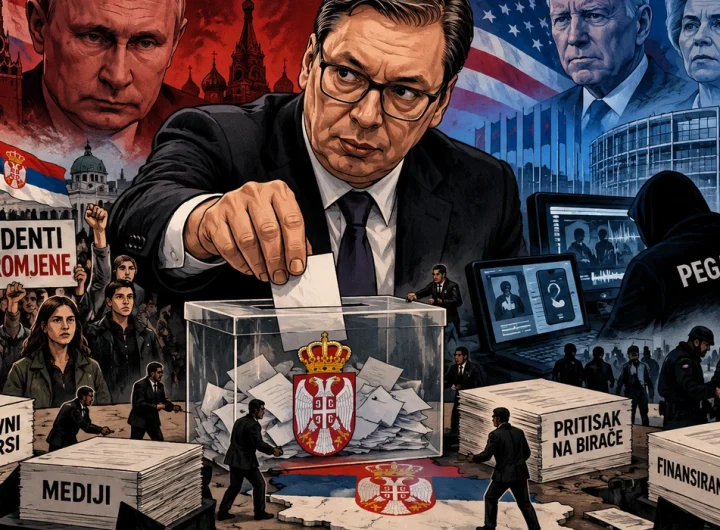 Elections under the Kremlin's shadow: Vučić faces students, Washington and Brussels
 Ten journalists leave TV station critical of Vučić, Amanpour: Very worrying for press freedom in Serbia
 “No one dares to say no”: Voters from Kosovo speak out about pre-election pressures in Serbia
 Milorad Djokovic sentenced to 10 years in prison for war crimes in Ozdrim and villages in the Peja region
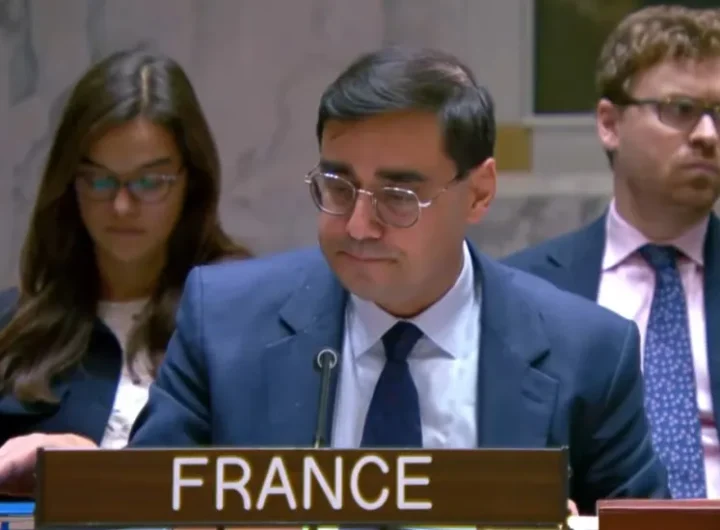 At the UN Security Council, France demands accountability from Serbia for the attack in Banjska
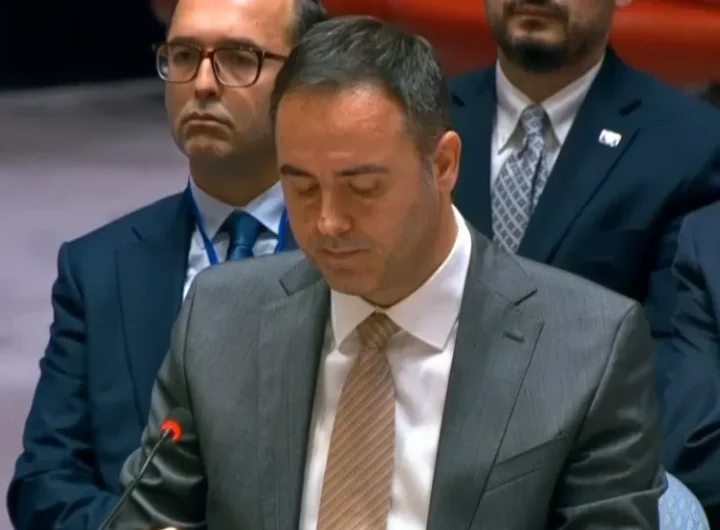 Konjufca responds to Djuric at the UN: How can we talk about European integration when you meet with Radoicic?