

The European Union has been facing the same problem for years regarding Aleksandar Vučić and his regime. Brussels is aware that the problem exists, sees it and occasionally expresses it publicly, but then takes a step back.
Written by: Dragan Shormaz
The reasons are well known: Kosovo, Russia, security, migration, regional stability, Chinese influence and the fear of destabilizing the Western Balkans. In Brussels, there is a whole catalogue of justifications why Vučić should be kept "inside", even when his behavior has less and less to do with European political standards and values.
And so we have reached the paradox that the regime that systematically undermines what should be the content of European integration has simultaneously become one of the main interlocutors in Serbia's European integration process.
All this time, Vučić has been telling Europe what it wants to hear, when it needs it, while when he appears before the domestic public, he says the complete opposite. In Brussels, he pretends to be a pragmatic European, while in Belgrade he presents himself as the defender of Serbia from Brussels!
In one role he guarantees stability, while in another he mobilizes voters and builds his position on fear of the West. One moment he talks about reforms, while the next moment, to a different audience, he talks about “sovereignty,” foreign pressures, “color revolutions,” and an alleged attempt to have someone from outside decide how Serbia should live.
It is clear that this is not a contradiction, but a consciously chosen political model, which can work as long as the European Union agrees to play the role of a dissatisfied partner, but which has no intention of really changing its approach to the Vučić regime.
The problem is that, in this way, Serbia has become a hostage to its European path. Not a hostage to the European Union, but to a regime that uses the European perspective as a protective belt for itself and Serbia as a kind of human shield in relations with Brussels.
Any serious measure against the government is immediately presented as a measure against Serbia. If Brussels cuts off funds, the regime turns this into a propaganda message that “Europe is condemning Serbia”. If the EU criticizes the elections in Serbia, the regime shouts loudly that “Europe is interfering in the country’s internal affairs”. If the EU criticizes the media under the control of the government, the regime responds with accusations that “Brussels is supporting the opposition”. If an independent judiciary is demanded, the regime responds with claims that “foreigners want to regulate our state”. If the possibility of targeted political accountability against individuals arises, Vučić and his “sluts”, in chorus, declare that “European capitals are attacking Serbia”.
In other words, Vučić has managed to create a political shield from Serbia itself, so the EU must finally make a decisive break, a clear distinction between Serbia and the Vučić regime, because Serbia and its European future are not Vučić! This is such a clear fact that it is almost unbelievable how often European policy towards Belgrade has forgotten this over the past decade.
At a time when we can openly talk about a kind of hostage crisis in the Western Balkans, where we have a Serbian state taken hostage and a regime torn from the control of Aleksandar Vučić in the role of its captor, the European Union must not make the mistake of starting to punish the entire society because of bad governance. This would be the worst possible policy and an extremely wrong response, which would further nourish and strengthen the Vučić regime.
Here we come to some very simple conclusions. If Vučić is destroying the rule of law in Serbia, why should European programs for Serbian universities be reduced for this reason? If the regime in Serbia controls the media, why should European support for independent journalism in a hostage country be weakened?
If Serbia's state institutions are not doing their job, why should the EU reduce direct support to municipalities, schools, hospitals and civil society? If the regime is misusing European money as a political resource, the answer should not be to withdraw Europe from Serbia, but to remove the regime's control over European money.
It is precisely in this approach that the great difference lies, because of which the European Union should start thinking about a policy that can be summarized in a simple formula:
Less Europe for the regime, more Europe for the citizens of Serbia!
This means that, under the existing circumstances, Brussels should not close the European doors to Serbia, but those doors through which Vučić benefits from political rent from European politics. If a government does not meet democratic conditions and standards, then the political rewards it receives from the EU should be denied.
For blocking reforms, undermining the independence of institutions, and openly violating the rules, Vučić should not receive ceremonial applause and the privilege of being presented as a European reformer. The consequences of the regime's anti-European policy should be directed at those who violate the rules, while European money for citizens should not become collateral damage.
A new approach also requires changing the very logic of European sanctions. Why should responsibility always be collective, if it is clear that specific individuals are responsible for certain actions? Why can't the consequences be personal, in the form of travel bans, financial restrictions, asset controls where there is a legal basis, restrictions on access to European institutions and programs, along with the clear political isolation of those responsible?
All of this should be done with a clear explanation that Serbia is not a “problematic state”, but that certain individuals, through their actions, are creating problems. This would make it much more difficult to build propaganda that “Europe hates Serbia” through the consequences affecting the regime’s leaders.
Because, if Brussels says: “We are not sanctioning Serbia, but politicians responsible for what they have done,” it will become much more difficult for the regime to hide its responsibility behind the national flag.
The same should apply to elections. It is not enough for European officials, after each election, to declare that “certain irregularities have been identified” and that the ODIHR recommendations should be implemented. Serbia is not a laboratory for endlessly repeating the same experiment, in which the same remarks are repeated for years, reforms are promised, something is constantly “improved”, and then new elections come, where we see the same movie again.
This must end, and the EU must set clear rules before elections and clear consequences after them. If there is no equal access to the media or public resources are misused, there must be clear consequences. If pressure is exerted on voters or the institutions that are supposed to guarantee fair elections are not independent, there must be clear and precisely addressed consequences.
Not because Brussels should decide who will win the elections in Serbia, but precisely because Brussels should not decide who will win them, it should insist that citizens decide on equal terms. This is not at all interference in the elections, but a legitimate demand for respect for the minimum democratic standards, which every civilized democratic state must respect.
There is something else very important that Europe needs to understand. If it bases its relations with Serbia almost exclusively on the relationship with the president of the state, then it itself, unwittingly, helps to make Vučić irreplaceable. Every meeting with him becomes evidence of his international importance, just as every photo with European leaders turns into propaganda material for Vučić for domestic consumption.
Any praise for “constructiveness” becomes evidence that his regime is acceptable, while any criticism that goes unheeded becomes evidence that he can continue as he is. And that is a bad model.
Europe must build relationships with Serbia that will exist even after Vučić. With universities, cities, the economy, the judiciary, the media, professional associations, civil society and, above all, with citizens.
Because if the European Union wants a European Serbia, then it must engage in dialogue with Serbia, and not just with the man who currently stands at its political helm. This is also important because of a much greater danger. If the EU continues to tolerate democratic regression in the name of “stability,” it could get exactly the opposite of what it wants.
It may have a stable government, but an unstable state. It may maintain the channel of communication with Vučić, but lose the trust of Serbian society and generations of citizens, who will begin to perceive European politics as hypocritical.
This is the real geopolitical risk. Not that one day Vučić might get angry with Brussels, but that the citizens of Serbia will conclude that European values apply to everyone except those with sufficient political power.
Therefore, the EU should not close its doors to Serbia, but should open them even wider. But not to Vučić and the Serbian Government, but to universities, young people, free cities, companies, researchers, independent media, and institutions that are trying to do their job.
European integration should become something that the citizens of Serbia feel every day, and not something that politicians talk about when they need another international applause or the votes of pro-European citizens.
This would take away one of Vučić's most important political levers. Because when the European perspective is no longer something that the regime "gives" to its citizens, then the regime can no longer use it as its own political property. Europe then ceases to be Vučić's reward and becomes a European right of Serbian society.
And here lies the way out of the hostage crisis. The hostage should not be punished for being taken hostage, but at the same time the kidnapper should not be rewarded for holding the hostage. This is the principle that the European Union should apply to Serbia. Not to punish Serbia because of Vučić, but not to reward Vučić on behalf of Serbia.
This means that the European perspective must remain open, but European privileges for power must be denied or conditioned. European money must continue to come, but not be transformed into party spoils of the Vučić regime. European institutions must continue to dialogue with Serbia, but without legitimizing every behavior of its power. Political responsibility must be individualized, democratic standards must be clearly defined and the consequences must be known in advance.
The citizens of Serbia must finally be sent a message far more important than any diplomatic communiqué: they are not the problem, but the government that convinces them that they are the target every time someone calls them to account.
The European Union should not save Vučić from the consequences of his policies just because it fears that, without him, it will lose Serbia. If Serbia's European perspective depends on a single man, then this is no longer a European perspective, but a political hostage.
The European Union must free Serbia from this hostage-taking relationship, not by alienating it from itself, but by bringing it closer to itself, beyond and despite the regime that has attempted to turn the country's European path into its political monopoly.
Because Vučić is not Serbia. And the sooner Europe understands this, the more serious, principled and effective European policy towards Serbia will be. This is a prerequisite for the final and successful resolution of the hostage crisis in the Western Balkans.
Now is the time for the EU to start a new relationship with Serbia. The day Aleksandar Vučić resigns as President of the Republic, Brussels must let our public know that it will NEVER AGAIN reduce relations with Serbia to relations with a single person, but with institutions and citizens themselves.
In this way, the EU would send a message before the elections: Vučić no longer benefits anyone and will no longer benefit them.
The GeoPost
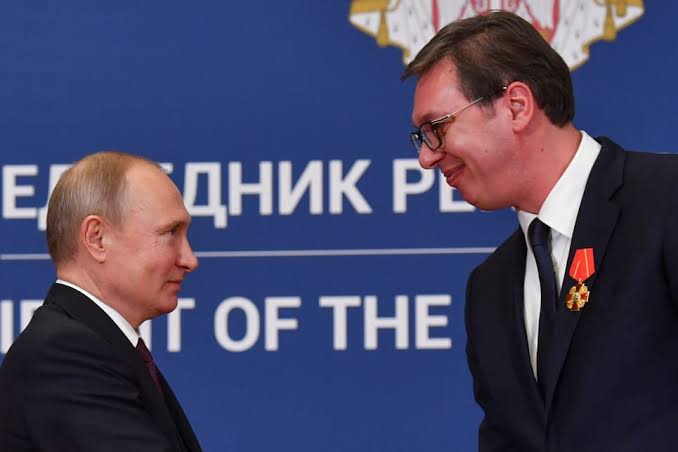 Vucic follows Putin's script to stay in power, but even the Kremlin has doubts about his success
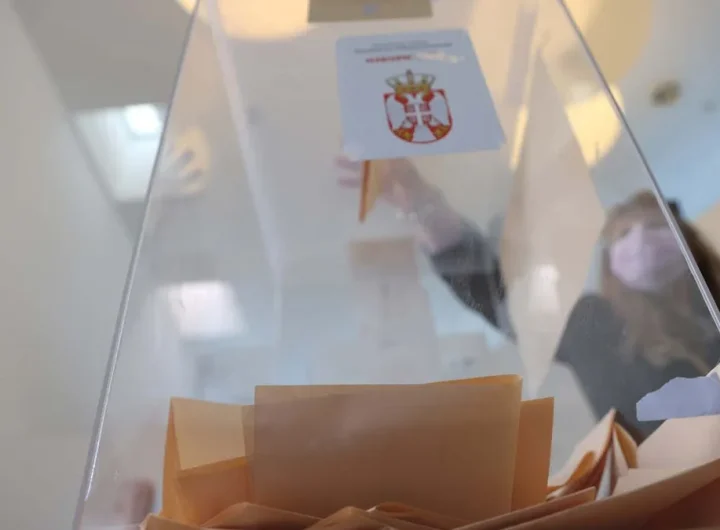 Alarm before elections in Serbia, former heads of security services call on police: Do not become an instrument of power
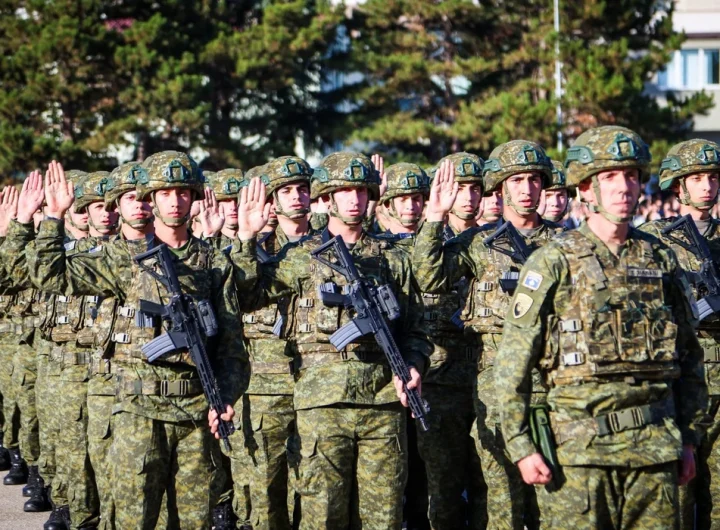 Over 3 new soldiers in five years, Macedonia: We will continue to invest in the development and professionalization of the army
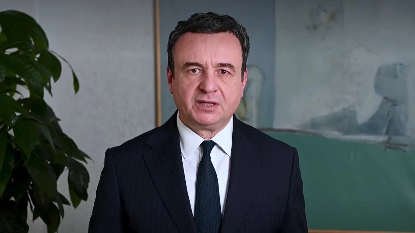 Kurti calls on Albanians of the Presheva Valley to vote for the “Albanian Coalition”
 Government: Over 1 billion euros invested in the army in this mandate
 Scandal in Vienna: KRIK uncovers Vučić-linked network suspected of manipulating Serbian diaspora voters