
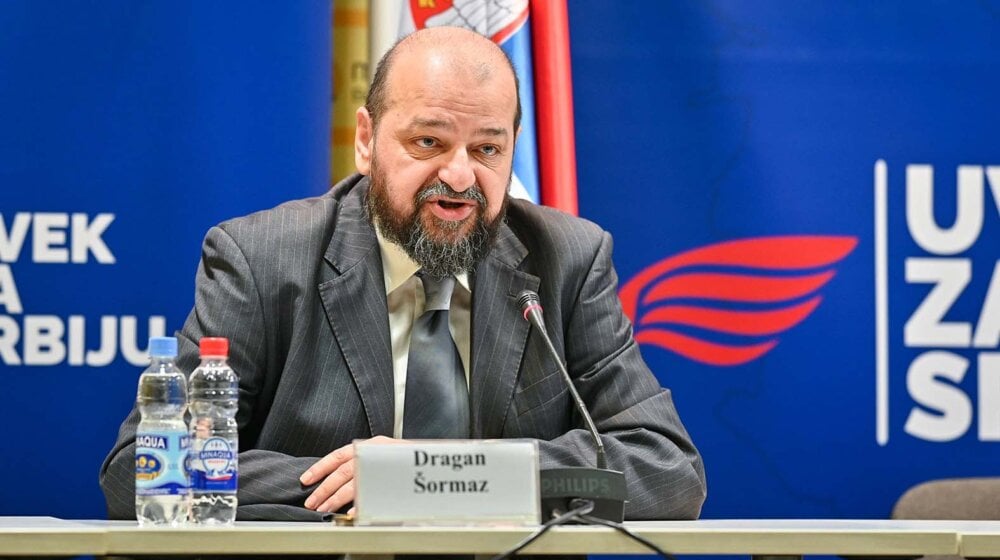
The Serbian president recently visited China, where he announced new investments worth 1 billion euros, which is only a quarter of Serbia’s annual needs (or only an eighth, if these investments are made over a two-year period). However, he did not disclose what the political cost of these investments will be, nor what fate awaits the Smederevo Steel Factory after the reduction of export quotas to the EU and the doubling of customs duties on quantities exported above the allowed quotas.
Written by: Dragan Shormaz
Is there an economic justification for the investment relationship with China, considering that last year Chinese investments in Serbia fell by a full 97%, while the US and the EU have serious reservations about Beijing's unfair trade practices, which could significantly limit the opening of the EU market to products that will result from the agreed Chinese investments? Will Chinese investments in Serbia be able to survive if the EU market is closed to them?
After his visit to China, the Serbian president stayed in Tivat, at the EU-Western Balkans summit.
The event itself was preceded by two incidents.
The first involved a plane full of people of security interest, which Montenegrin police turned back to Serbia. After alerting the public through Serbian tabloids about an alleged threat to his safety in Montenegro, Vučić finally admitted in Tivat that the disputed plane was carrying a team of SNS party loyalists, sent to Tivat to organize a festive reception and fan support for him.
The second incident followed the Serbian authorities' ban on the transit flight of the Romanian president's plane, which was headed to Tivat. After a day-long silence on the Romanian side's request, the Serbian authorities gave different and inconsistent explanations for the refusal to grant permission to fly. While the Serbian Ministry of Foreign Affairs claimed that permission was not granted due to military exercises of the Serbian Army, the General Staff gave the Romanian side guarantees that such exercises had not existed.
In the end, the Romanian president arrived in Tivat via Bulgaria and North Macedonia, while Serbia once again demonstrated its anti-European approach to building relations with its neighbors. The real reason for the Romanian plane's flight ban must be sought in Aleksandar Vučić's revenge for Romania's refusal to grant him a flight permit during his trip to Moscow in May last year.
After these bizarre and humiliating incidents for Serbia, Vučić was hosted by a meeting with the leaders of the EU, France, and Germany, in which it became clear to him that the time of balancing between the EU, China, and Russia is over and that Serbia must choose its future.
It is difficult to even call this meeting a meeting; it can be described more as a crisis headquarters. Only Vučić was organized with something like this, but not because he is important, but because he is considered the biggest problem in the region!
Essentially, Vučić must now choose between his criminally inclined loyalists, who keep him in power, and the only possible future that can bring Serbia prosperity and secure its place among developed European nations.
Vučić accompanied his flirtation with China and his uncomfortable confrontation with the European truth with a series of servile interviews for the American media, through which he tries to entice Donald Trump to visit Belgrade. By promising him a grand, nationwide reception in Serbia, Vučić plays the card of stroking Trump's ego, constantly losing sight of the fact that for the US, Serbia's relationship with China is much more important than any servile statements by the regime leaders in Belgrade.
However, even more serious is that Vučić shows a clear intention to find a substitute for Serbia's EU membership in bilateral alliances with Beijing and Washington, which constitutes an old dream of radicals, completely disconnected from reality.
Even if Trump does not resist the desire for attention and visits Serbia, this would only be a headline in America and the world, while Vučić would once again face reality: from a security perspective, this region belongs to NATO, while the alliance is changing towards taking on greater responsibilities from European members; geopolitically, the region is the European Union's backyard, and in this regard Trump cannot help!
The Serbian government has been claiming since mid-2025 that the Strategic Partnership Agreement with the US is almost complete, but it does not even exist as an official announcement. Armenia, on the other hand, reached such an agreement with Washington after only a few months of negotiations.
Equally deceptive is Vučić's relationship with Moscow, which is constantly dragging out negotiations on the sale of NIS and the decision on the gas agreement with Serbia, which would have a deadline of more than three months. In this way, Russia continues to tighten the noose around Serbia's neck, keeping it in a quasi-vassal position, while Vučić clearly has neither the strength nor the will to resist this.
Viewed from a broader perspective, all recent developments point to one simple fact: the space for Vučić's policy of sitting on several chairs simultaneously is rapidly disappearing.
While in Beijing it seeks new investments, in Brussels it tries to maintain the European path and secure even greater access to EU funds; in Washington it tries to find a political supporter, while from Moscow it expects energy security. But the world around Serbia is changing irreversibly.
The problem for Vučić is not that relations between great powers have become more complicated, but that they have become more honest. The European Union no longer wants to finance Chinese influence on its doorstep, while the United States no longer sees the Balkans as separate from the global rivalry with China.
On the other hand, Russia does not see Serbia as a partner, but as a means of maintaining its influence in Europe, while China sees Serbia primarily as an entry point for its economic penetration into the European market.
Therefore, today Serbia is not faced with a choice between East and West, as the regime's propaganda tries to portray, but with a choice between a clear strategy and a permanent wandering. This is a decision between a state that knows where it is going and a state that checks the mood in Brussels, Washington, Moscow and Beijing every morning to determine its policy.
The greatest irony is that Aleksandar Vučić is today trying to find an alternative to the European Union precisely at a moment when no serious economic, political or security indicators show that such an alternative exists. Neither China, nor Russia, nor any bilateral relationship with the United States can offer Serbia what European integration can offer: access to the largest market in the world, stable institutions, the rule of law, long-term investments and a place in the community of the most developed European states.
Today, Serbia stands at the end of a geopolitical era. The policy of balancing, which for years brought political and economic benefits, is entering a phase of diminishing returns. The fiercer the rivalry between the West, China and Russia becomes, the higher the price of indecision rises. Therefore, the key question is no longer whether Serbia can cooperate with all the great powers, but whether it can avoid the consequences of not defining a clear strategic direction for its development.
In a world that is rapidly dividing into blocs, neutrality becomes increasingly costly, while choosing the future becomes increasingly inevitable.
And when that moment of final choice comes, it will not only decide Serbia's foreign policy, but also the fate of the system that has survived for years precisely thanks to the ability to balance between different centers of power.
Therefore, the issue of Serbia's European path today is much more than a geopolitical issue. It is a matter of the future of the state and the survival of the regime, and precisely for this reason the time for balancing is running out faster than Aleksandar Vučić is willing to admit.
 Palmer warns of Russian influence in the Balkans: Delaying EU and NATO integration leaves the region vulnerable
  Margetić: Aleksandar Vučić killed civilians during the siege of Sarajevo
  The elections that scare Vučić: Promises to voters, destabilizing scenarios behind the ballot boxes
 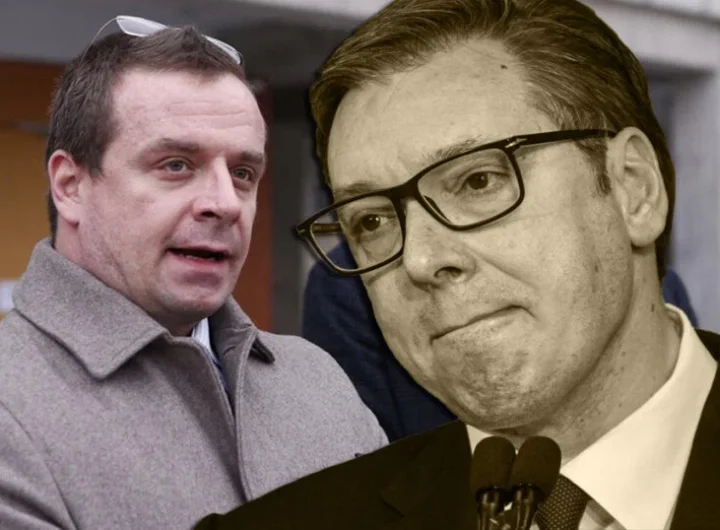 From "Politika" to pro-Russian propaganda, Stojkovic: How Vučić took control of the media and oriented Serbia towards the Kremlin
 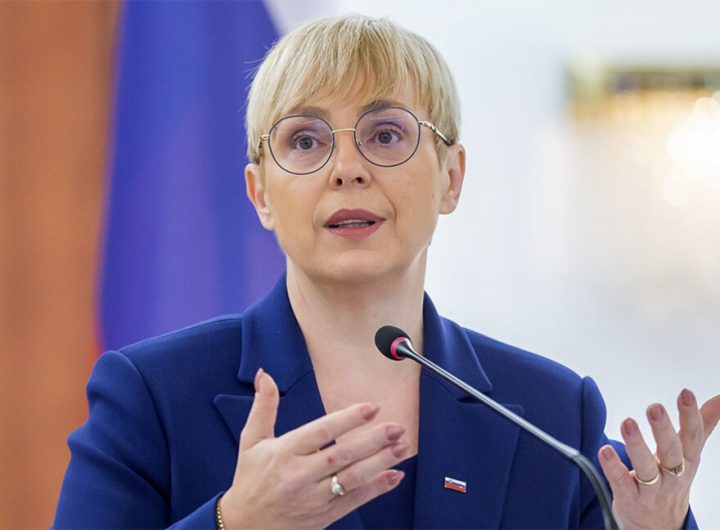 Slovenia on alert over Russian influence: President faces accusations of ties to Russia
 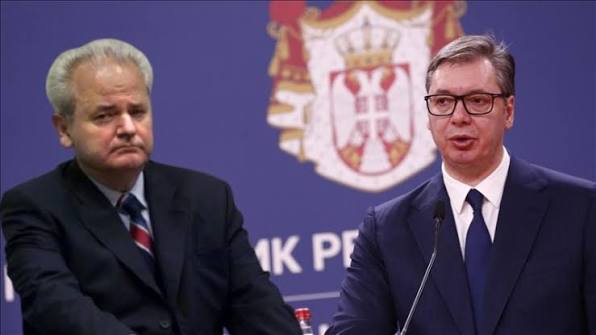 From Milosevic's propaganda to Vučić's politics: Is the same scenario returning?