

Despite international sanctions imposed on Moscow over its aggression against Ukraine, it was announced on Wednesday that Serbia has received yet another shipment of weapons from Russia. It is a Russian electronic drone jamming system, known as Repellent, which was presented by Serbian President Aleksandar Vučić himself.
In the last decade, Serbia has increased its spending on purchasing new and sophisticated weapons, making it one of the 40 largest importers in the world. According to the SIPRI Institute , Serbia ranks 37th in the world in terms of arms purchases in the period 2018-2022, with an increase of as much as 743% in spending for this purpose compared to the period 2013-2018. Serbia's largest suppliers of weapons are China with 43%, Russia with 30% and Belarus with 20%.
According to the institute, Serbia is the record holder in the Western Balkans in terms of armaments, leaving behind even Croatia, which is a NATO member. According to the indicators of the flow of weapons systems and subsystems, used by SIPRI to track the armaments of states, Serbia is marking an exponential increase in the purchase of weapons, starting from 2016, while in 2022 it reached its highest point.

At the Balkan level, only Croatia can be considered to be in an arms race with Serbia. In 2021, Croatia decided to purchase 12 used Rafale fighter jets from France for almost 1 billion euros, which would replace the aging fleet of Soviet-era aircraft and strengthen its air combat capabilities.
The arms race in the Balkans began in 2015 when Croatia asked the United States to donate 16 Lockheed Martin-made M270 Multiple Launch Rocket Systems, equipped with ballistic missiles. Current Serbian President Aleksandar Vučić, then prime minister, responded by declaring that his country would have to “find an answer to this.” He sought an answer from Russia, where in January 2016 Moscow promised to donate a model of the Russian S-300 missile defense system. Neither Croatia nor Serbia received the requested aid. However, in April 2022 Serbia secretly purchased a Chinese anti-aircraft system, a capacity increase for the Serbian military a month after the start of Russian aggression in Ukraine. Serbia has also purchased 30 European and Russian combat helicopters, Chinese drones, Israeli anti-tank missiles and French anti-aircraft systems.
Croatia, meanwhile, bought 12 German aviators, 16 American helicopters, American missiles and modernized 76 ground combat vehicles. However, when it comes to heavy combat vehicles, Serbia and Croatia are still within the limits agreed in 1995 with the Dayton Agreement.
Albania, as a NATO member state, has invested very little in defense, thus not being involved in the regional arms race. However, it seems that this period is over. Nearly 1 billion euros are planned to be spent from the Albanian budget for the purchase of new weapons and the modernization of existing ones in the period 2022-2028. This amount will be used to purchase weapons and ammunition, air warfare systems, drones from Turkey and a transponder system worth over 30 million euros that will be installed on Blackhawk helicopters. This will result in 27% of the annual budget being invested in defense, unlike in 2019 when this investment was only 9.8%.
From 2022, Kosovo also seems to be entering the arms race. In the last two years, the youngest state in Europe increased the number of soldiers by 80% and defense spending by 100%. In 2023, Kosovo bought drones from Turkey, and later requested the purchase of 246 Javelin anti-tank missiles and other types of weapons from the US, which have not been disclosed by the Pristina government.
North Macedonia, which joined NATO in 2020, has a ten-year defense modernization plan , which foresees spending 1 billion euros. The goal is to replace old Soviet and Yugoslav-made weapons with new Western-made ones. By 2032, it is planned to spend on the purchase of 8 Western-made multi-role military helicopters, which will replace the 12 Mi-24 helicopters donated to Ukraine. This will be the largest purchase of military equipment since 2001, when North Macedonia was involved in an armed conflict. Instead of tanks, North Macedonia has already signed contracts for the purchase of JLIV light wheeled armored vehicles and Stryker armored personnel carriers from the United States. It is also in the process of purchasing light armored vehicles from Turkey and Javelin anti-tank systems, Boran vehicles from Turkey, the Mistral 3 anti-aircraft system from France, as well as other types of equipment.
The equipping of Albania, North Macedonia and Montenegro with new weapons is seen in the prism of fulfilling NATO obligations to invest in defense of at least 2% of Gross Domestic Product (GDP). On the other hand, the arming of Serbia, especially after the beginning of Russia's invasion of Ukraine in early 2022, is seen by the West as a dangerous potential that could provoke another war in the Balkans, in order to defocus attention from Ukraine.
Serbia is the only European country that has not imposed sanctions on Russia and continues to sign cooperation agreements with Moscow. Although it has started the process of accession negotiations with the European Union (EU) since 2014, Belgrade has not harmonized its EU foreign policy towards Russia, refusing to impose the Union's sanctions.
In addition to Croatia, Vučić also mentions the danger from Kosovo to justify the ever-increasing purchase of weapons for the Serbian army. “If someone were to try to carry out an aggression against Serbia like it happened in 1999, technically they would not be able to do it in the same way,” he said, alluding to NATO’s intervention in 1999, when Serbia was attacked in order to stop the humanitarian catastrophe that Slobodan Milošević’s regime was causing in Kosovo.
To prevent the situation from escalating again, the US and the EU have called for all arms purchases to be transparent and for European integration, which means promoting regional cooperation, to be the focus of every country in the region.
Written by: Xhelal Neziri, editor and contributor to The Geopost from North Macedonia
 Bosnia and Herzegovina bans entry to Milan Radoić: National security threat declared due to terrorist attack in Banjska
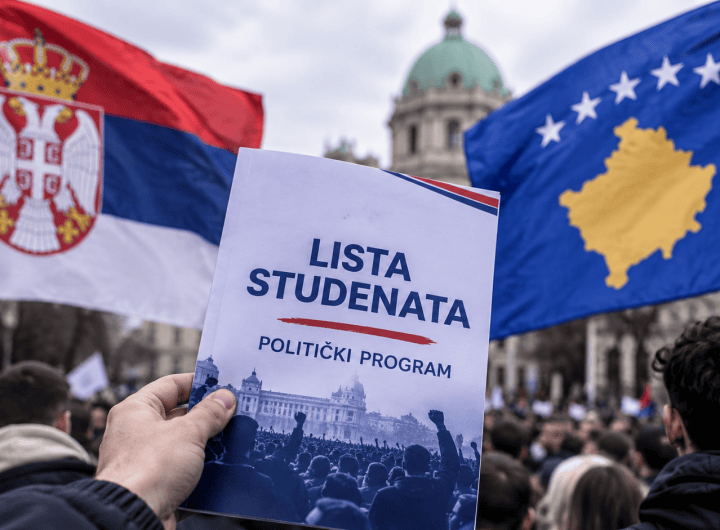 Student List, new in name but with old attitudes towards Kosovo
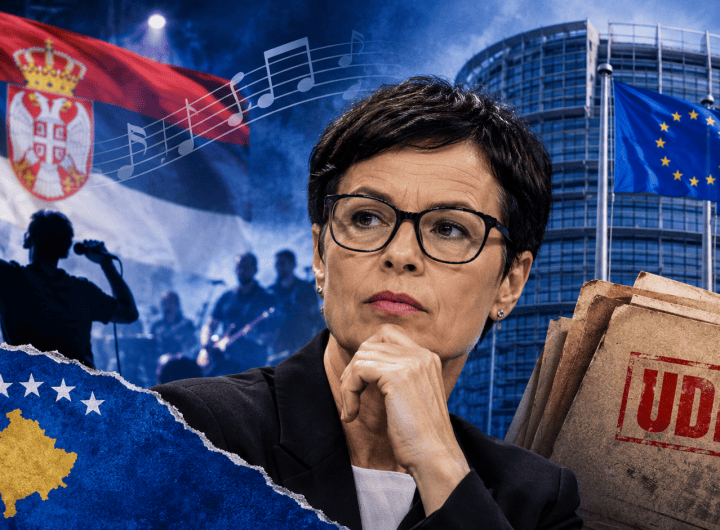 Serbian nationalist melody in Brussels against Kosovo, Marta Kos and the shadow of UDB
 Fetoshi: Vučić's 'warning' despair
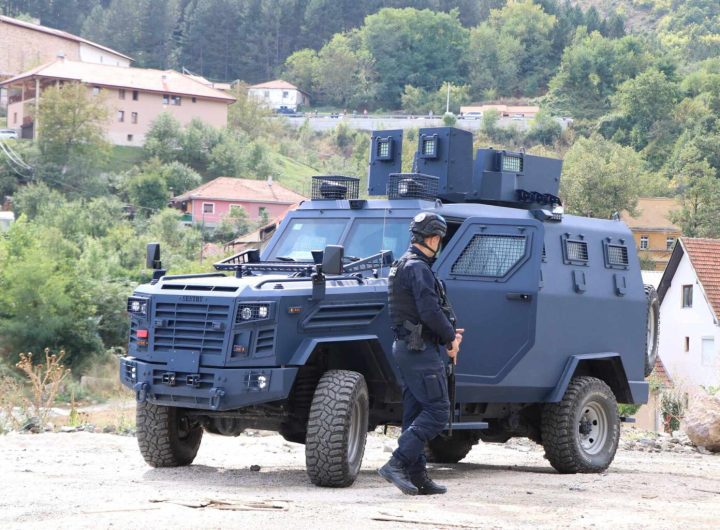 Former BIA inspector: Serbian secret service should have known about Banjska, for Vučić the action enabled his survival in power
 Challenges after Vučić: Five tasks on which Serbia's democratic future depends