
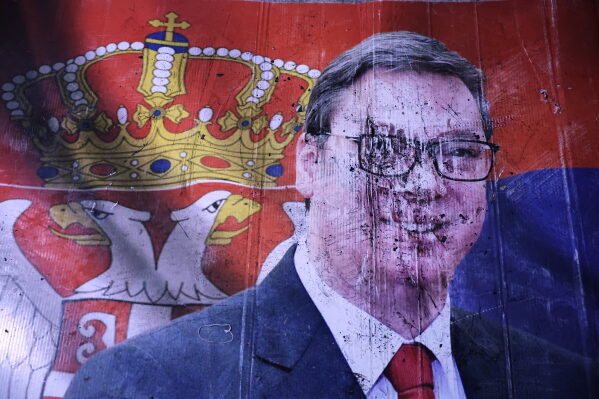
The victory of the student list in the October 25 parliamentary elections in Serbia is not expected to bring a reversal of the country's foreign policy orientation, but it could change the way Belgrade builds and manages relations with major powers, especially China.
In an analysis published after the elections, experts Dr. Nenad Stekić and Stefan Vladisavljev assess that Serbia is entering a phase of continuity of objectives, but change of methods. According to them, military neutrality, non-imposition of sanctions against Russia and support for China on the Kosovo issue are expected to remain part of the country's foreign policy.
However, what may change is the way this policy is exercised: diplomacy focused on Aleksandar Vučić's personal relationships with foreign leaders may give way to a more institutional, transparent, and law-based approach.
According to the authors, the student list secured an absolute majority in the Assembly, winning 52.9 percent of the vote and about 140 seats, while the list "Aleksandar Vučić - United Serbia" received 38.8 percent and 103 seats, according to the final projection of CeSID and Ipsos. This majority allows the new government to govern without the need for coalition partners.
However, experts emphasize that it is still unknown who the new prime minister will be and that the issue of political coexistence between the government and the presidency remains open.
Why is an immediate geopolitical turnaround not expected?
According to the analysis, there are several structural factors that limit the new government's room for action and make a rapid change in Serbia's orientation difficult.
One of them is the stance towards Kosovo. While non-recognition of its independence remains a constitutional and political commitment in Serbia, Belgrade continues to have an interest in the support of Russia and China in the United Nations Security Council.
The authors estimate that the student list program is even harsher towards Kosovo than Vučić's current practice, which could increase the importance of Chinese support for Serbia.
Another obstacle is the dependence on Russian gas and the unresolved issue of the NIS company. According to experts, imposing sanctions on Russia would have direct consequences for the economy and citizens, while no newly formed government is expected to take such a step without concrete compensation from the European Union.
The composition of the student list's electorate is also a limitation. The movement has gained support from diverse groups, including voters with cultural affinity to Russia and skepticism about the EU. A sudden shift in foreign policy could jeopardize this electoral coalition.
Relations with China could move from personal friendship to partnership with conditions
One of the most notable changes expected to occur in Serbia's foreign policy relates to relations with China.
According to Stekić and Vladisavljev, cooperation with Beijing is not expected to be interrupted, but its nature may change. Relations that during Vučić's government were characterized by personal ties between leaders, political symbolism and a lack of transparency, may shift to a more conditional partnership, where contracts, institutional oversight and respect for legal standards will be of greater importance.
This issue is particularly sensitive, as the student movement was created after the tragedy at the Novi Sad railway station, where a canopy collapsed and killed 16 people. The station was being renovated by a Chinese consortium.
The authors emphasize that the student list program does not contain rhetoric against China, but stipulates that cooperation with foreign companies be conditioned on respect for local laws, environmental standards, and occupational safety.
In this context, the analysis identifies five areas where clashes between the new government and Chinese interests could emerge: responsibility for the collapse in Novi Sad, transparency of contracts, environmental and labor standards in Bor, Smederevo, and Zrenjanin, the use of surveillance technology, and military cooperation.
According to experts, the new government is more likely to demand the review and publication of existing contracts than the termination of Chinese projects.
The EU, the US and Russia will influence Belgrade's new policy
Experts estimate that Serbia's policy towards China will not only be determined by bilateral relations with Beijing, but also by the pressure and interests of the European Union, the United States, and Russia.
According to them, the new government will be under pressure from Western partners to prove that political change in Serbia also brings changes in foreign policy.
However, since the student list program excludes imposing sanctions on Russia, the authors expect some of the Western pressure to shift towards issues related to China, such as the security of telecommunications networks, surveillance systems, control of foreign investment, and transparency of public procurement.
In this way, according to the analysis, China could face part of the political cost that Serbia is not willing to pay through sanctions against Moscow.
As for Russia, experts estimate that its influence on Serbian domestic politics is greater than that of China, due to energy dependence, ties to the Church, the media, and a portion of the electorate. While China exerts its influence mainly through capital and state institutions, Russia has more means to directly influence domestic politics.
For this reason, the authors consider that normalizing relations with China may be easier for the new government than changing relations with Russia.
What is expected by the end of 2027?
In the final part of the analysis, Stekić and Vladisavljev present several scenarios for Serbia's future relations with China, until the end of 2027.
According to them, a complete break in relations or a turn of Serbia towards the West at the expense of China is not a realistic scenario in this period, as both the programmatic basis and the necessary social support are lacking.
The scenario they consider most likely is maintaining the strategic partnership with China, but with stronger conditions, more transparency and institutional control.
The investigation into the Novi Sad tent collapse will also be a determining factor. If the legal process finds Chinese companies responsible and Beijing interprets this as a political issue, relations could face tensions. On the contrary, if China accepts the legal process, the partnership could emerge from this crisis more sustainable.
In conclusion, the authors emphasize that Serbia after Vučić is not expected to change its geopolitical wing, but the way it develops relations with various parties.
"The student list has taken on the four pillars of foreign policy, but rejects the personalized and non-transparent practice on which they are based," the experts conclude.
The GeoPost
 US envoy to the UN urges Bosnia to take responsibility for its future
 A Serbia without Vučić, but with the same policy towards Kosovo?
 Kosovo is not at war, but the risks are real: Sabotage, cyberattacks and Russian influence
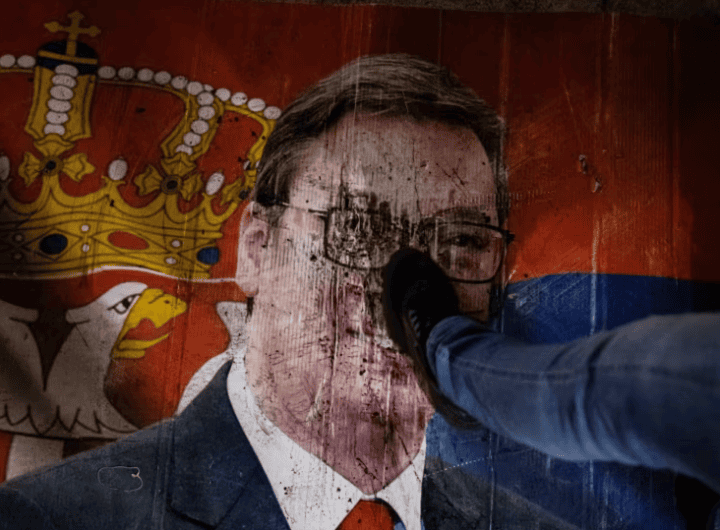 Spasojevic and Popovic: Vucic may face justice, Serbia must investigate former regime's illegal wealth
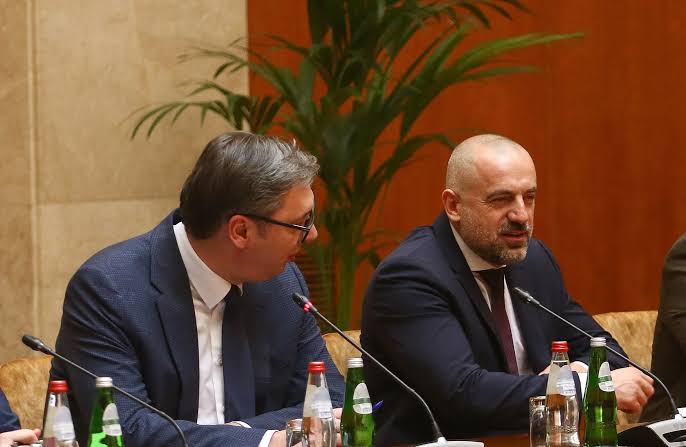 Informer's Editor-in-Chief in Serbia Alarmed by Radoicic's Case Review, Calls Him a Hero: Today We Are All Milan Radoicic
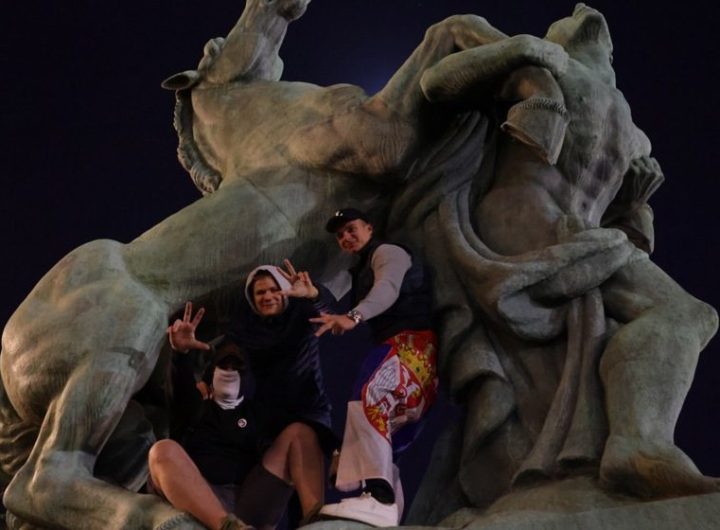 Kremlin-Close Oligarch Congratulates Serbian Students, Reinstates Nationalist Slogan for Kosovo