

Modern wars are no longer fought only on battlefields, with tanks, missiles and armies competing for control of territory, because alongside traditional conflicts, another front has emerged, much less visible, but with great potential to influence democratic societies and institutions. This front extends to smartphones, social networks and digital platforms, where millions of people are informed every day, form their political beliefs and try to understand the developments taking place around them.
The rapid development of artificial intelligence (AI) is fundamentally changing the way information is produced, processed and distributed, creating extraordinary opportunities for communication and access to knowledge, but at the same time providing malicious actors with increasingly sophisticated tools for manipulation, propaganda and interference in democratic processes. In this new reality, Russia, China and other state and non-state actors have been involved in reporting and documenting information influence operations, while democratic societies are facing an increasingly complex challenge: how to maintain trust in information at a time when even fabricated content can appear completely authentic.
For decades, propaganda required organized structures, institutions, newspapers, radio and television to convey a message to the public, while today technology has created the possibility that a video produced with artificial intelligence, a manipulated photo or a statement that was never made can be distributed to millions of users in an extremely short time. This not only means accelerating traditional propaganda, but also changing the way a false reality can be constructed, which for a part of the public can be as convincing as a documented event.
A politician can appear in a video saying words he never said, a protest that never happened can be illustrated with photographs that appear to have been taken by photojournalists, and a piece of false information can be shared simultaneously by hundreds of accounts on social networks, creating the impression that it has been confirmed by different and independent sources. It is precisely this ability to produce not only messages, but also materials that the public can perceive as evidence, that constitutes one of the most disturbing dimensions of modern information manipulation.
The problem becomes even more serious when such content appears during periods of political crisis, elections, protests or military conflicts, when citizens demand immediate information and when emotions, uncertainty and social polarization can reduce the space for critical assessment. In such circumstances, fabricated material does not need to remain credible for long to cause consequences, because public reaction can occur much faster than fact-checking.
In this context, hybrid warfare should also be understood, which is not limited to the use of military force, but involves the combination of military and non-military means to exert pressure on a state, to weaken its institutions and to influence political and social decision-making. Cyberattacks, sabotage, economic pressure, intelligence operations and information manipulation can be combined in a common strategy, where each instrument serves to reinforce the effect of the other and to achieve objectives that cannot necessarily be achieved through direct military confrontation.
Within this architecture, disinformation occupies a special place, because it does not always aim to change the event itself, but the way it is understood and interpreted by the public. Instead of physically controlling a territory, an information operation may aim to control perceptions, weaken trust in institutions, and create an environment where citizens find it increasingly difficult to distinguish facts from fabricated claims.
What makes this form of manipulation particularly dangerous is that the goal is not necessarily to convince the public to accept a particular lie, but to create a constant state of doubt, in which any information can be contested and any source can be presented as unreliable. When an authentic photograph can be declared manipulated, a real video can be described as the product of artificial intelligence, and a professional report can be labeled as propaganda, then manipulation begins to undermine not only the credibility of a news story, but also society's ability to create a shared understanding of reality.
This risk no longer remains at the level of theoretical warnings, as reports from European institutions and technology companies have documented the development of increasingly organized, faster and more complex information operations. In its fourth report on the threats posed by foreign manipulation and interference in information, published in March 2026, the European External Action Service (EEAS) found that during 2025 these operations had reached a new level of complexity and international scope, making it increasingly clear that information manipulation cannot be treated simply as a public communication problem.
According to this report, interventions in the information space are part of a broader hybrid arsenal, where digital activities can be combined with political pressure, threats and other destabilizing actions, creating an environment in which influence on public opinion becomes an instrument for the realization of strategic interests.
Russia constitutes one of the most well-documented cases of the use of information influence operations for geopolitical purposes, especially after the beginning of the invasion of Ukraine, when networks connected to Russian interests have been identified in campaigns aimed at discrediting Ukraine, weakening Western support for Kiev, and deepening political divisions within democratic societies. These efforts are not limited to promoting Moscow’s positions, but also include the dissemination of content aimed at creating distrust of Western institutions and influencing the way citizens interpret the conflict.
The EEAS’s third report, published in March 2025, identified the digital infrastructure used by foreign actors, mainly from Russia, but also from China, to interfere in the information space of the European Union and partner countries. The mechanisms documented include the creation of pages that imitate well-known media outlets, the use of fake profiles, and the coordinated distribution of materials intended to present themselves as independent reporting, while in fact they are part of organized influence efforts.
Artificial intelligence significantly expands the capabilities of these operations, enabling actors to produce content in multiple languages, tailor messages to different audiences, and distribute them at a speed that previously required far more time, personnel, and financial resources. In this way, a single narrative can take on different forms, depending on the political, cultural, and social environment in which it is intended to spread, making it more difficult to identify its origin and purpose.
A notable example of this development was during the 2024 US presidential election, when Microsoft’s Threat Analysis Center documented influence efforts by actors linked to Russia, Iran, and China. These activities identified fabricated videos, artificial intelligence-generated content, and cyber operations aimed at influencing the electoral information environment, indicating that new technologies are also being used in efforts to influence the political processes of democratic countries.
However, it is important to distinguish between documenting an influence effort and proving that it determined the outcome of an electoral process, because the existence of such operations does not automatically prove that they changed the voters’ decision. What these cases show is that digital manipulation has become part of organized efforts to influence the political debate, shape public perceptions, and exploit vulnerabilities in the information environment.
Another dimension of this threat is related to the use of artificial intelligence to imitate the identity, voice and appearance of real people, through technology known as deepfake, which enables the creation of audiovisual materials that convincingly present a person saying or doing something that did not actually happen. In a polarized society, where a political statement can cause immediate reactions, such material can influence public opinion before journalists, institutions or experts have been able to verify its authenticity.
But the impact of this technology is not limited to the fabrication of evidence, because the spread of manipulated materials creates another, equally worrying possibility, that authentic evidence can be dismissed by presenting it as the products of artificial intelligence. This phenomenon, known in disinformation studies as the liar's dividend, gives an advantage to those seeking to avoid responsibility, as the constant presence of fabricated content makes it easier to sow doubt even on materials that are genuine.
In this way, information manipulation can work in two directions simultaneously, making untruths seem credible and creating circumstances in which even the truth can be contested. The most serious consequence of this process is not only the spread of inaccurate information, but the gradual weakening of citizens' trust in the possibility of knowing and verifying reality.
The automation of propaganda further exacerbates this problem, as artificial intelligence enables actors conducting influence operations to produce thousands of variants of a message, adapting them to the language, culture, concerns, and sensitivities of different audiences. A narrative that in one country might be built around economic insecurity, in another might be presented through political tensions or distrust of institutions, exploiting precisely the issues that have the greatest potential to provoke social reactions.
In its February 2026 report on malicious uses of artificial intelligence, OpenAI found that threat actors typically do not rely solely on AI models, but combine them with traditional tools, such as websites and social media accounts, while their operations often take place across multiple platforms and involve the use of more than one artificial intelligence model.
This finding suggests that new technology has not replaced traditional propaganda, but is being used to accelerate, amplify, and adapt it to an environment where information is constantly circulating. However, producing a large amount of content does not necessarily mean having a large impact on the public, which is why security reports distinguish between attempted manipulation, the extent of distribution, and actual impact on citizens’ attitudes or behavior, a distinction that is essential to understanding the scale of the threat without overestimating its power.
In this global competition for information influence, China represents another dimension of the use of technology to achieve strategic interests, as reports by Microsoft and the EEAS have identified operations linked to Chinese actors that aim to influence international perceptions, exploit social polarization, and promote narratives in line with Beijing’s interests. Although the methods, priorities, and objectives of these operations are not necessarily the same as those of Russian actors, both cases demonstrate that the information space has become an important arena of competition between great powers.
For the Western Balkans, these developments are of particular importance, as the region continues to be characterized by ethnic tensions, political disagreements, external influences, and ongoing debates about Euro-Atlantic orientation. In an environment where historical, identity, and security issues continue to strongly influence public debate, fabricated content can exploit existing sensitivities and create uncertainty at times when accurate information is particularly important.
A fabricated statement by a senior official, a doctored video purporting to show clashes during a protest, or false information about a security incident can spread rapidly and provoke reactions before the real circumstances are clarified. In such situations, the problem lies not only in the false content, but also in the possibility that it can be used to reinforce existing tensions and influence the way different communities perceive each other.
Kosovo faces this risk in a particularly sensitive context, due to relations with Serbia, periodic tensions in the north of the country, and the spread of conflicting narratives regarding political and security developments. In such an environment, where information about sensitive events can quickly take on a political and interethnic dimension, the manipulation of digital content poses a challenge that should not be underestimated.
For example, fabricated material purporting to represent an intercommunal incident, a NATO statement, or a decision by Kosovo institutions can create confusion and uncertainty, especially if distributed in a coordinated manner and presented as confirmed information. In these circumstances, the consequences can go beyond ordinary misinformation, as a false claim can affect the perception of security and public reactions to developments that require calm and verified information.
However, it would be wrong to automatically consider every fake news, every journalistic error, or every AI-generated content as part of a hybrid warfare operation, because identifying such activity requires evidence of coordination, purpose, actors involved, and the manner in which the content was distributed. This distinction is particularly important for journalism, which must treat allegations of information interference with the same standard of verification that it applies to any other information of public interest.
In the age of artificial intelligence, journalists can no longer rely solely on the impression that a photo looks authentic, that a voice sounds convincing, or that a piece of information was published by several different sites, because none of these elements in themselves constitute a guarantee of the authenticity of the material. Verification requires identifying the original source, checking the time and place of publication, comparing it with independent evidence, and analyzing the context in which the content was produced and distributed.
Even automated tools that claim to identify AI-generated content have their limitations and can produce inaccurate results, so their use should be accompanied by other verification methods and should not serve as the sole evidence to determine the authenticity of a material. For journalism, this means the need for a more cautious approach to digital sources and a deeper understanding of how technology can be used to construct content that appears credible but does not reflect real events.
At the same time, artificial intelligence should not be seen only as a tool that creates risks, because it can also be used by journalists and researchers to analyze large amounts of data, identify coordinated distribution patterns, and compare content in different languages. This creates a situation in which the same technology that can be used to manipulate information can also serve to identify and document it, depending on how it is used and the standards on which the analysis is based.
For democratic institutions, the challenge is even more complex, because efforts to protect themselves from organized information interference must be carried out without turning the fight against disinformation into a justification for censorship or the restriction of legitimate criticism. A democratic society must have the capacity to identify and oppose operations aimed at manipulating public opinion, while preserving freedom of expression, media pluralism and the right of citizens to criticize institutions and challenge government decisions.
This is precisely where one of the greatest dilemmas of the digital age lies, because the protection of the information space cannot be built on the limitation of public debate, just as freedom of expression should not be used as an excuse to ignore the existence of organized operations aimed at deceiving and manipulating citizens. Maintaining this balance requires responsible institutions, professional media, and a public that has the opportunity to be informed by reliable sources.
Hybrid warfare in the age of artificial intelligence is, in essence, not just a technological confrontation between states and different actors, but a much broader confrontation over trust, authority, and the way societies understand reality. If in traditional wars the strategic objectives may be territory, infrastructure, and military capabilities, in information manipulation operations the very trust of citizens in institutions, the media, and each other can become the objective.
When this trust is continually weakened, the consequences are not limited to the spread of false news, because even accurate information can lose its ability to guide public debate and serve as a basis for citizens' decision-making. A society in which every fact is contested, every evidence is questioned, and every source of information is viewed with distrust becomes more vulnerable to manipulation, precisely because its citizens find it increasingly difficult to form beliefs based on verifiable facts.
Therefore, the greatest risk posed by artificial intelligence in the field of information is not only the possibility of people believing an event that did not happen or a statement that was never made, but the creation of an information reality where fabricated content and constant accusations of manipulation make citizens doubt even what is documented and proven.
Ultimately, the battle for information is not just between those who produce propaganda and those who seek to detect it, but also between efforts to undermine public trust and the need for democratic societies to preserve it. For when citizens lose the ability to distinguish reliable information from manipulation, not only the quality of public debate is at risk, but also the very foundation on which democratic decision-making rests.
In an age when technology can make lies look like truth and truth appear like deception, protecting the credibility of facts is no longer just the responsibility of journalism, but a fundamental issue of democratic security./UN/
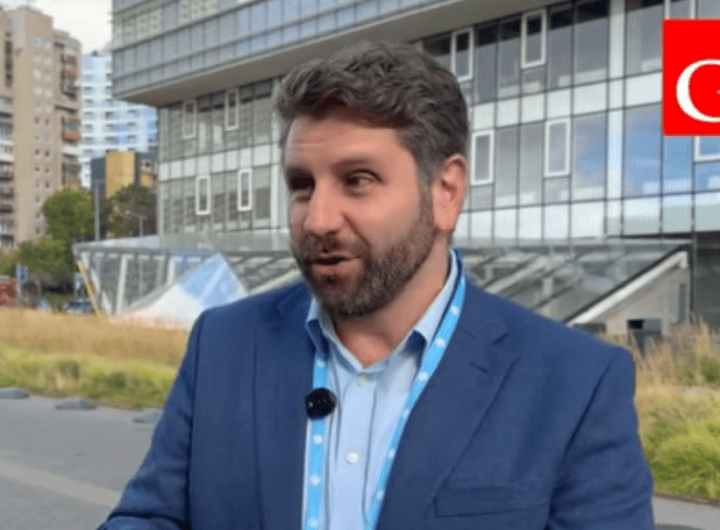 Fivenson: The Balkans must strengthen the fight against disinformation
 European Democrats alarmed about Pegasus in Serbia: Wiretapping threatens democracy
 Sweden to keep Patriot systems in Poland through 2027 – New NATO defense plans
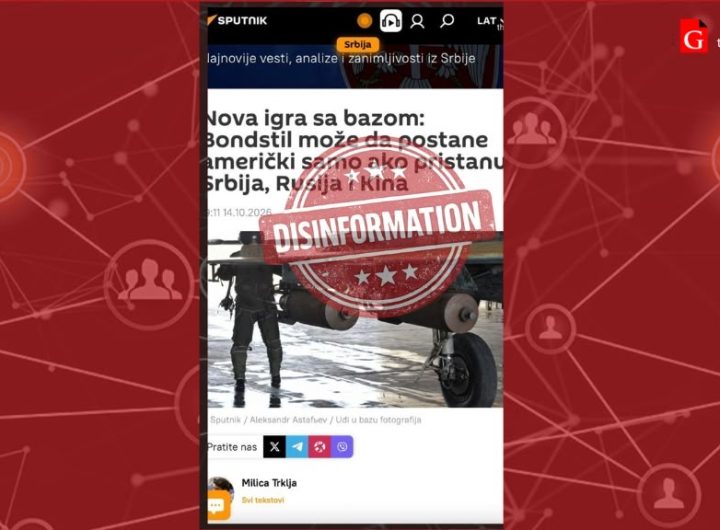 Sputnik spreads disinformation about Bondsteel, says Serbia, Russia and China must give their consent
 Kosovo discusses purchase of Black Hawk helicopters with US
 Macedonian to international media: Serbia continues to threaten Kosovo, ties with Russia increase security concerns