
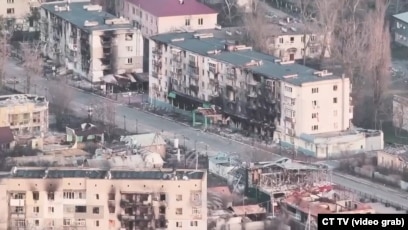
Ukraine and Russia have agreed to a ceasefire in Oleshki, the administration of United States President Donald Trump announced on October 23.
According to the announcement, the agreement was reached with the mediation of US First Lady Melania Trump.
The two countries have agreed to temporarily cease all hostilities in Oleshki, "to enable the delivery of humanitarian aid and to prepare the evacuation of civilians through a designated safe corridor," the statement said.
The local ceasefire is expected to begin on October 29th.
In a statement, Melania Trump described the situation in Oleshki as critical, recalling that civilians, mostly elderly, remain there, who need medical assistance, medicine, food, and clean water.
According to the White House, the first lady, in her official capacity, "initiated negotiations with both parties and coordinated the objectives, technical procedures, schedule, work processes, and terms of this agreement."
Civilian representatives from Russia and Ukraine are expected to “jointly visit the residents of Oleshki in their homes to determine what specific assistance they need.” Those who wish to evacuate will be provided with support and transportation. Trump suggested that “some may want to go to Russia, while others may want to go to Ukraine.”
The US president's administration also added that the mission will be accompanied by an independent American media organization, whose name has not been disclosed.
So far, Ukraine and Russia have not officially announced a humanitarian ceasefire. Radio Free Europe/Radio Liberty's Ukrainian Service has reached out to Ukraine's Ombudsman, Dmytro Lubinets, for comment.
A few days ago, the head of the parliamentary group of the Servant of the People party, Davyd Arakhamia, announced "good news" regarding the humanitarian crisis in Oleshki, located in the Kherson region.
Oleshki was occupied by Russia in the first days of the full-scale invasion of Ukraine, which began in February 2022. The city is located on the left bank of the Dnipro River, which currently forms a natural border between the free and occupied parts of the Kherson region.
According to the Kherson Regional Military Administration, about 2.000 people remain in Oleshki, including about 50 children. The administration claims that Russian forces are obstructing the delivery of aid and, in practice, denying residents the opportunity to leave the town.
The attempt by international organizations to reach an agreement with the Russian authorities for the evacuation of civilians from the occupied city has so far yielded no results./REL
 EC defends EP election observation delegation opposed by Serbia
 Vučić faces his biggest political challenge, elections under the shadow of suspicions of manipulation
 Fire, drones and graffiti: Russian connection to sabotage across Europe
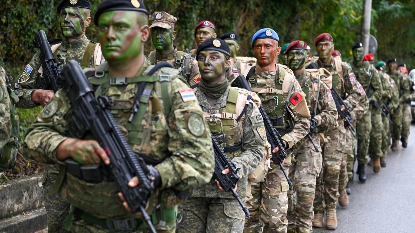 "Tactical march from Udbina to Knin Castle", KSF and regional soldiers conclude training in Croatia - not only Serbia participates
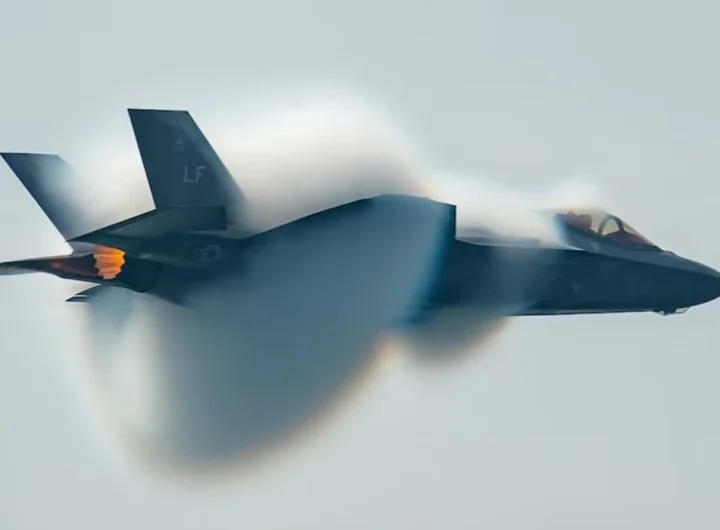 Pentagon and Lockheed Martin sign deal for 850 F-35 jets
 Why are Russian fishing boats standing near the NATO state?