
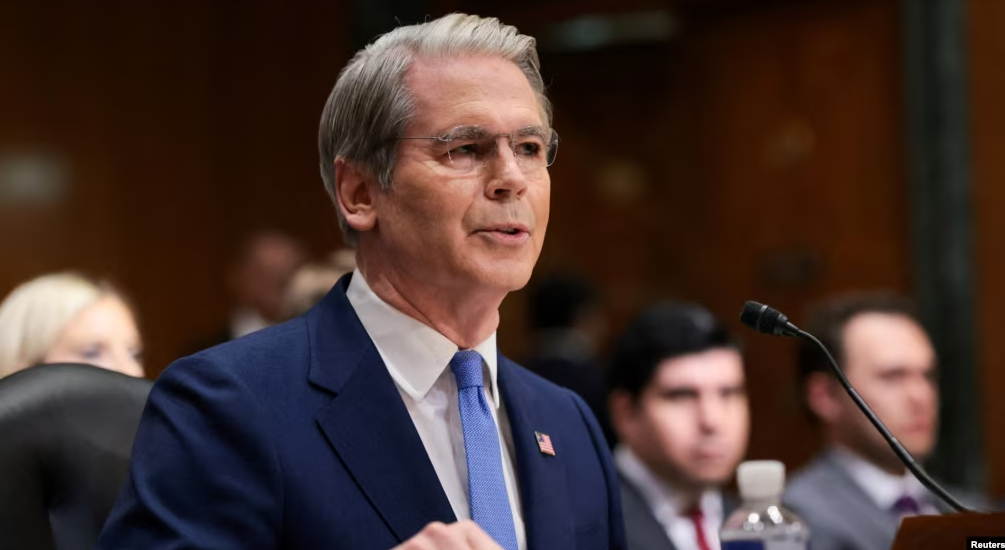
US Treasury Secretary Scott Bessent said the United States would impose the "toughest sanctions in history" on Tehran and suggested that plans to increase economic pressure mean major US military strikes on Iran are unlikely to resume anytime soon.
"It's a double whammy. We have the blockade [of Iranian ports] and we will have the toughest sanctions in history," Bessent told US network CNBC on August 20. "This will work in Iran and we will bring down this regime."
Bessent's comments came a day after US President Donald Trump threatened Iran with "economic warfare and isolation on an extraordinary scale" and warned that any country that provides support to Iran would face severe economic consequences.
In addition to pressuring Tehran, “ANY country that allows its financial institutions, businesses, airports, or government entities to provide any kind of vital support to Iran will face EXTREME economic CONSEQUENCES themselves,” Trump wrote on his Truth Social platform in the late hours of August 19.
"This will be the largest coordinated economic isolation in the history of the world," Bessent said. "And we will tell [allies] that you are either with us or against us."
Neither Trump nor Bessent provided many details.
Bessent told CNBC that he will hold a press conference on August 24 "to talk about exactly what we're going to do."
As oil prices rose on August 20, Bessent said he believes oil markets are “misinterpreting what this economic pressure means. If we are exerting maximum economic pressure, then that means there is likely no resumption of a large-scale kinetic operation.”
"Kinetic," in this context, refers to military action.
Trump's warnings came via a social media post, in which he said Tehran had failed to reach a deal with the US.
This post came hours after Trump said that negotiations with Iran could resume "at some point," but expressed satisfaction with the current situation, saying: "Right now, I think the situation is very good."
These developments come after the expiration of a 60-day negotiation period set out in a memorandum of understanding between the US and Iran signed in June. The memorandum aimed to create a framework for ending the conflict, preventing Iran from obtaining a nuclear weapon, and restoring freedom of navigation through the Strait of Hormuz.
The United States says Iran violated the June agreement by attacking merchant ships in the strait in July, prompting the resumption of US military action. The US-Israeli war against Iran began on February 28./REL
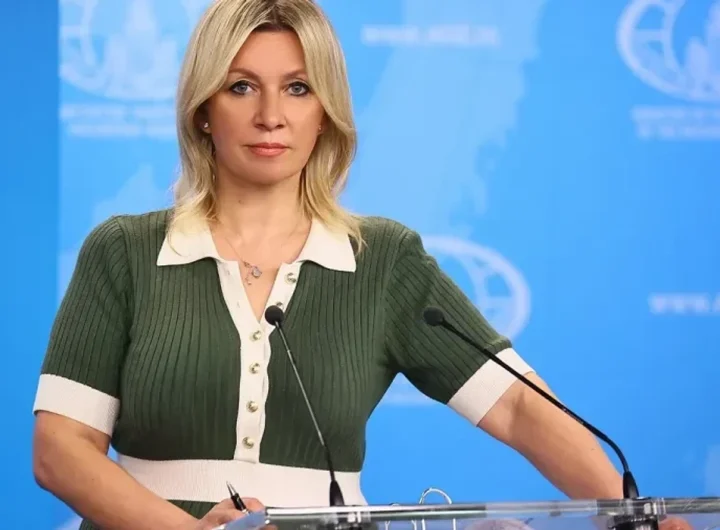 Kremlin repeats Belgrade's narratives, Zakharova accuses the West of inciting "ethnic cleansing" of Kosovo
  Espionage indictment filed against Croatian pilot who served in KFOR and his Serbian partner – to whom did they give information?
 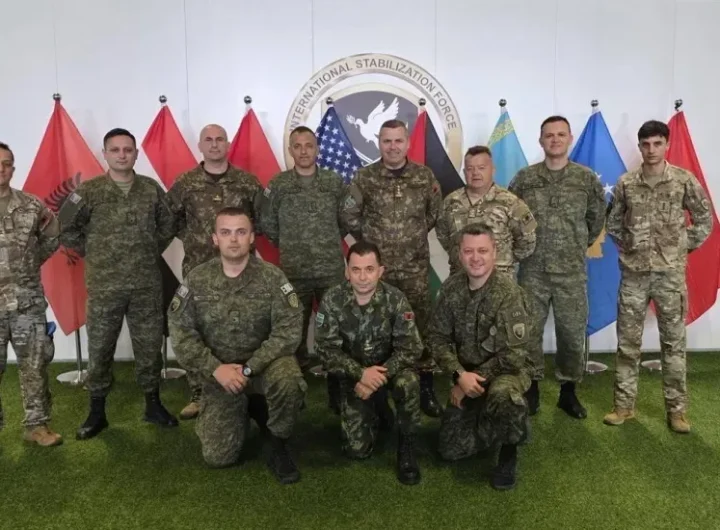 Kosovo and Albania the first to be equipped by the US for the mission in Gaza
  German authorities uncover secret weapons cache near Berlin linked to Russian spies
  Ukraine hits Russian refinery over 1,600 kilometers from border, Zelensky confirms attack
  RUSSIAN OCCUPATION WITHOUT ANY SOLDIERS: How did Serbia become a training ground for Putin's hybrid operations?