
Current developments related to the future of Kosovo show that the newest state in the Balkans is in a completely different international and regional context than just a few years ago.
While Belgrade continues to formally insist on the policy of “status neutrality”, the preservation of Resolution 1244 (which served as the legal basis for the proclamation of Kosovo’s Declaration of Independence) and Serbia’s military neutrality, the reality on the ground is moving in the opposite direction.
Kosovo is gradually deepening its integration into Western security and political structures, while Serbia remains increasingly stuck between its inability to implement the agreed process of normalizing relations, Vučić's internal political calculations, and a contradictory foreign policy.
One of the key events of the last few weeks is the first instance decision in the Banjska case. The Basic Court in Pristina sentenced Blagoje Spasojevic and Vladimir Tolic to life imprisonment, while Dusan Maksimovic was sentenced to 30 years in prison for participating in the terrorist attack in Banjska in September 2023. The court found that the group had acted with the aim of destabilizing the constitutional order of Kosovo, attempting to occupy northern Kosovo and unify it with Serbia.
The fact that Milan Radoićić, who publicly claimed responsibility for organizing the action, continues to be accessible to Serbian authorities in Serbia, without facing any serious legal proceedings, gives this case special political weight. For this reason, the decision of the Court in Pristina has opened the issue of political and command responsibility of structures close to the government in Belgrade.
The pro-regime media and Vučić’s “watchdogs” have almost completely silenced this topic, which shows that Banjska has become a politically unpleasant issue for the regime in Belgrade. At the same time, Pristina rightly emphasizes that this case is evidence that Serbia directly supports the destabilization of northern Kosovo. Vučić himself did not say a word about the court decision; an unstatesmanlike stance, and one can even conclude that such behavior is cowardly.
Politically, Banjska has further weakened Serbia's international position, both in the issue of normalizing relations with Kosovo and in its relations with Western countries. After the events of 2023, some Western partners have begun to more openly view Serbia's security policy as a factor of regional risk and instability, especially in the context of the Russian invasion of Ukraine and NATO's growing sensitivity to potential destabilizing points in Europe.
In parallel, Kosovo is entering a new phase of internal political instability through extraordinary parliamentary elections scheduled for June 7. Although the Serbian List has gone through serious political and international controversies in recent years, including accusations of close ties to criminal structures and individuals associated with Banjska, it continues to enjoy the open support of the Vučić regime.
This shows the deep paradox of Serbia's policy towards Kosovo: even after Banjska, sanctions, international pressure and serious damage to credibility in the West, Vučić has not offered a new strategy nor a new political infrastructure for Serbs in Kosovo. Instead of redefining politics, he continues to rely on the same criminal actors and the same mechanisms of political control.
Such an approach may preserve Belgrade's political control over Kosovo Serbs in the short term, but in the long term it further deepens their international isolation and dependence on the central government in Serbia, which has less and less to offer.
The arrest of five agitators in Gracanica proves that the Serbian List will find it increasingly difficult to use pressure tools to secure votes.
Meanwhile, the international context is changing rapidly. An initiative has been launched in the US Congress that promotes deeper integration of Kosovo into Euro-Atlantic structures, including the idea of NATO membership. Although formal admission of Kosovo to NATO is not yet directly on the agenda because four member states of the Alliance do not recognize Kosovo, the very fact that this issue is being discussed more and more openly is a serious indicator of the change in the Western approach to the Balkans.
Ultimately, recognition of Kosovo by all NATO member states is not necessarily necessary. These states can vote for Kosovo as a territory, since Pristina exercises indisputable sovereignty over its territory. All that remains is to ensure the full presence of the Kosovo army in the north and the process would be considered complete.
I am convinced that this will happen after the next elections and in cooperation with KFOR. It is not at all impossible that, due to the avoidance of reaching a "Final Legally Binding Agreement on the Normalization of Relations between Serbia and Kosovo", the four states that are also members of the European Union, due to Belgrade's obstructions, will decide to recognize Kosovo.
For the West, especially after the war in Ukraine, the Balkans are increasingly seen less as a “frozen conflict” and more as part of the broader European security architecture. In this context, Kosovo is now treated as a security partner of the West, while Serbia is increasingly perceived as an uncertain actor trying to balance between the West, Russia and China.
An additional problem for Serbia is the fact that the “four pillars” or “four chairs” policy is becoming less and less sustainable in the conditions of new geopolitical polarization. In the circumstances of the escalating conflict between the West and Russia, as well as the rivalry between China and the United States, the space for balancing in foreign policy is narrowing.
Serbia formally remains a candidate for membership in the European Union, but at the same time refuses to align with key European foreign policy decisions, primarily sanctions against Russia. Together with the increasingly visible erosion of democracy within the country, this is producing growing distrust among Western partners towards the real foreign policy goals and sincerity of official Belgrade.
In this context, the insistence on military neutrality is becoming increasingly complicated and harmful to Serbia's security. Neutrality over the past decade was a short-term political formula for balancing between different international centers of power, but today it represents a passive position without a clear strategic direction.
While Kosovo is building its security cooperation with NATO and the United States, Serbia remains between formal cooperation with NATO through the Partnership for Peace program and the more imaginary political support of Russia and China in the UN Security Council.
The key problem for Serbia is the fact that there is currently no sustainable strategy to break the Kosovo impasse. The frozen conflict no longer functions as a stable option, because international relations are changing rapidly. On the one hand, Serbia does not have the political strength to formally recognize Kosovo, while on the other hand it does not have the capacity to stop or even slow down Kosovo's international integration.
For this reason, the Kosovo issue today is becoming less and less the question of "will Kosovo integrate into Western structures", and more and more the question of how quickly this process will develop and what consequences the continuation of the current policy of self-isolation will have for Serbia, without a clear long-term strategy.
Autor: Dragan Shormaz
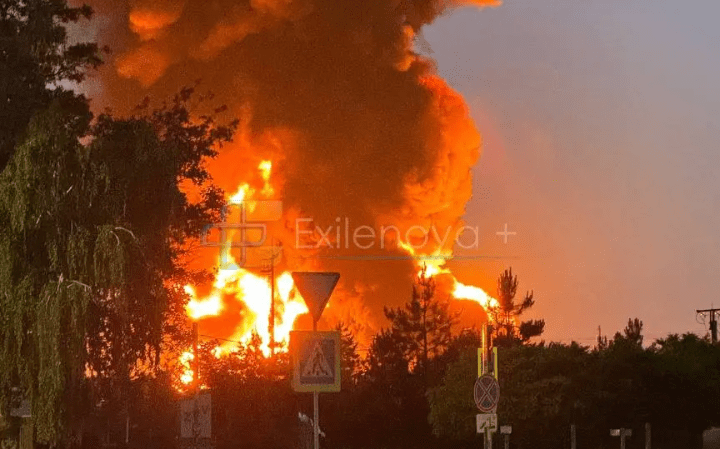 Ukrainian drones over St. Petersburg on the last day of the forum in Russia
  US warns of review of presence in Bosnia after clashes with Europe
 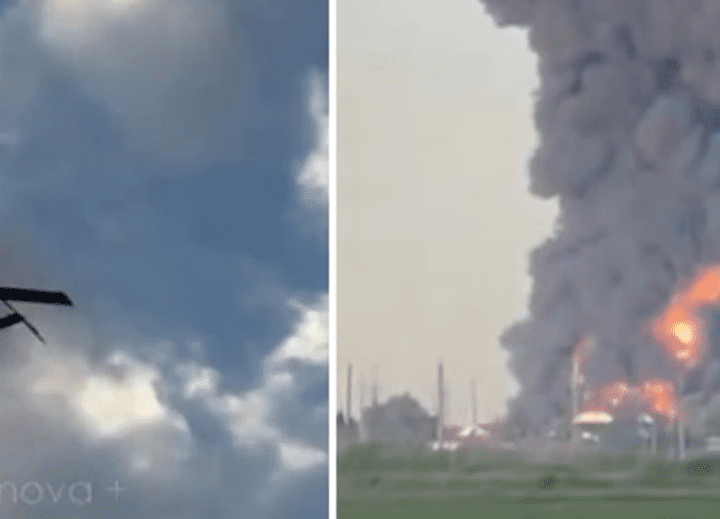 Massive drone attack in Putin's hometown
  Vučić's failed attempt at hybrid pressure on Montenegro before the eyes of the European Union
 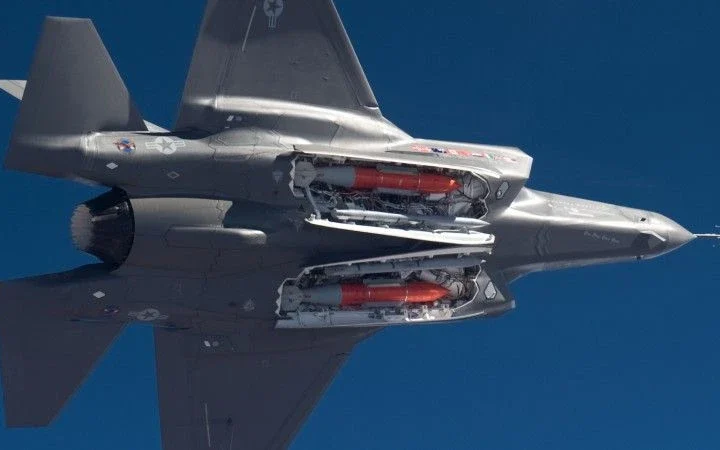 Will the US deploy nuclear weapons on NATO's eastern flank?
  As EU moves away from Russian gas, Republika Srpska deepens cooperation with Gazprom