
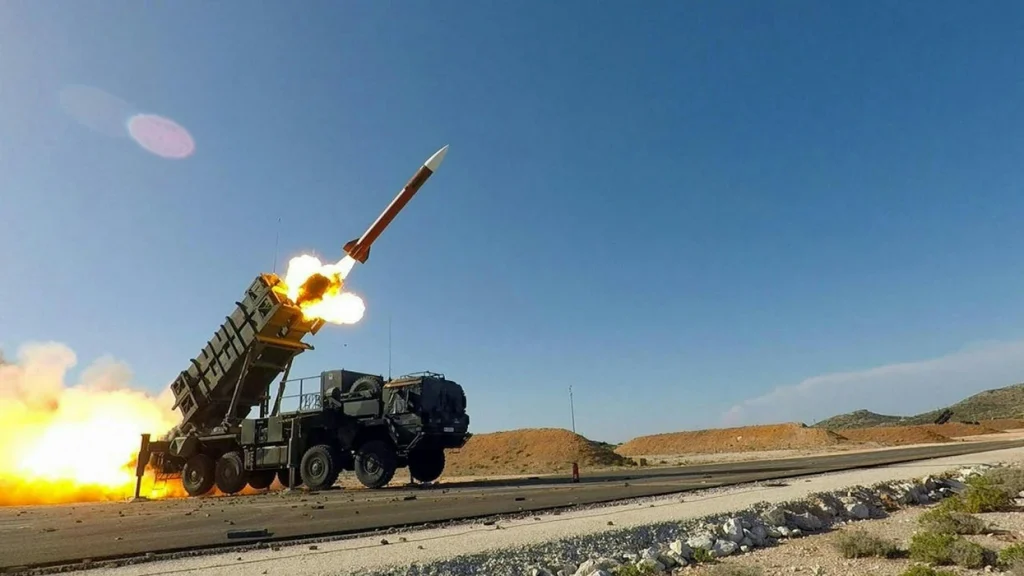
Ukraine's shortages of interceptor missiles for the Patriot air defense system continue to be a major problem.
With another winter not far on the horizon, Russia has been able to launch an ever-increasing number of ballistic missiles toward Ukrainian cities – and they are succeeding.
Volodymyr Zelensky continues to call on the US to allow his country to buy more of the prized Patriot interceptor missiles – one of the only things that can shoot down ballistic missiles.
But with the Iran war having used up much of Washington's reserves - and Donald Trump's adversarial stance, the problem is getting worse.
The current outlook is bleak, but there is hope on the horizon. Work continues on a European alternative to the vaunted Patriot system: Freya.
What is Freya?
Perhaps named after a Norse goddess, the Freya initiative is an attempt to build a cheaper version of the Patriot that is still effective and not controlled by the US.
The FP7.X interceptor missile – which, like the Patriot, will be fired at an incoming ballistic missile to destroy it before it hits its target – is being built by Ukrainian company Fire Point.
This is the company behind Ukraine's "Flamingo" cruise missile, which is becoming increasingly popular.
The idea is that this interceptor will be integrated into a “system of systems” approach, using various radars and command networks produced by Ukraine’s European allies.
The hope is that – once operational – it will cost around $700,000, much, much less than the $3.8 million cost for the Patriot.
Which countries are included?
Denmark, France, Germany, Italy, the Netherlands, Norway, Spain, Sweden and the United Kingdom have joined this effort.
Zelensky said Freya was not designed to replace existing European air defense capabilities, but rather to "supplement defense, create a strong shield over all of Europe, and do all this faster and at a lower cost."
One big question: when will it be ready?
The deteriorating situation with Ukraine's Patriot missile supplies has shown how important it is to Kiev's war effort to have a working alternative.
While Ukrainian forces are finding success elsewhere in the war – inflicting heavy casualties on slowly advancing Russian forces and isolating Crimea with drone strikes – ballistic missiles are a major problem.
According to Fire Point, it is hoped that Freya will achieve its first successful interception of a ballistic missile by mid-2027.
"We are trying to squeeze a program that usually lasts 20 or 30 years into just a few years," said Fire Point executive director Iryna Terekh, adding that at least five tests of the interceptor missile had been conducted.
 NATO fighter jets shoot down drone over Latvia
  Bone remains of three people found in Kalludra, Zubin Potok
  NYT Investigation: Russian Operatives Ran Training Programs in Bosnia and Serbia Targeting Moldova
  Report: Europe has increased aid to Ukraine, but US weapons play key role
  Poland increases army by over 220 personnel, aims for 500 by 2039
  How Putin hides his location – identical offices, recorded meetings and a secret train