
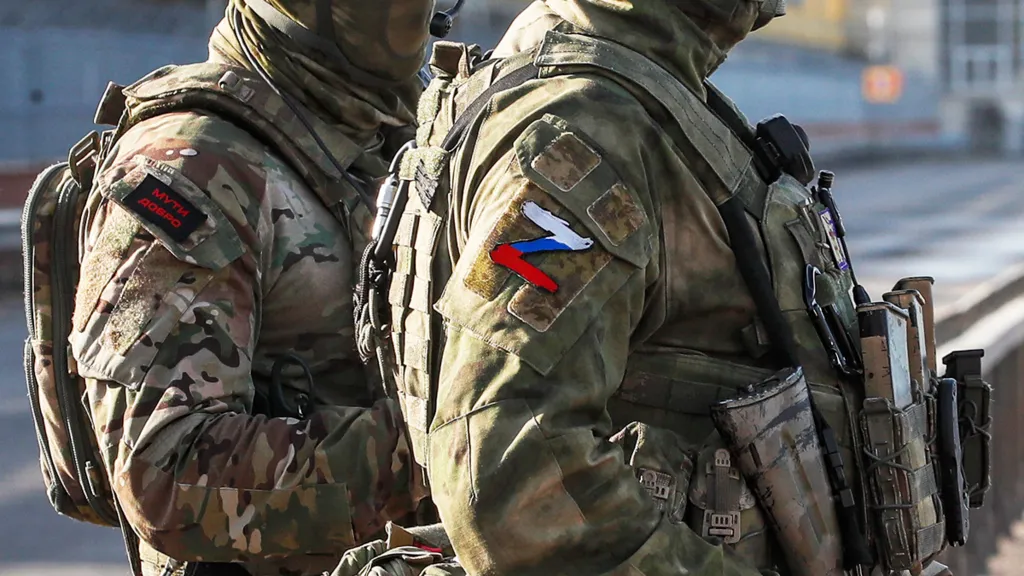
Estonia is preparing to defend itself from Russian soldiers, even after the fighting in Ukraine is over.
The small Baltic nation has blocked about 1,300 former Russian fighters from entering the country this year, according to the foreign ministry. It is now pressuring Brussels to ban former Russian soldiers from entering the EU and keep them out long after the guns have fallen silent.
"You can't allow these people who commit crimes, who rape women, who kill children and civilians on the battlefield, that we allow these people to come to Europe," Estonian Defense Minister Hanno Pevkur told POLITICO.
"It's not an Estonian issue, it's an issue of European security," he added.
Estonia first raised the idea at a meeting of EU foreign ministers in January. Although critics warn that a blanket ban could also affect forced conscripts and deserters, the proposal has received support from Kaja Kallas, the EU's foreign policy chief and a former Estonian prime minister.
The idea enjoys the support of "many member states," Kallas said in January.
In late March, EU national leaders asked the European Commission to examine “possible ways to address” the issue. Kallas has promised concrete proposals in time for an EU summit in June.
Lithuania has also pledged to maintain a blacklist, along with strict entry restrictions that already amount to a near-total ban on Russian citizens.
'From Bucha to Brussels''
Estonia presents the proposal as a security and moral imperative.
“People who commit war crimes… should not walk on the soil of European countries,” Pevkur said.
Estonian officials warn that former soldiers could be recruited by Russian President Vladimir Putin's security services for sabotage or espionage in Europe.
“I am sure that Putin will push these people towards Europe,” Estonian Foreign Minister Margus Tsahkna told reporters in January. “We already know about hybrid attacks today, but can you imagine these hundreds of thousands of former fighters, criminals coming here?”
"I'm sure they won't just work and pay our taxes," he added. "No, they'll do a lot of bad things."
Officials also argue that those who fought in an army accused of atrocities – including murder and torture in places like Bucha, near Kiev – should not be rewarded with entry into the EU.
"There can't be a road from Bucha to Brussels," Tsahkna said.
Estonia defines former combatants in a broad sense, including everyone involved in Russia's war effort, from regular troops to intermediate forces, such as the Wagner mercenary group.
This includes hundreds of thousands mobilized since 2022, as well as tens of thousands who later deserted, risking prison sentences.
Pevkur dismissed concerns that a blanket ban would also punish those who were recruited under duress. "Before joining the Russian Army, they have the opportunity to escape," he said.
However, during Russia's mobilization campaign, Estonia was among those countries that decreed that evasion of military conscription would not qualify as grounds for asylum or other forms of protection, suggesting that dissidents should resist the war in their own country.
Independent journalists and experts have reported that around 300,000 Russian men have been mobilized, many of them under duress. Mediazona, an independent Russian media outlet, estimates that around 18,000 mobilized soldiers have been killed. The rest have not yet been released from military service.
Returning veterans
Joris van Bladel, a military sociologist at the Brussels-based Egmont Institute, said that returning veterans "constitute a risk group - both for Russia and for us."
Using court records, the Russian investigative newspaper Novaya Gazeta estimates that at least 6 percent of demobilized soldiers have been convicted of crimes in Russia, including more than 900 serious criminal offenses such as murder.
Van Bladel warned that the return of around 1 million soldiers after the war could strain Russian society, given the country's limited attention to psychological and social reintegration.
"These individuals often return deeply destabilized, in some cases psychologically fragile, in others prone to risk-taking or violence," he said.
However, he stressed, the main impact would be internal.
"It's also a problem for us, but honestly, I don't think it's to the extent that Tallinn is now suggesting," he said.
The biggest risk, he said, is that Europe overreacts.
"The danger is that this fuels paranoia, making us see every Russian and every veteran as a potential security threat."
Russian human rights activists warn that punishing deserters, rather than supporting them, discourages them from handing over their weapons.
They also highlight the risks faced by those who refuse military conscription, from fines to prison sentences of up to 15 years for desertion.
On the issue of soldiers leaving Russia, Putin and his critics seem to be of one mind.
On Monday, the Movement of Conscientious Objectors said in a Telegram post that a Russian man who had been handed conscription documents had been thwarted in his attempt to escape. After initially being stopped at the Russian border, he managed to get to Belarus, only to be denied boarding when he tried to fly onward from Minsk.
The Geopost
 Council of Europe Commissioner expresses concern over handling of police violence case in Serbia
  United Kingdom updates travel advice for northern Kosovo
  Serbian arms dealer's firm earns millions under Vucic's rule despite US sanctions
  Rašić: Pressures continue even after the elections, my son was stopped at the border by the Serbian BIA
  Rašić raises accusations of "electoral engineering" and pressure from Belgrade in the elections in Kosovo
  New details about Serbs with criminal pasts expelled by Montenegro, Vučić supporters