

On 23 October, the Youth Initiative for Human Rights (YIHR) presented a report entitled “The passivisation of the addresses of Albanians in the Presevo Valley as a discriminatory practice” at the Envoy Conference Centre in Belgrade. The authors of the report, Marko Milosavljevic, Head of Research and Advocacy at YIHR Serbia, and Dr. Milos Rašić, PhD in Ethnology, and Relja Pantić, head of the complaint department in the professional service of the Commissioner for the Protection of Equality, spoke at the promotion.
From July to September this year, researchers from the Youth Initiative for Human Rights in Serbia conducted a survey on the passivization of addresses of Serbian citizens of Albanian ethnicity in the municipalities of Bujanovac, Presevo and Medvedja. Based on interviews, access to the decisions of the Ministry of Interior of Serbia (MUP) on the passivisation of addresses, as well as data on changes to the electoral rolls and interviews with local activists and political parties, they found that 72% of the respondents had not received a decision on passivisation, but had only been verbally informed, and that 80% of them had lost their right to vote.
Two basic indicators that the Ministry of Interior of Serbia (MUP) is violating the Law on Residence and Residency are the inconsistent and non-transparent data on police passivisation and the fact that at least 3,370 Albanians have been removed from the electoral register in the Presevo Valley in the period from 2015 to 2022.
“The passivisation of addresses represents a type of political instrument that is being misused to change the demographic and ethnic structure of the south of Serbia,” said Marko Milosavljevic at the presentation of the report. Those who lose their address during this process are deprived of almost all rights: they cannot obtain an identity card, get a job, get married, stand for election or be elected, register a car or own property. A particular paradox is that the victims of the abuse of the passivisation procedure are often the owners or co-owners of real estate, flats and houses, for which they regularly pay taxes to the state. Although their basic human rights are clearly at stake, Serbian officials have denied this for years and there is no precise official data on the number of people whose addresses have been deactivated.
Relja Pantić, head of the complaint department in the professional service of the Commissioner for the Protection of Equality, said that in the institution’s latest annual report on discrimination complaints, complaints of discrimination on the grounds of nationality dominated, with 16%. Of these, only one complaint concerned discrimination against Albanians. He stressed that this shows that the institution of the Commissioner needs to pay more attention to this issue, as the research of the Youth Initiative for Human Rights shows different data and a much broader scope of discrimination.
The Youth Initiative for Human Rights calls on both the competent prosecutor’s office and independent state bodies such as the Ombudsman to fully investigate the allegations in the complaint and prosecute those responsible. We demand that the Ministry of the Interior of Serbia publicly publish the statistics of citizens by ethnicity who have been passive from 2012 to 2023 in all municipalities of Serbia, including Bujanovac, Presevo and Medvedja./The Geopost/
You can read the report in Serbian, English and Albanian here.
The report “Passivization of addresses of Albanians in Presevo Valley as a discriminatory practice” was created within the project “Disclosure of discriminatory practices in Presevo Valley”, implemented by the Youth Initiative for Human Rights together with the Human Rights Committee of Bujanovac, with the support of the Rockefeller Brothers Fund from the United States of America.
 How should Europe prepare for 2026 — An analysis of external pressure and internal challenges
  Hope, fear, exhaustion, and resilience in wartime Dnipro
 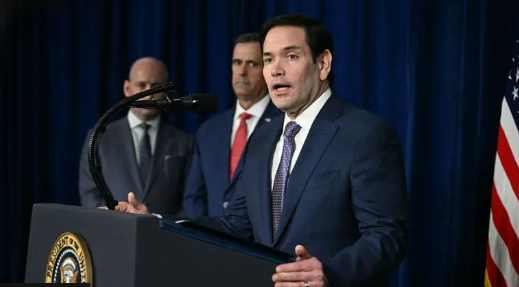 “Don’t play games,” Rubio says after Maduro’s arrest: Message should reach the whole world
 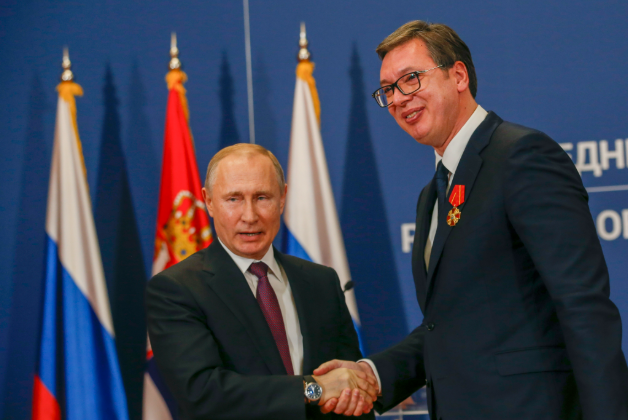 An alliance that comes at a high cost: The political and economic price of Serbia’s closeness to Russia
 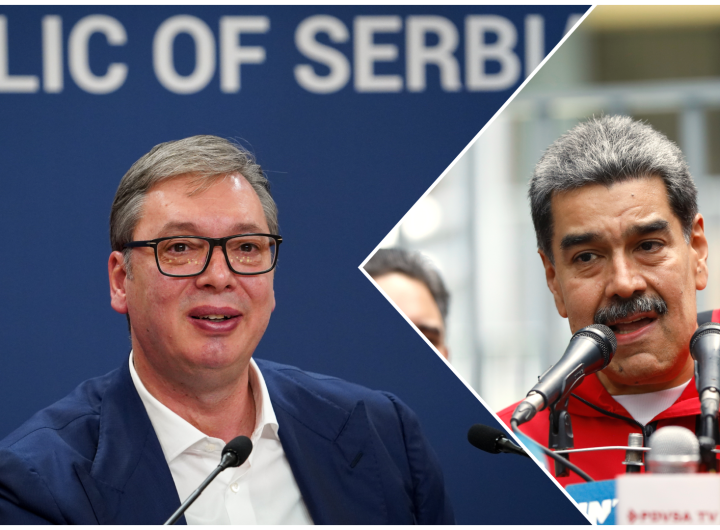 Maduro’s arrest and his close ties with Serbia and Vučić
 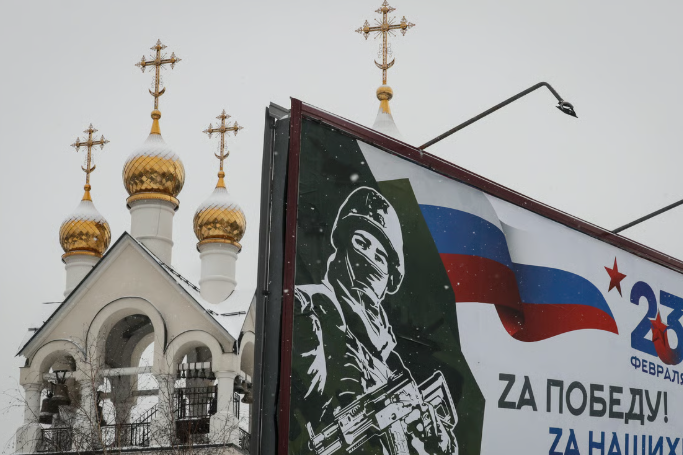 Ukrainian Intelligence: Russia planning fake attack on place of worship with ‘significant’ casualties