

Ukrainian forces on the front lines in the country's east say they are prepared to face a new Russian offensive. After declaring the capture of the Donbas region a key objective of the war, Moscow has resumed a full-scale military offensive along a 480-kilometer front.
Ukrainian forces on the frontline in the Donbas region in the east of the country say they are ready to face the offensive by Russian forces.
The Ukrainian Ministry of Defense released footage of soldiers defending positions in government-controlled areas of the Donetsk region.
"As I said in 2016, if they step on our territory, then let them come. They will stay here forever. There is enough land here to (bury) everyone. Even if they enter even half a meter, there will be no question. They will get what they deserve," says a Ukrainian soldier.
Russia resumed its offensive to seize control of eastern Ukraine on Monday, attacking along a 480-kilometer front in what officials say will mark a new phase and possibly a turning point in the war.
The Donbas region of Ukraine is largely industrial and the majority of the population speaks Russian. Moscow-backed separatists have been fighting Ukrainian forces for the past eight years and have declared two independent republics that are recognized by Russia. Ukrainian soldiers are now preparing for more complex attacks.
"We didn't think about aviation. We thought more about artillery, because they would only use artillery. But we also had to learn what air strikes are like," says a Ukrainian soldier.
In recent weeks, the Kremlin has declared that capturing the Donbas region was the main objective of the war, after attempts to take the capital Kiev failed.
After withdrawing from the capital, Russia began to reorganize and reinforce combat formations in eastern Ukraine for a full-scale offensive.
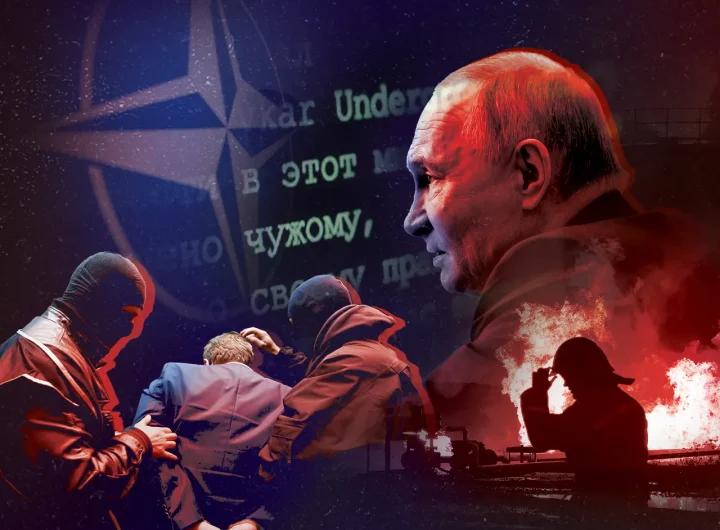 CEPA report: Russia is waging a "shadow war" in Europe, the risk of escalation increases
  Momcilo Gajic, the leader of the Serbian group that caused unrest in Europe on the orders of Russian intelligence, takes refuge in Moscow
  Kosovo, along with other countries, condemns Iranian attacks in the Strait of Hormuz
 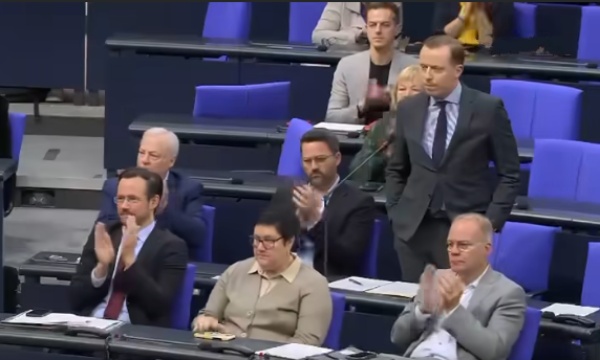 German Bundestag Member: NATO Intervention in '99 Stopped Milosevic's Genocide in Kosovo
 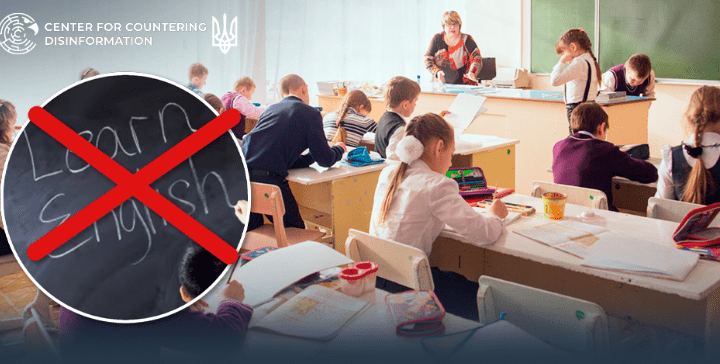 Reducing foreign language classes in Russian schools as a tool of militarization
 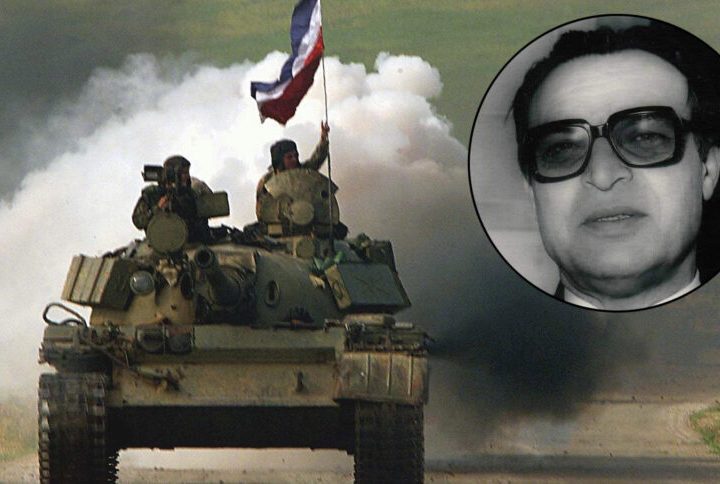 "The Albanians didn't do it" - How Miloš Vlashković was killed in Mazgit by two Serbian soldiers while they were looting houses in 1999