

Recently, a group of Ukrainian women leaders visited Kosovo as part of the project 'TRENDS IN THE FIELD OF WOMEN, PEACE AND SECURITY: THE CASE OF THE WESTERN BALKANS AND UKRAINE'.
Anna Nikolaenko, co-founder and project director of the Day After Foundation and an expert on women's participation in security and peacebuilding, explained to The Geopost how the experiences of Balkan countries can help rebuild post-war Ukraine.
It should be noted that the Day After Foundation is a non-profit NGO established in Kiev in September 2024. The organization's website states that its goal is to contribute to the creation of sustainable peace through the active participation of women in the processes of reconciliation, restoration and strengthening of social cohesion, both at the national and international levels.
You can find the full interview here:
The Geopost: Hello, Anna. We are pleased to welcome you to Pristina, the capital of the Republic of Kosovo. Please tell us, I know you are a co-organizer of the Day After Foundation. What role do you play in this organization? What do you do?
Nikolaenko: Hello, thank you very much. Yes, I am one of the co-founders of the Day After Foundation. We have three co-founders in the foundation (Iryna Drobovych, Alina Myakienka and Anna Nikolaenko, editor's note). We have extensive experience working with women, women's rights, women's leadership and gender policies. Therefore, we essentially complement each other in our work, both professionally and organizationally. My work as a co-founder is more about ensuring the operational activities of the organization and implementing programs.
The Geopost: What is the purpose of the organization?
Nikolaenko: The main goal of our work is to recognize the contribution of women to the development of our country, especially in the processes of peacebuilding and post-conflict recovery. And in general, we want to ensure that the achievements already achieved by our women are strengthened, that they have a platform to share their expertise and achievements. And that they can also incorporate these skills into their political and social activities.
The Geopost: You are currently in the Balkans. What goals did you set for yourself when you came here and have your expectations been met?
Nikolaenko: I don't think we can say that these expectations have been met. I think the experience we had here was much more comprehensive than what I personally hoped for.
It's a very different experience, but at the same time very similar to what we're going through now, what our society is going through and what it's facing. Perhaps the most important conclusion for me is that the first country we visited was Bosnia and Herzegovina. Now we're in Kosovo and this is a very different experience. And we're learning different lessons from Bosnia and Herzegovina and Kosovo.
Regarding the experience in Kosovo specifically, I knew before I came that there is a very strong women's movement here. There are more than 100 NGOs here founded and led by women. But I had no idea how powerful their activities are here, how much influence they have in shaping state policy.
And that's probably the most important thing I've noticed here.
The Geopost: What useful lessons from the Kosovo experience can you take with you to Ukraine and apply in Ukraine?
Nikolaenko: For me, this is, first of all, sustainability. The systematic approach to post-conflict resolution and reconstruction. It's about creating national mechanisms. And this is the cooperation of all actors in society. This is, as I said, a very strong public sector, a very strong social movement.
He interacts with the main actors, with the government policymakers, with the state apparatus. And it seems to me that this synergy helps mainly in conveying the needs of the population to those who form public policies. And I think that the systematic approach that exists here and the national mechanisms that have been created are the result of such cooperation and unity in this work.
The Geopost: A little personal. What did you know about Kosovo before planning this trip and what surprised you most about the country? What particularly impressed you?
Nikolaenko: I'll start with the second one. What struck me was the very open society. Our visit is quite short; we're only here for two days. So far, we've spent a little less than a day and a half here. But this openness, this willingness to share their experiences, is very impressive.
And I think that the fact that both our society and theirs have had such a common experience of war and crisis is a unifying factor. We understand each other better, we understand each other's needs better. And it's very valuable that they support us, that they show solidarity, especially at the level of the NGOs that we met with and the activists.
This is very tangible and very motivating. We will definitely share these experiences in Ukraine and implement them as best practices in our work.
The Geopost: As you know, Russian propaganda has reached the Balkans and much of the information about the events in Ukraine and the war is presented through the prism of Russian disinformation. Have you encountered such cases in your work?
Nikolaenko: I can't give you specific examples right now, but I can say that propaganda is indeed one of the tools of information warfare. And perhaps, like everywhere else in the world, we are facing the consequences of this propaganda. And our self-imposed duty as representatives of our country is to carry out such educational work, to talk about the current situation, about what Ukrainians want and what they are fighting for.
And I think we have 100% public support here.
/ The Geopost
 Swiss journalist: Switzerland also faces disinformation and propaganda
  Dubrava between memory and oblivion
  Dugolli: Serbia implemented a morbid plan to exterminate Albanians in Dubrava
  Dugolli on Ukshin Hoti: They kept him isolated... his face showed that he had experienced horror
 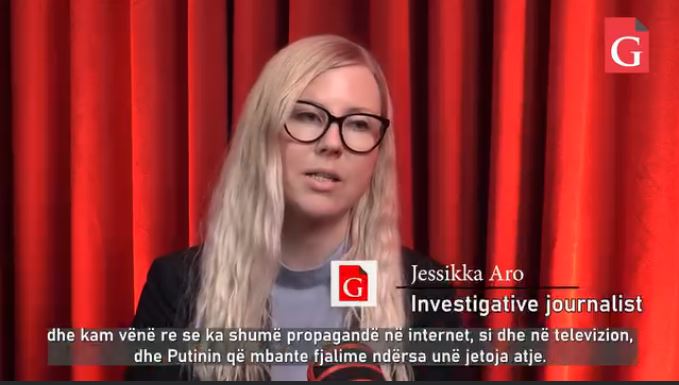 Aro: The loss of the pro-Russian candidate in Hungary does not mean the failure of the Kremlin's propaganda
 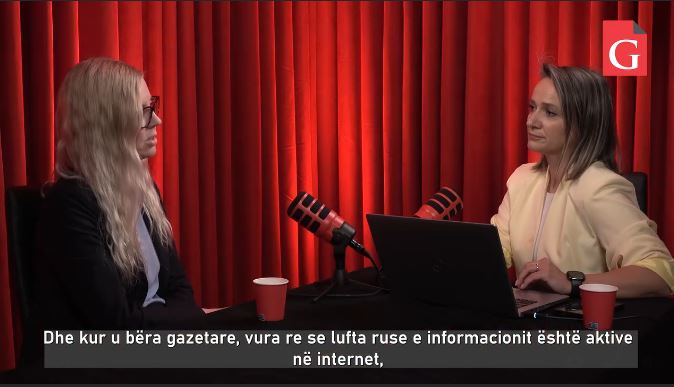 From propaganda to manipulation: The story of the Finnish journalist who exposed Russian “troll factories” and their global influence